
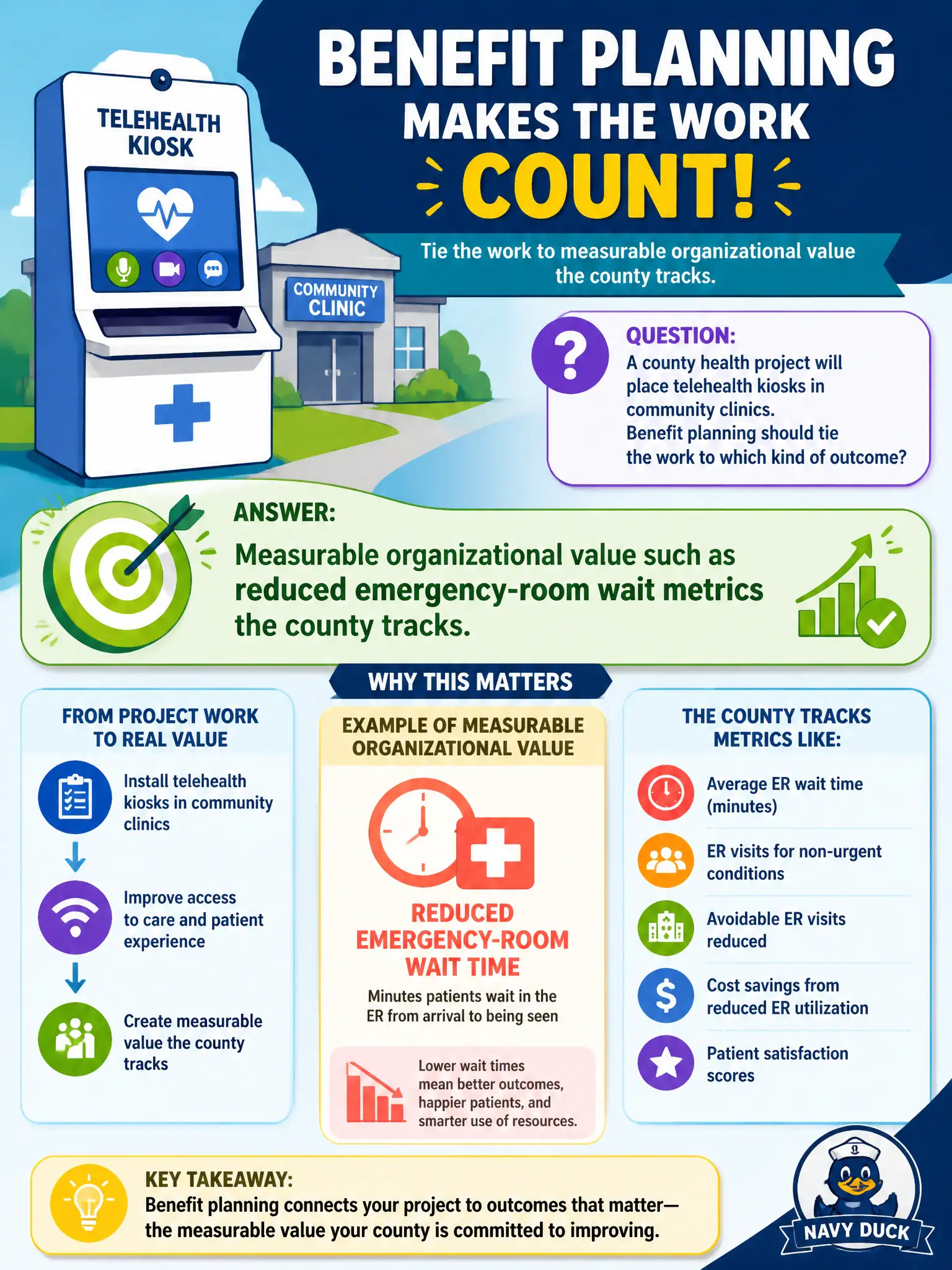
A county health project will place telehealth kiosks in community clinics. Benefit planning should tie the work to which kind of outcome?
Select an answer to reveal the explanation.
Short Explanation
Benefits are the results the county actually cares about—like shorter ER waits—not shiny features or more meetings. Tie the kiosk work to those metrics so go-live means something after the boxes are installed.
Full Explanation
Benefit planning for municipal work must tie deliverables to measurable organizational value the jurisdiction actually tracks. Telehealth kiosks in community clinics are means, not ends; the benefit lens asks whether outcomes such as reduced emergency-room wait metrics improve for residents the county serves. Naming a tracked outcome keeps the capital spend accountable to public health results rather than to activity volume alone.
Longer vendor logo placement on a splash screen is marketing exposure, not an organizational benefit the county owns. More internal status meetings during build are process overhead and do not constitute realized value for patients or clinics. Freezing clinic furniture purchases earlier may be a procurement tactic, but it is not the benefit outcome the telehealth investment is meant to produce.
Exam caveat: CAPM benefit concepts distinguish outputs (kiosks installed) from outcomes (access or wait-time improvements). Not every convenient project activity or vendor preference qualifies as a planned benefit. Associates should expect benefits to be stated in terms stakeholders can measure after delivery.
Operational check: in the benefit plan, list each intended outcome, the metric and data source the county already uses or will stand up, and the operational owner who will report progress after go-live—not only the IT delivery lead.