
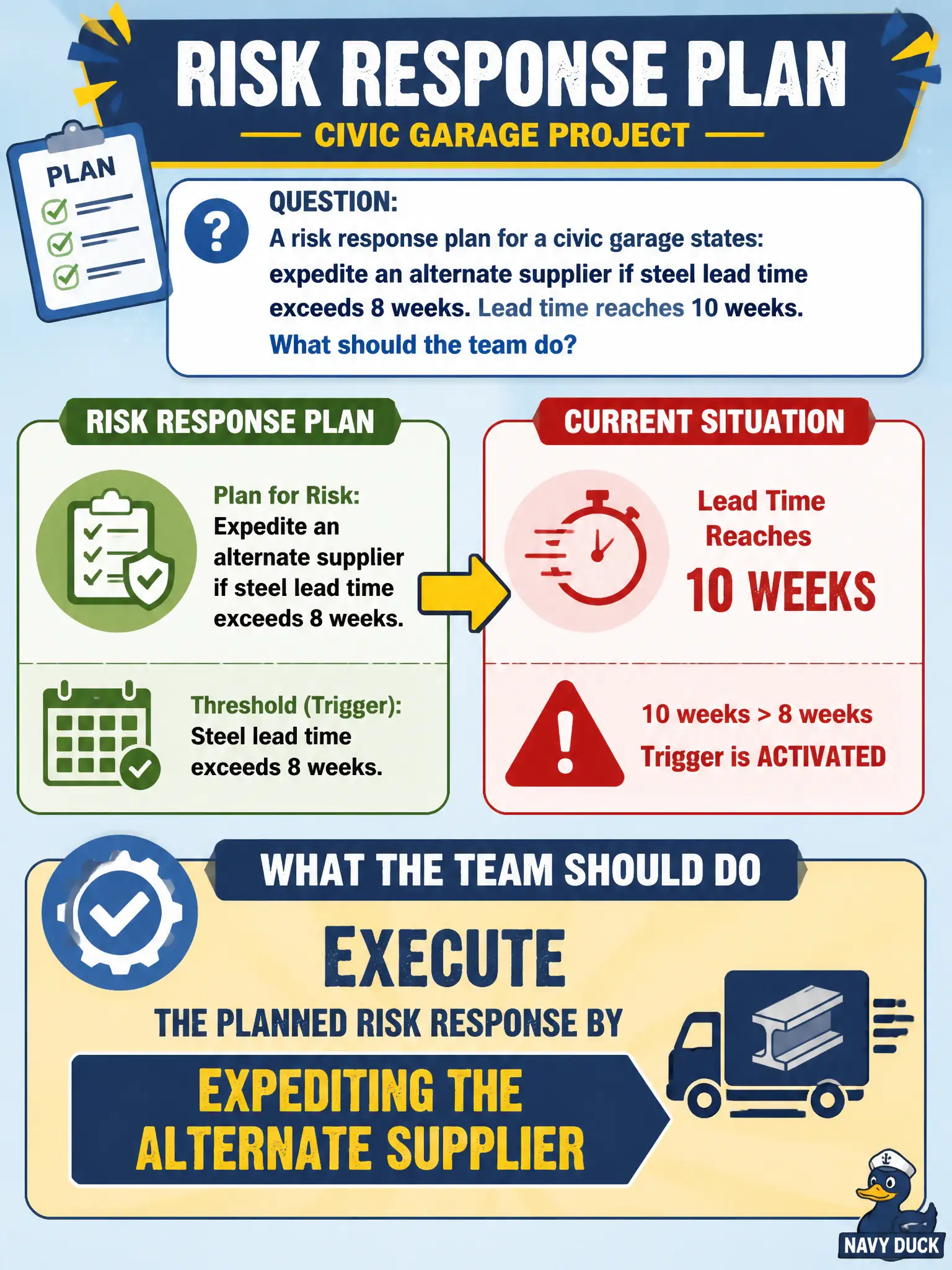
A risk response plan for a civic garage states: expedite an alternate supplier if steel lead time exceeds 8 weeks. Lead time reaches 10 weeks. What should the team do?
Select an answer to reveal the explanation.
Short Explanation
Ten weeks is past the eight-week tripwire—time to run the play you already wrote. Expedite the alternate supplier instead of admiring the risk register. Planned responses earn their keep when triggers fire.
Full Explanation
Planned risk responses should be executed when identified triggers occur. If a civic garage risk response says to expedite an alternate supplier when steel lead time exceeds eight weeks and lead time reaches ten weeks, the team should execute that planned response without delay. Ignoring the trigger because contingency plans are only documentation exercises fails by concept: response plans exist to be used when thresholds are crossed on live capital projects. Rewriting the entire project charter before contacting any supplier fails because a triggered supply response does not require re-initiating the project via charter rewrite. Canceling the garage project automatically whenever any lead time slips fails because cancellation is not the planned response and overreacts to a managed procurement risk. Exam caveat: CAPM risk items test trigger-based execution—having a plan is insufficient if the team freezes when the trigger fires in procurement. Operational check: confirm the ten-week lead time against the eight-week trigger, expedite the alternate supplier per the response plan, update schedule and cost impacts, and log the risk action clearly in the register. Notify purchasing and the sponsor that the alternate-supplier trigger has been activated.