
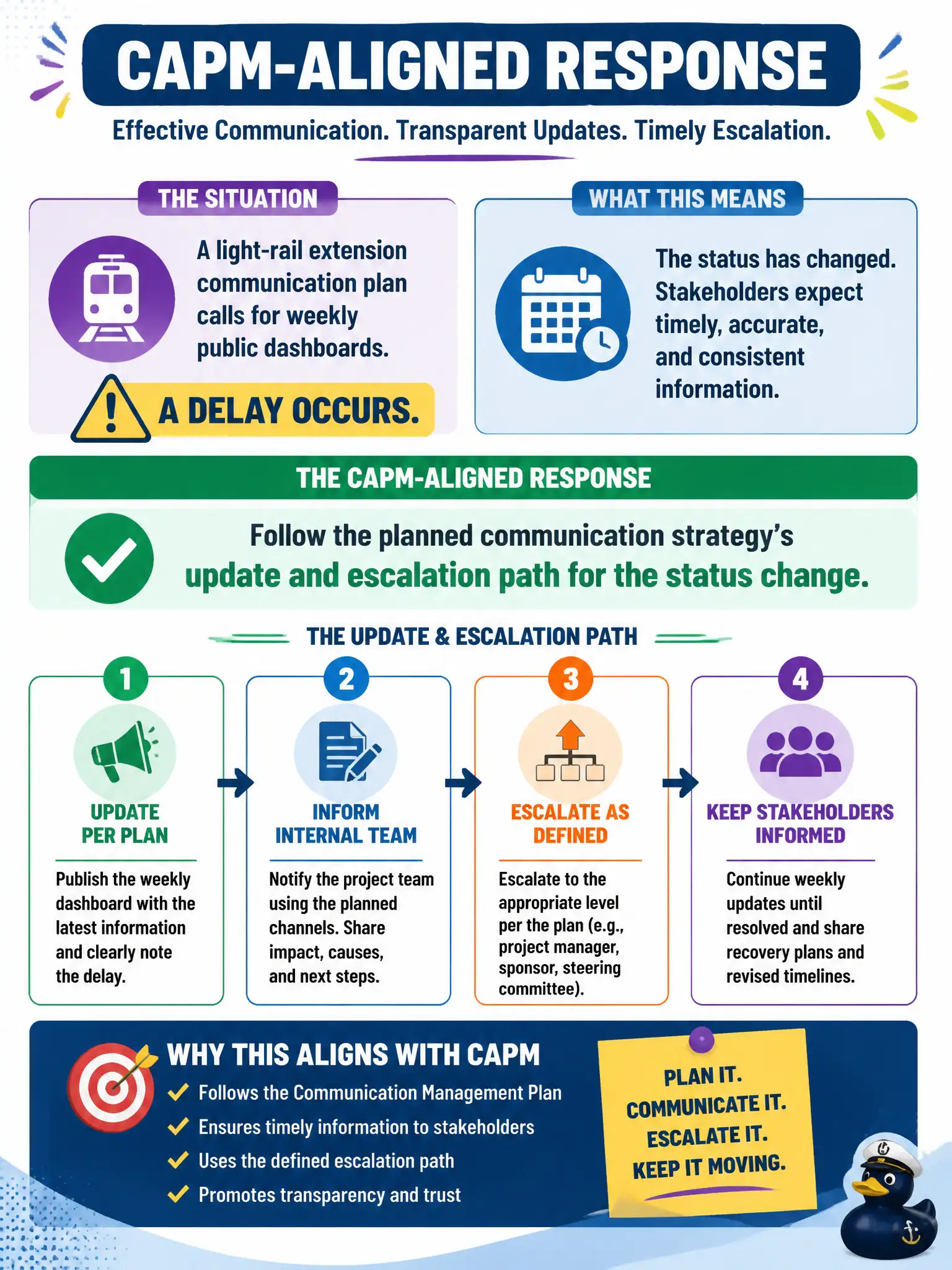
A light-rail extension communication plan calls for weekly public dashboards. A delay occurs. What is the appropriate CAPM-aligned response?
Select an answer to reveal the explanation.
Short Explanation
When the plan says weekly dashboards, a delay is exactly when you use that channel—not when you go dark. Follow the escalation and update path you already agreed. Silence turns a schedule slip into a trust crisis.
Full Explanation
Planned communication strategies should be followed when status changes. If a light-rail extension communication plan calls for weekly public dashboards and a delay occurs, the appropriate response is to follow that plan’s update and escalation path for the status change. Stopping all public updates until the delay is secretly recovered fails by concept: secrecy contradicts planned transparent communication and damages resident trust in the transit program. Replacing the dashboard with an unofficial social-media rumor thread only fails because unofficial rumor channels are not the approved strategy and create conflicting messages among stakeholders. Waiting for residents to discover the delay during weekend site visits fails because passive discovery is not executing the communication plan as written. Exam caveat: CAPM Domain 1 emphasizes following planned frameworks—communication and risk responses—when triggers occur, rather than improvising silence or side channels. Operational check: publish the delay on the weekly dashboard per the plan, execute any escalation to sponsor and communications leads, and document the message so field staff and public information officers stay aligned.