
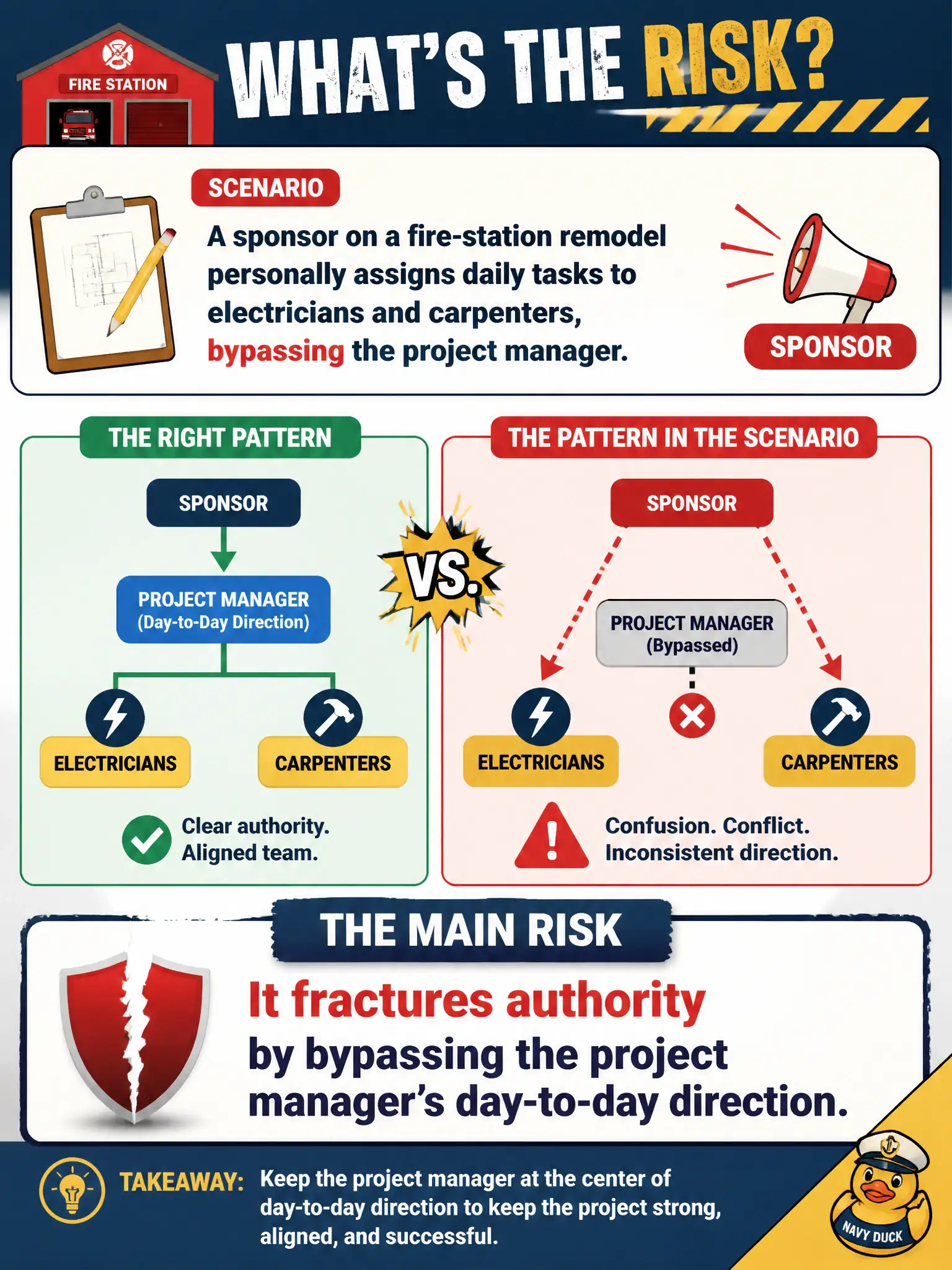
A sponsor on a fire-station remodel personally assigns daily tasks to electricians and carpenters, bypassing the project manager. What is the main risk of that pattern?
Select an answer to reveal the explanation.
Short Explanation
When the sponsor micro-assigns the trades, the PM's authority turns into Swiss cheese. Escalation paths are fine; daily tasking through the PM is the healthier pattern. Keep the champion role and leave crew direction with project leadership.
Full Explanation
Sponsors should escalate and enable, not routinely bypass the project manager when assigning day-to-day trade work. On a fire-station remodel, a sponsor personally assigning daily tasks to electricians and carpenters fractures authority by bypassing the project manager’s day-to-day direction on site. Saying it guarantees faster permits because sponsors outrank inspectors fails by concept: sponsor rank does not override inspection processes or fix fractured site direction. Saying it is required whenever union trades appear on a municipal site fails because union presence does not mandate sponsor micro-assignment of daily tasks. Saying it eliminates the need for a project charter or communication plan fails because bypassing the project manager creates more need for clear authority and communication, not less. Exam caveat: CAPM role boundaries protect a single point of day-to-day direction—sponsor interference is a common governance failure mode on civic construction sites. Operational check: reset task assignment through the project manager, ask the sponsor to route priorities via that channel, and escalate only decisions that truly require sponsor authority. Confirm trades take direction from the project manager during daily huddles.