
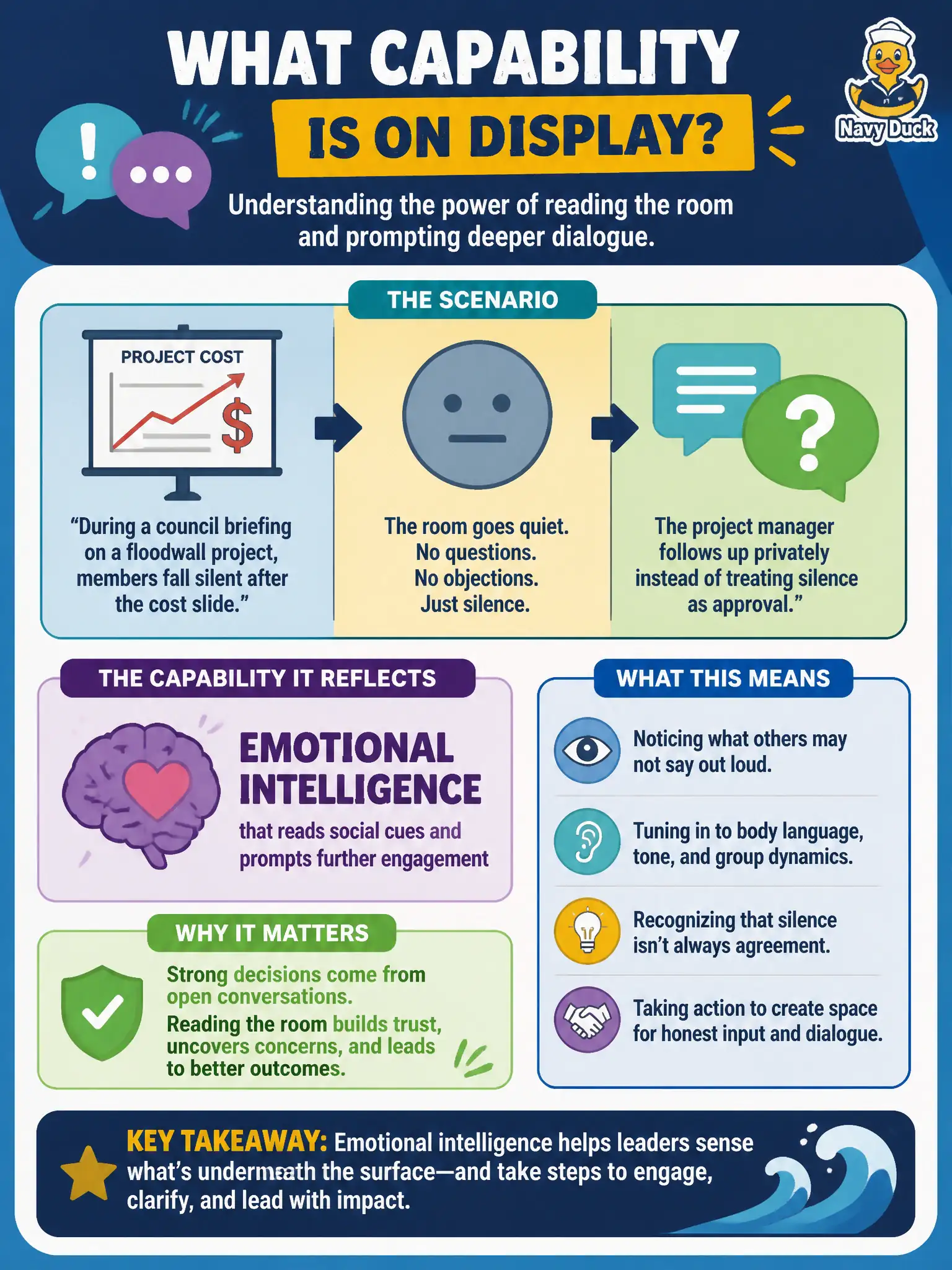
During a council briefing on a floodwall project, members fall silent after the cost slide. The project manager follows up privately instead of treating silence as approval. What capability does that reflect?
Select an answer to reveal the explanation.
Short Explanation
Quiet council chambers after a cost slide is rarely a standing ovation. EQ hears the concern in the silence and follows up. Better to dig now than discover a no-vote later.
Full Explanation
Emotional intelligence includes interpreting social and nonverbal cues—such as silence that signals concern rather than consent—and choosing appropriate follow-up. Following up privately after council members fall silent on a floodwall cost slide reflects that capability in a political briefing. Ignoring nonverbal cues to keep briefings under five minutes fails by concept: speed is not a reason to miss material concern signals from governing stakeholders. Assuming silence always means unanimous formal authorization fails because silence is not documented approval and may mask objections that surface later publicly. Delegating all council engagement exclusively to the paving contractor fails because contractor delegation does not replace the project manager’s responsibility to read and engage governance stakeholders. Exam caveat: CAPM EQ scenarios treat silence and body language as data—especially in political briefings where public objection may be muted in the room. Operational check: schedule private follow-ups with silent members, invite questions on the cost slide, document concerns as risks or issues, and do not treat the briefing as authorized until formal approval is recorded.