
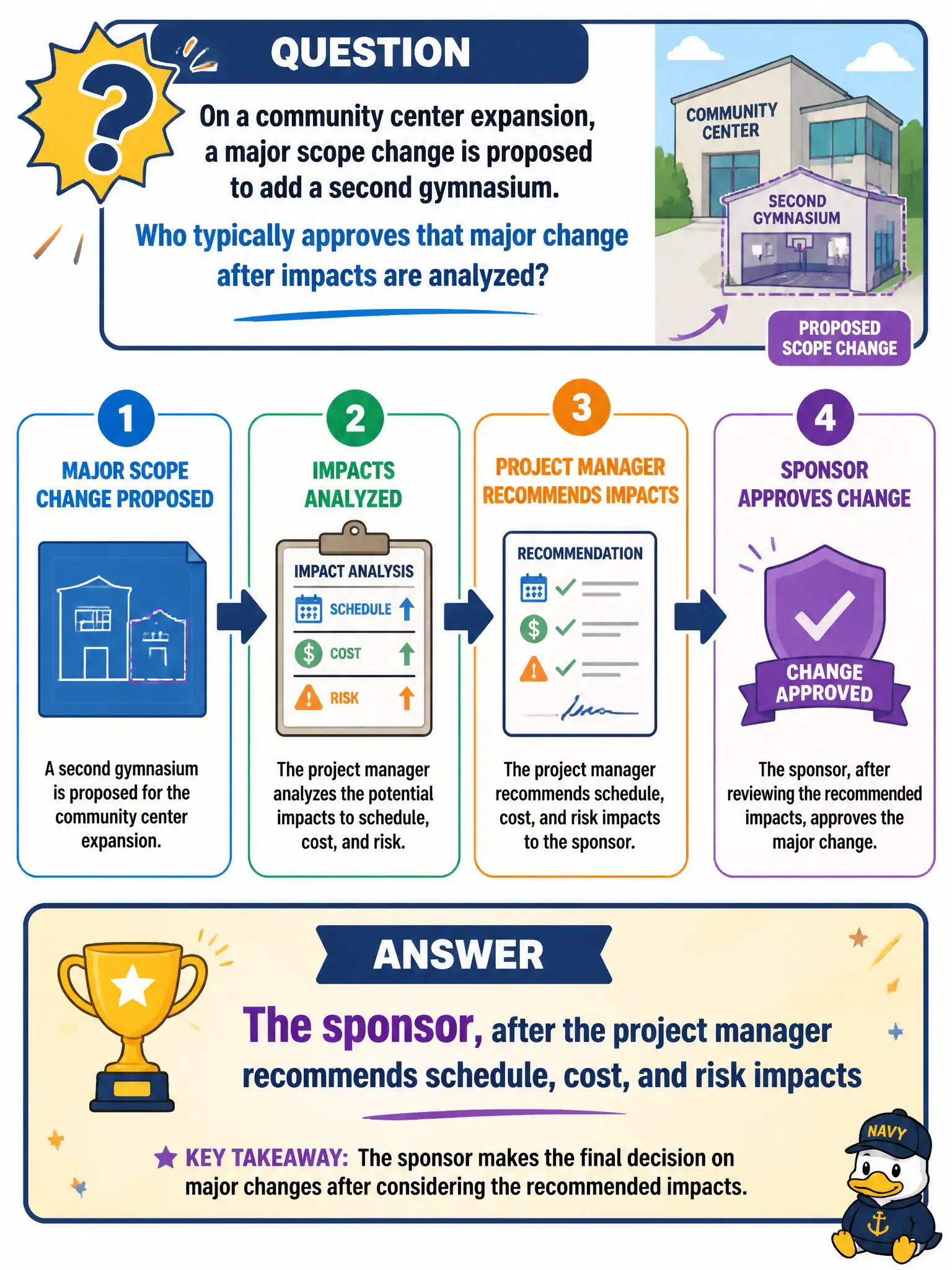
On a community center expansion, a major scope change is proposed to add a second gymnasium. Who typically approves that major change after impacts are analyzed?
Select an answer to reveal the explanation.
Short Explanation
Big scope means big money and big authority—that is sponsor territory. The PM runs the numbers on schedule, cost, and risk and recommends. The sponsor then decides whether the second gym is in or out.
Full Explanation
Major funding and scope decisions generally rest with the sponsor, informed by the project manager's impact analysis and recommendations. On a community center expansion where a major scope change proposes a second gymnasium, the sponsor typically approves that major change after the project manager recommends schedule, cost, and risk impacts. Saying the junior scheduler who updates task IDs in the software fails by concept: schedule hygiene supports the change process but does not authorize major civic scope and funding. Saying any team member who posts the idea on the project chat channel fails because informal ideation is not change authorization or impact analysis. Saying the materials supplier who would sell additional flooring fails because vendor commercial interest is not a substitute for sponsor decision rights on municipal scope. Exam caveat: CAPM role questions reinforce analyzing impacts at the project manager level and authorizing major change at the sponsor level—candidates often confuse who recommends with who decides. Operational check: analyze schedule, cost, and risk impacts of the second gymnasium, present a clear recommendation to the sponsor, obtain documented sponsor approval before updating baselines, and do not treat chat posts or supplier enthusiasm as authorization.