
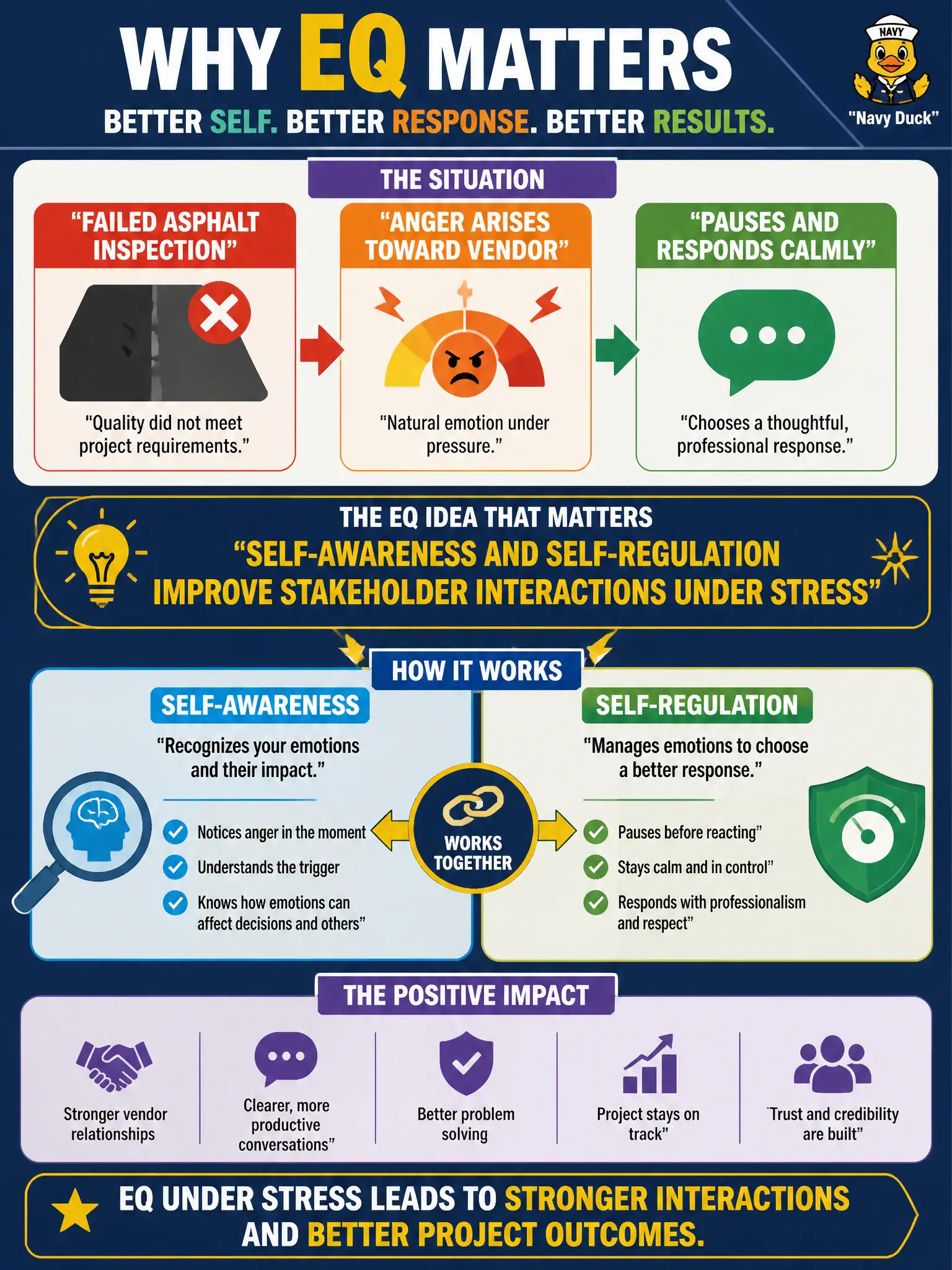
After a failed asphalt inspection, a project manager feels anger toward a paving vendor but pauses and responds calmly. Which EQ-related idea best explains why that matters?
Select an answer to reveal the explanation.
Short Explanation
Bad inspection days tempt sharp words. Catching yourself before you snap is self-awareness doing its job. Calm vendor talks keep the relationship—and the fix—moving.
Full Explanation
Self-awareness and self-regulation are emotional intelligence capabilities that improve stakeholder interactions under stress. After a failed asphalt inspection, a project manager who feels anger toward a paving vendor but pauses and responds calmly shows why those EQ skills matter for keeping collaboration intact while defects are corrected. Saying vendors must be excluded from all communications after any failed inspection fails by concept: cutting off the vendor removes the partner needed to remediate the asphalt and escalates conflict without solving quality. Saying anger is required to prove the project manager's authority to the city council fails because performative anger damages professional credibility and does not substitute for evidence-based status and corrective action. Saying emotional control is only needed during closing, not during inspections fails because inspections and quality pressure are precisely when self-regulation protects stakeholder relationships. Exam caveat: CAPM EQ questions treat self-awareness and self-regulation as delivery tools under stress—not as suppression of all emotion by policy, and not as a license for public outbursts. Operational check: pause before responding to the failed inspection, document the asphalt defect objectively, engage the vendor on corrective action calmly, and reserve escalation for facts and impacts rather than venting.