
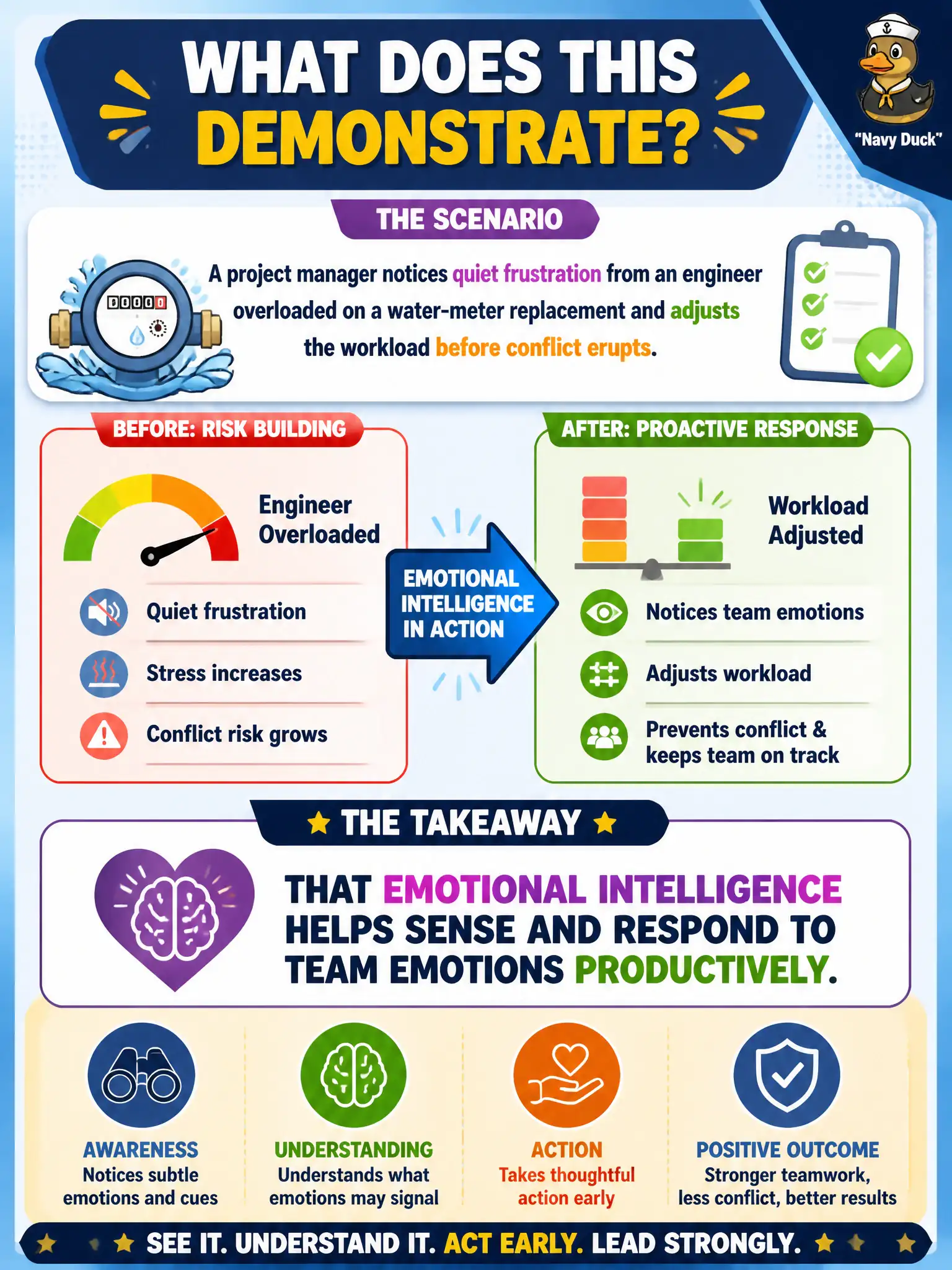
A project manager notices quiet frustration from an engineer overloaded on a water-meter replacement and adjusts the workload before conflict erupts. What does this demonstrate?
Select an answer to reveal the explanation.
Short Explanation
EQ is reading the room before it becomes a shouting match. Spotting that quiet engineer's frustration and lightening the load is smart project care. Problems fixed early beat fireworks later.
Full Explanation
Emotional intelligence helps sense and respond to team emotions productively before conflict hardens. Noticing quiet frustration from an overloaded engineer on a water-meter replacement and adjusting workload demonstrates that capability in a civic field setting. Saying emotional cues are irrelevant once the charter is signed fails by concept: charters authorize work; they do not suspend interpersonal dynamics during delivery. Saying only HR may adjust workloads on municipal projects fails because project managers routinely rebalance assignments within their authority and escalate to HR when policy requires formal intervention. Saying schedule compression always requires adding night shifts first fails because the stem’s lesson is emotional sensing and workload adjustment, not a mandatory night-shift compression tactic. Exam caveat: CAPM includes emotional intelligence as a professional capability for project managers—especially useful before conflict hardens on civic crews under schedule pressure. Operational check: check in privately with the engineer, redistribute tasks or renegotiate deadlines, document the assignment change, and watch for similar overload signals across the water-meter crew.