
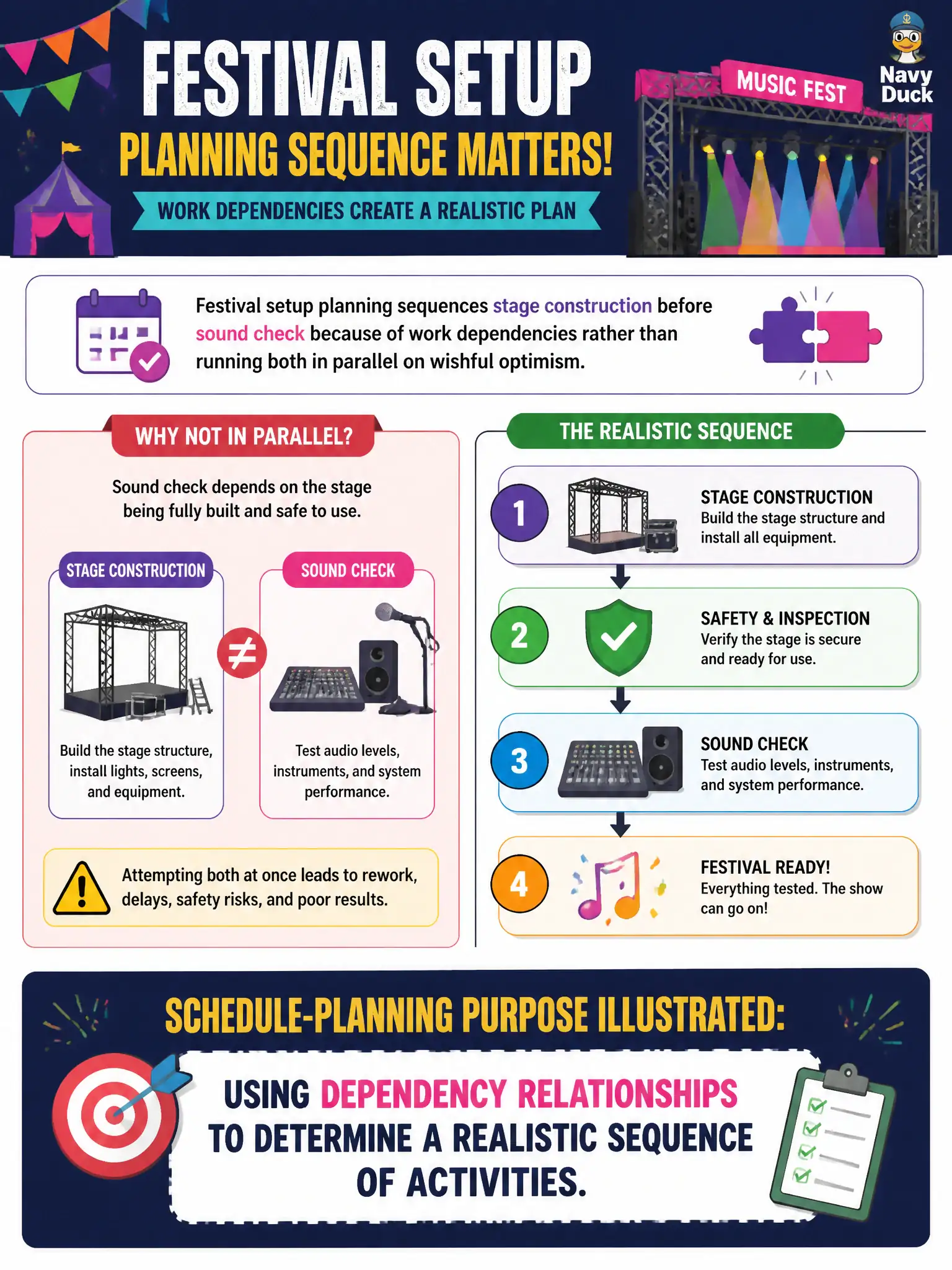
Festival setup planning sequences stage construction before sound check because of work dependencies rather than running both in parallel on wishful optimism. What schedule-planning purpose does that illustrate?
Select an answer to reveal the explanation.
Short Explanation
You cannot sound-check a stage that is still a pile of lumber. Schedule planning respects that 'must finish before' link instead of hoping parallel magic will invent a finished stage.
Full Explanation
Schedule planning uses dependency relationships to determine a realistic sequence of activities. Sequencing stage construction before sound check for festival setup because of work dependencies—rather than running both in parallel on wishful optimism—illustrates that core purpose. Saying the goal is removing all dependencies so every activity starts on day one fails by concept: dependencies reflect real finish-to-start and similar constraints; deleting them creates an impossible plan that fails on site. Saying the festival opening should be treated as a task duration instead of a milestone confuses event markers with work duration and is not the dependency-sequencing lesson the stem asks about. Saying the schedule should be replaced with a product roadmap of musical genres fails because genres do not sequence construction and sound-check work packages. Exam caveat: CAPM schedule items reward dependency-driven logic over optimism bias—especially in civic events with hard public open times. Operational check: model stage construction as a predecessor to sound check, validate resource timing against the dependency logic, and only compress the sequence after confirming which links are truly soft versus hard technical constraints.