
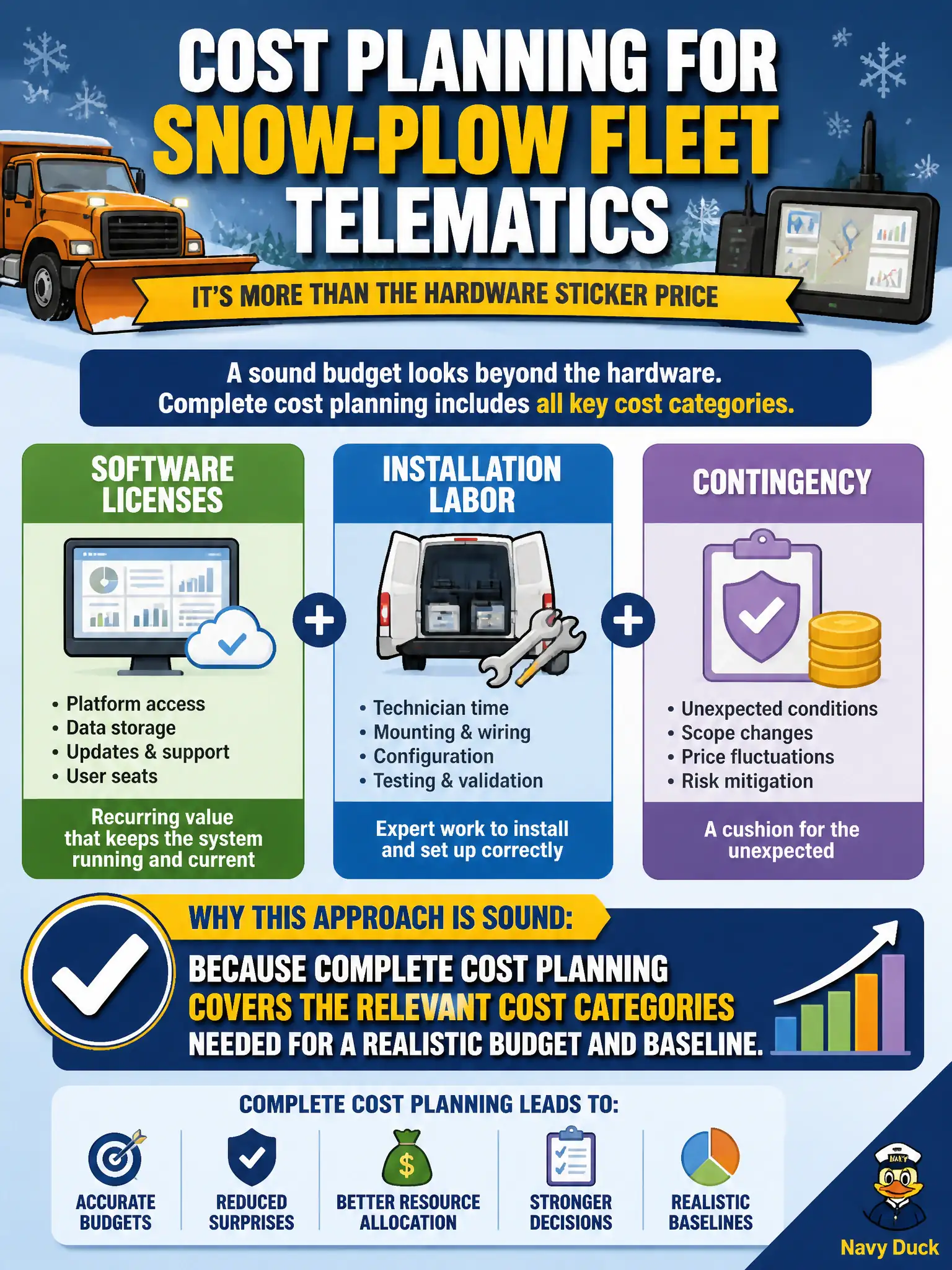
Cost planning for snow-plow fleet telematics includes software licenses, installation labor, and contingency—not only the hardware sticker price. Why is that approach sound?
Select an answer to reveal the explanation.
Short Explanation
Buying only the gadgets and forgetting licenses, install hours, and a cushion is how projects 'come in under budget' on paper and blow up in real life. Cost planning adds up the whole cart.
Full Explanation
Complete cost planning covers the relevant cost categories needed for a realistic budget and baseline—not only a hardware sticker price. Including software licenses, installation labor, and contingency for snow-plow fleet telematics is therefore sound municipal cost planning. Saying contingency always equals the hardware cost so other categories can be ignored fails by concept: contingency is risk-informed reserve, not an automatic twin of hardware price, and licenses and labor are real costs that must be estimated. Saying licenses and labor must be funded from operations and never appear in project cost planning fails because project cost planning should include costs required to deliver the project outcome, regardless of later operational funding models. Saying sticker price alone is the cost baseline once a vendor quote is email-approved fails because an incomplete quote is not a complete approved baseline covering all categories. Exam caveat: CAPM cost planning expects completeness across categories; underestimating licenses and labor is a common civic IT trap. Operational check: build a cost estimate covering hardware, licenses, labor, contingency, and related costs; seek baseline approval; and track each category’s actuals against the plan.