
On a street-resurfacing project, the team wants ride-smoothness metrics defined only after residents complain. Why should quality planning set those metrics before paving starts?
Select an answer to reveal the explanation.
Short Explanation
Decide what 'smooth enough' means before the asphalt truck leaves—not after the neighborhood Facebook group explodes. Quality planning puts the measuring stick on the wall first.
Full Explanation
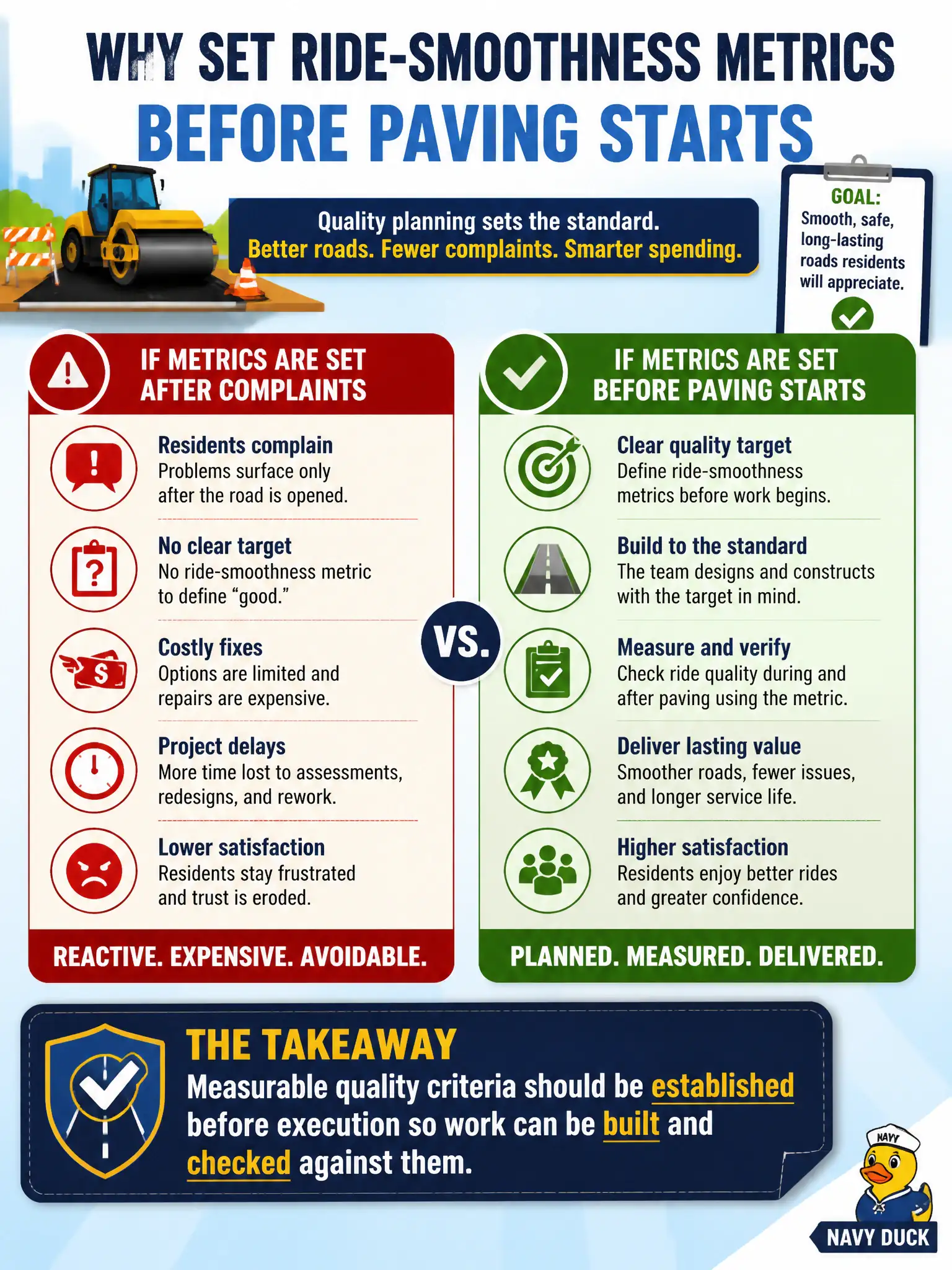
Measurable quality criteria should be established before execution so work can be built and checked against them. On street resurfacing, ride-smoothness metrics belong in quality planning before paving starts—not only after residents complain about the finished surface. Saying resident complaints are the only statistically valid quality measurement method fails by concept: complaints are lagging citizen signals; planned metrics enable proactive inspection and acceptance during and after paving. Saying smoothness metrics belong exclusively in the stakeholder register fails because the stakeholder register identifies people and engagement approaches, not technical quality criteria for pavement. Saying defining metrics early would prevent any corrective rework if pavement fails fails because early criteria enable detection and planned corrective action—they do not forbid rework when results miss the mark. Exam caveat: CAPM quality planning precedes control; “define metrics before work” is the recurring correct pattern on construction items. Operational check: set smoothness and related acceptance thresholds in the quality plan, brief the paving contractor, inspect against those thresholds during and after paving, and treat resident complaints as supplemental feedback rather than the first definition of quality.