
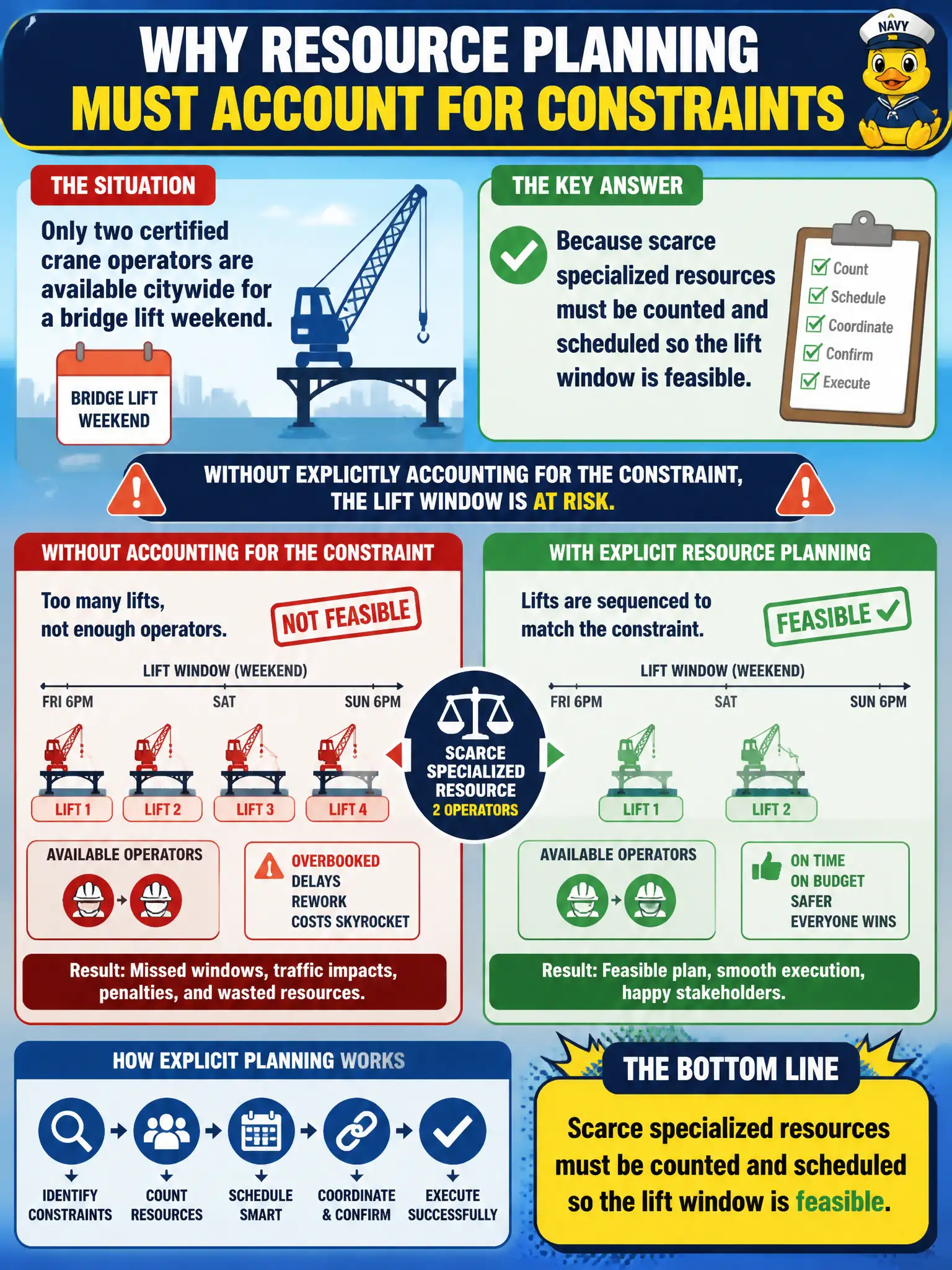
Only two certified crane operators are available citywide for a bridge lift weekend. Why must resource planning explicitly account for that constraint?
Select an answer to reveal the explanation.
Short Explanation
If only two people in town can run the crane, the calendar bends around them—not the other way around. Resource planning has to count those unicorns and book the weekend for real.
Full Explanation
Scarce specialized resources must be counted and scheduled so the work window is feasible. With only two certified crane operators citywide for a bridge lift weekend, resource planning must explicitly account for that constraint. Saying crane certification automatically removes the activity from the critical path fails by concept: certification constrains who can perform work; it does not remove the lift from the network or critical path. Saying specialized operators can be substituted with any general laborer at the same rate fails because certification and skill requirements are not interchangeable with generic labor. Saying scarce resources are never scheduled and the team simply waits until more operators are hired fails because projects must plan within real capacity or change scope/timing—not refuse to schedule. Exam caveat: CAPM resource questions highlight constrained resources as drivers of schedule feasibility in municipal settings with limited certified trades. Operational check: reserve the two certified operators on the lift calendar, sequence dependent work around their availability, and create a contingency (alternate weekend or mutual-aid operators) if booking fails.