
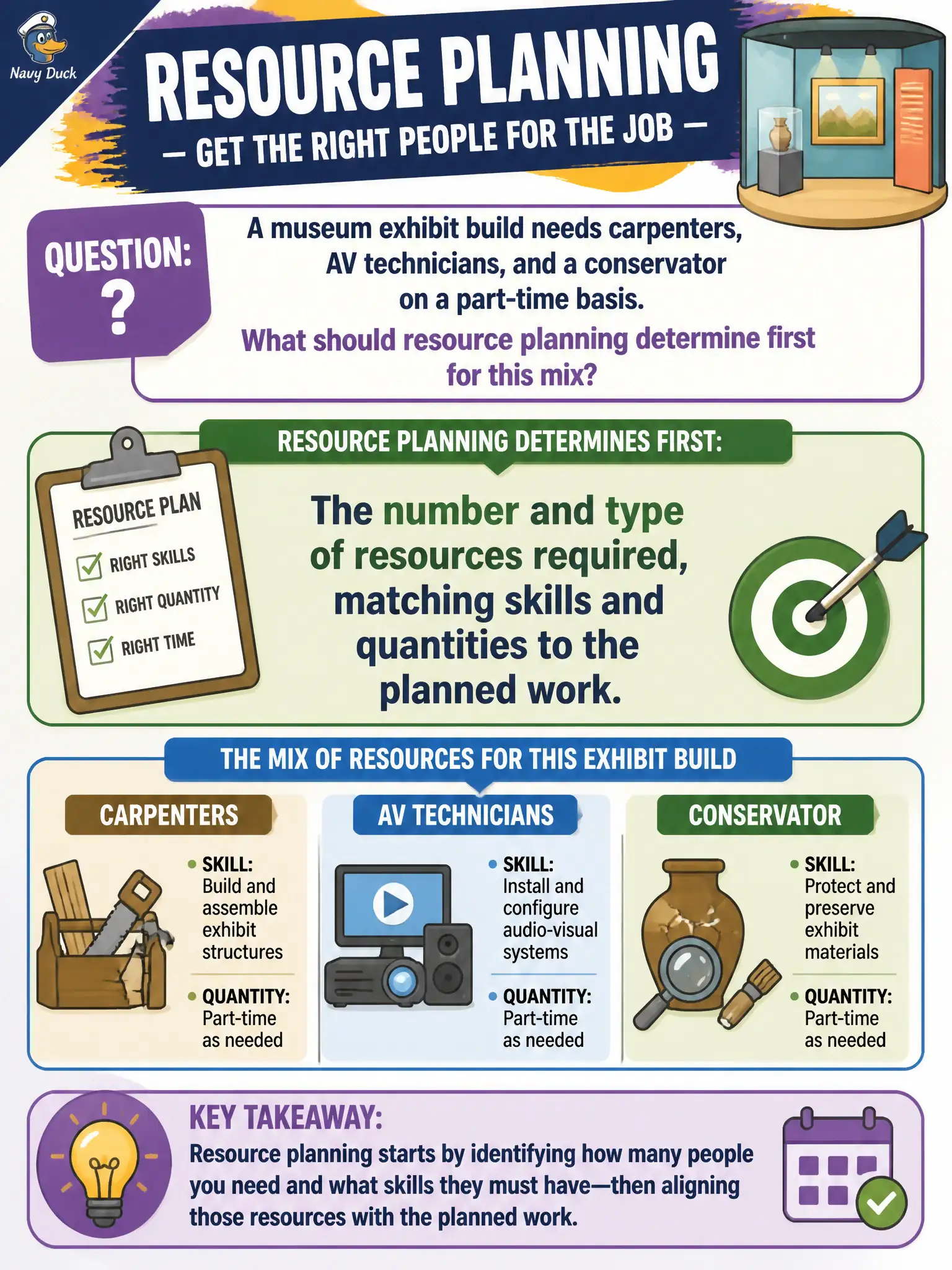
A museum exhibit build needs carpenters, AV technicians, and a conservator on a part-time basis. What should resource planning determine first for this mix?
Select an answer to reveal the explanation.
Short Explanation
You would not staff a kitchen with only dishwashers when you need a pastry chef. Resource planning names the skills and how many of each—carpenters, AV techs, part-time conservator—against the work.
Full Explanation
Resource planning determines the number and type of resources required, matching skills and quantities to the planned work. A museum exhibit build needing carpenters, AV technicians, and a part-time conservator must plan those skill types explicitly rather than assuming interchangeable bodies. Saying only total headcount matters because skill type is irrelevant once the budget is approved fails by concept: wrong skills cannot execute specialized conservation or AV work even if the numeric headcount matches the estimate. Saying the stakeholder register can replace the resource plan if stakeholders personally perform carpentry fails because stakeholder identification and engagement planning are not the same as resource loading of project work packages. Saying a single generic “museum staff” pool suffices so specialized roles never need naming fails because specialized part-time roles must be identified early to secure scarce availability. Exam caveat: CAPM resource planning emphasizes type and quantity—not merely FTE totals—especially when civic projects borrow scarce specialists from other departments. Operational check: build a resource breakdown by skill for carpentry, AV, and conservation hours, confirm availability calendars with lending managers, and escalate gaps before the exhibit install window locks.