
Inspectors on a bridge-deck overlay ask for clearer detail on each work package beyond the WBS diagram boxes. Which supporting artifact elaborates package content?
Select an answer to reveal the explanation.
Short Explanation
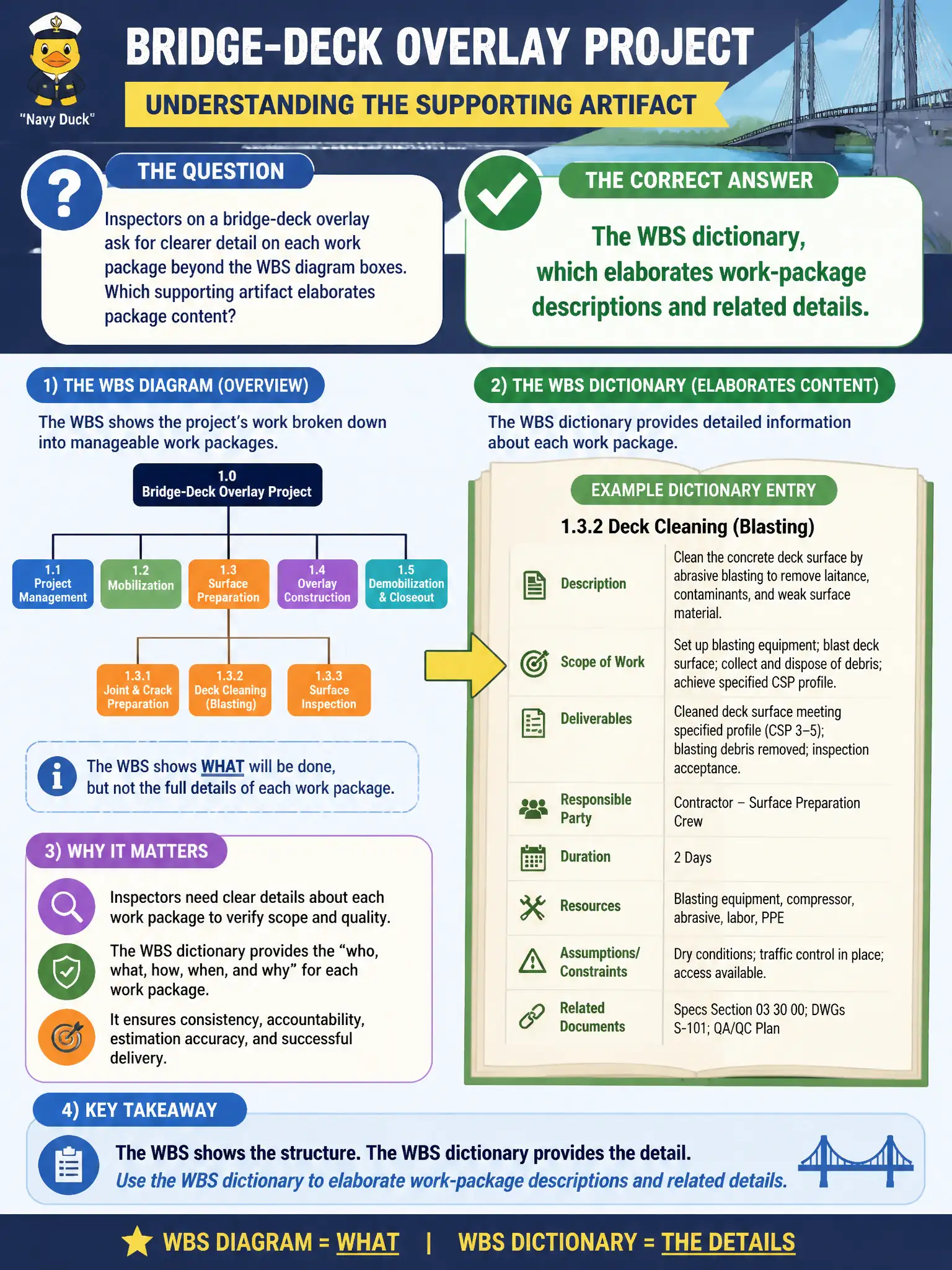
The WBS dictionary is the legend under the bridge WBS boxes—what each package includes, so inspectors are not guessing from a bare label. The diagram names the boxes; the dictionary fills them in.
Full Explanation
Inspectors on a bridge-deck overlay who need clearer detail beyond WBS diagram boxes should use the WBS dictionary, which elaborates work-package descriptions and related details. The dictionary turns boxes into shared understanding of scope, deliverables, and often related planning information. That clarity improves inspection alignment on civic bridge work.
A communications RACI for council briefings addresses stakeholder roles, not work-package scope text. Procurement advertisement dates without scope text schedule buying activities, not package content. A parking-fine fee schedule for downtown meters is unrelated municipal policy content.
Exam caveat: Associates should know the WBS dictionary as the companion elaboration to the WBS hierarchy. Diagram alone is often insufficient for execution and control.
Operational check: open or create WBS dictionary entries for overlay packages, include scope boundaries and completion expectations inspectors need, and baseline updates to those entries through change control when scope shifts. Keep dictionary entries version-controlled with the scope baseline. Inspectors should cite dictionary text when disputing package boundaries on the overlay.