
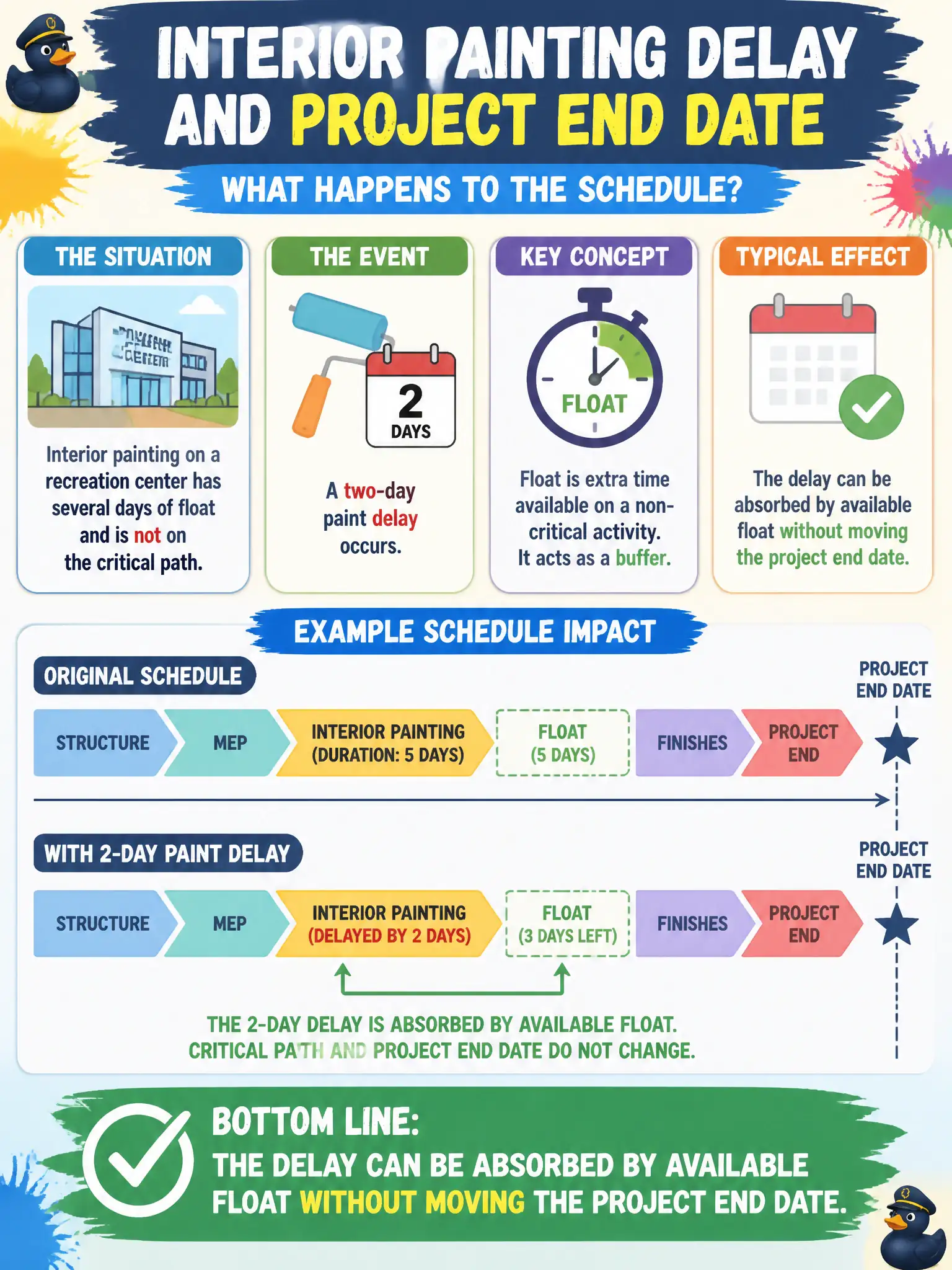
Interior painting on a recreation center has several days of float and is not on the critical path. A two-day paint delay occurs. What is the typical schedule effect on the project end date?
Select an answer to reveal the explanation.
Short Explanation
Float is spare time in the paint lane. A short delay that fits inside that spare time is like being a little late to a side appointment that still leaves the main meeting start untouched—the rec center opening can stay put.
Full Explanation
Interior painting on a recreation center with several days of float that is not on the critical path can typically absorb a two-day paint delay without moving the project end date. Total float is the amount an activity may slip without delaying project finish, given network logic. Using float is normal predictive schedule behavior on civic builds.
Assuming any delay always slips the end date ignores float and critical-path concepts. Assuming float converts delay into early finish reverses cause and effect. Assuming float is deleted automatically so painting becomes critical the same day misstates how networks update—float shrinks as delay consumes it, and criticality changes only if float is exhausted relative to other paths.
Exam caveat: CAPM schedule questions often test float literacy. Associates must know delays within float usually spare the end date, while critical-path delays do not.
Operational check: confirm painting’s remaining total float after the two-day slip, update the schedule, verify the project finish date is unchanged, and watch for near-critical status if float becomes small. After consuming float, update near-critical indicators so painting does not quietly become critical without notice. Float is a renewable management signal only if the schedule is kept current.