
Before field mobilization on a culvert replacement, which predictive planning activity is most appropriate?
Select an answer to reveal the explanation.
Short Explanation
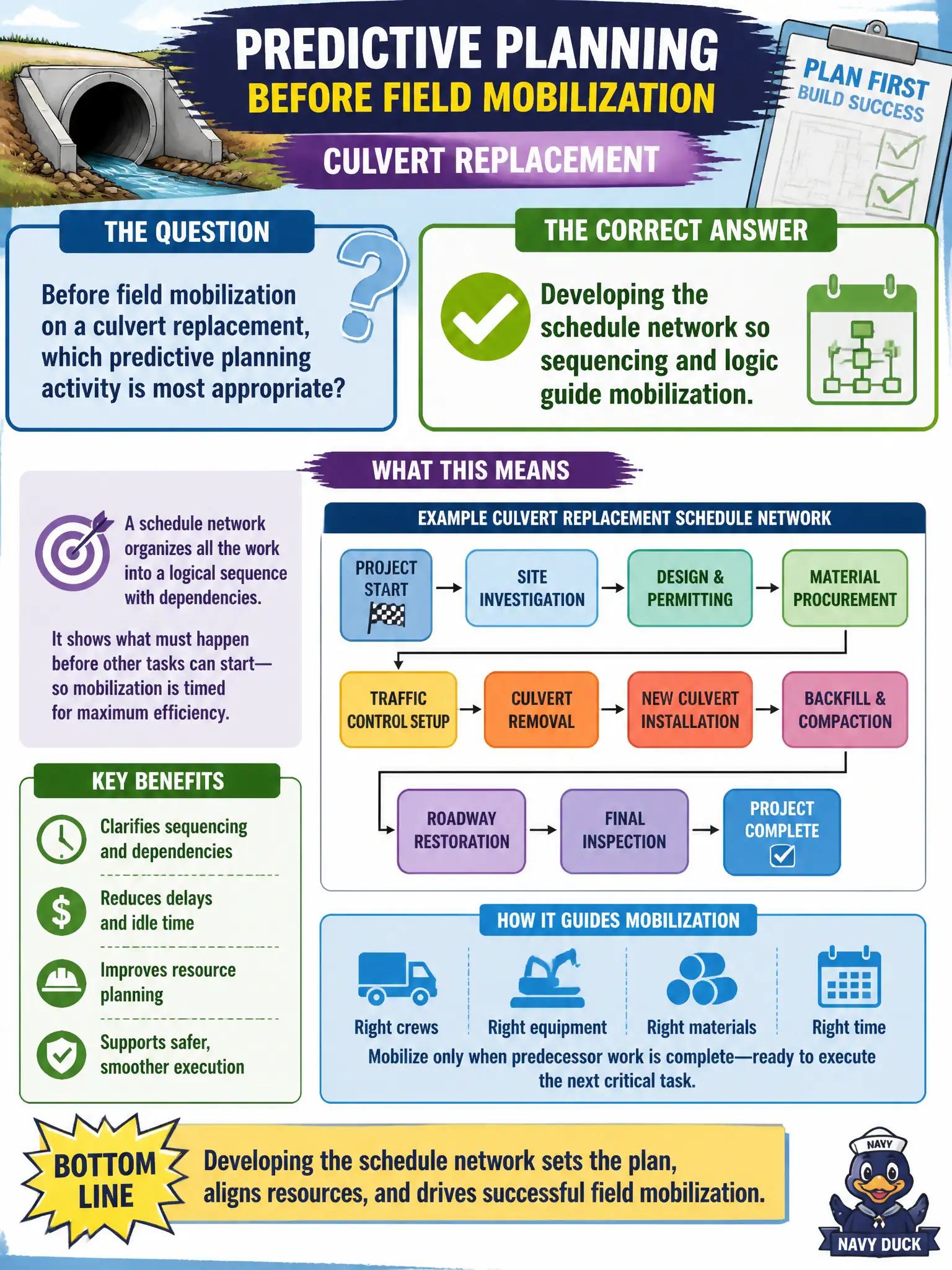
You map the route before the convoy rolls. Building the schedule network first tells you what must finish before crews hit the culvert site. Mobilizing without logic is how idle trucks and surprise predecessors appear.
Full Explanation
Before field mobilization on a culvert replacement, developing the schedule network so sequencing and logic guide mobilization is the appropriate predictive planning activity. Network logic reveals dependencies and the critical path that should drive crew timing. Mobilizing without a network invites idle time and out-of-sequence work on county roads.
Mobilizing crews first and drafting the network only after demobilization abandons planning. Deleting dependencies so every activity can start on day one destroys logic needed for coordination. Waiting until substantial completion to identify the critical path makes the path a historical curiosity rather than a control tool.
Exam caveat: CAPM schedule planning places network development before execution for predictive work. Associates should know why logic precedes mobilization.
Operational check: build the activity list and precedence network for the culvert job, identify the critical path, align mobilization dates to logic and permits, then release crews against that schedule. Validate permit and utility dependencies in the network before locking mobilization. A logic error discovered after crews arrive is far costlier than an extra planning day on culvert work.