
On a predictive street-lighting upgrade, how do requirements documentation and quality checklists differ as project components?
Select an answer to reveal the explanation.
Short Explanation
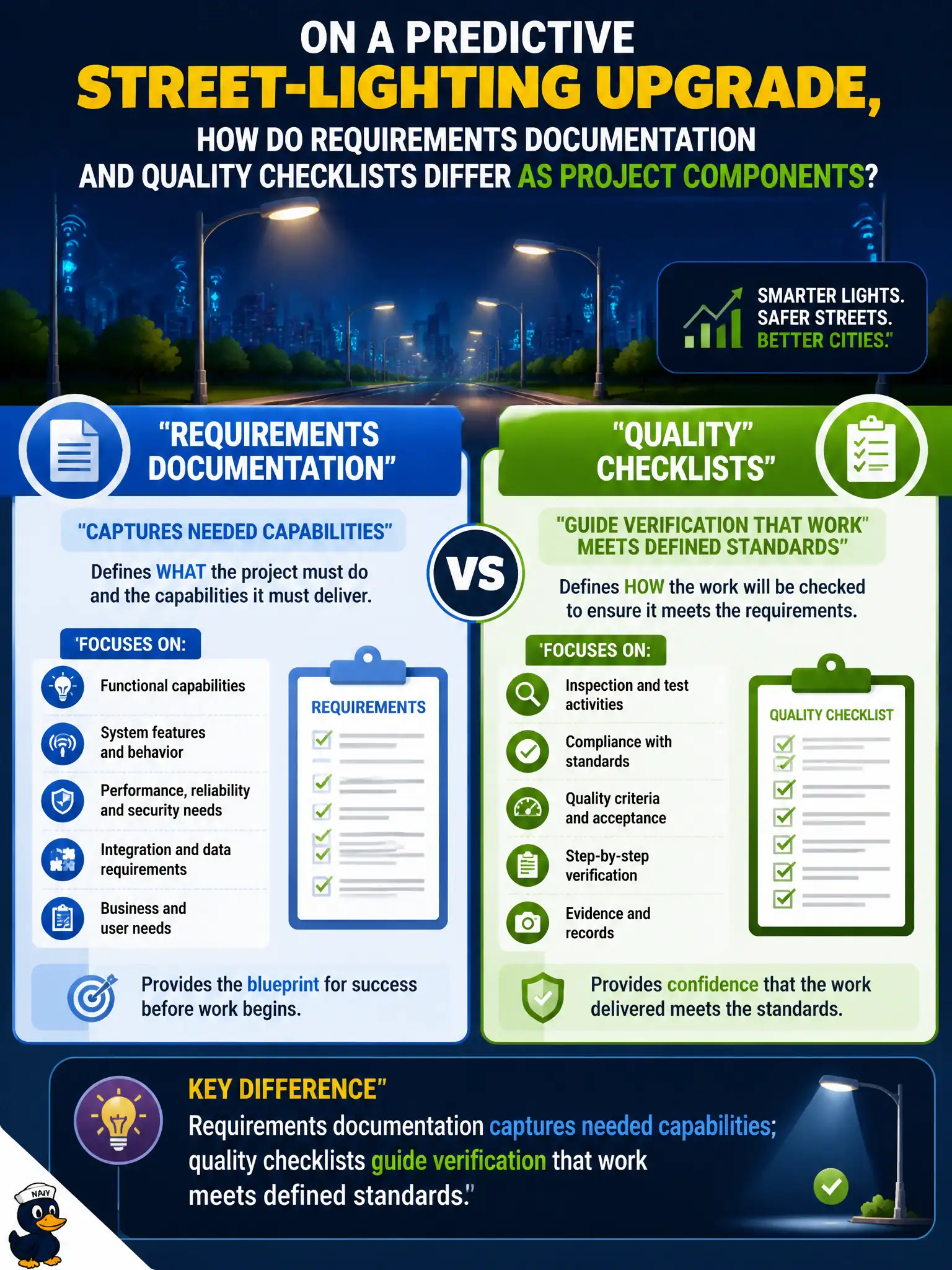
Requirements say what “good lighting” must include; checklists help inspectors confirm the install matches that bar. Different jobs, different paper. Calling them the same thing blurs planning with verification.
Full Explanation
On a predictive street-lighting upgrade, requirements documentation captures needed capabilities, while quality checklists guide verification that work meets defined standards. One states what is needed; the other helps confirm installed work complies. Keeping them distinct prevents verification tools from being mistaken for requirements baselines on civic construction.
Neither artifact exists only to record vendor invoice numbers. Quality checklists do not authorize the project, and requirements documentation is not merely a defect list. They are not identical artifacts renamed for different stakeholders; conflating them blurs planning versus control.
Exam caveat: CAPM component literacy includes knowing what each project document is for. Requirements versus quality tools is a classic pairing.
Operational check: maintain approved lighting requirements as the need baseline, derive inspection checklists from those standards and specs, and use completed checklists as quality-control evidence against the requirements. Derive checklist items from requirements and specs so verification stays traceable. Orphan checklists that do not map to requirements create busywork without proving capability delivery.