
A pump-station project advances through design, procure, build, and commission with formal gates between phases. What does this pattern exemplify?
Select an answer to reveal the explanation.
Short Explanation
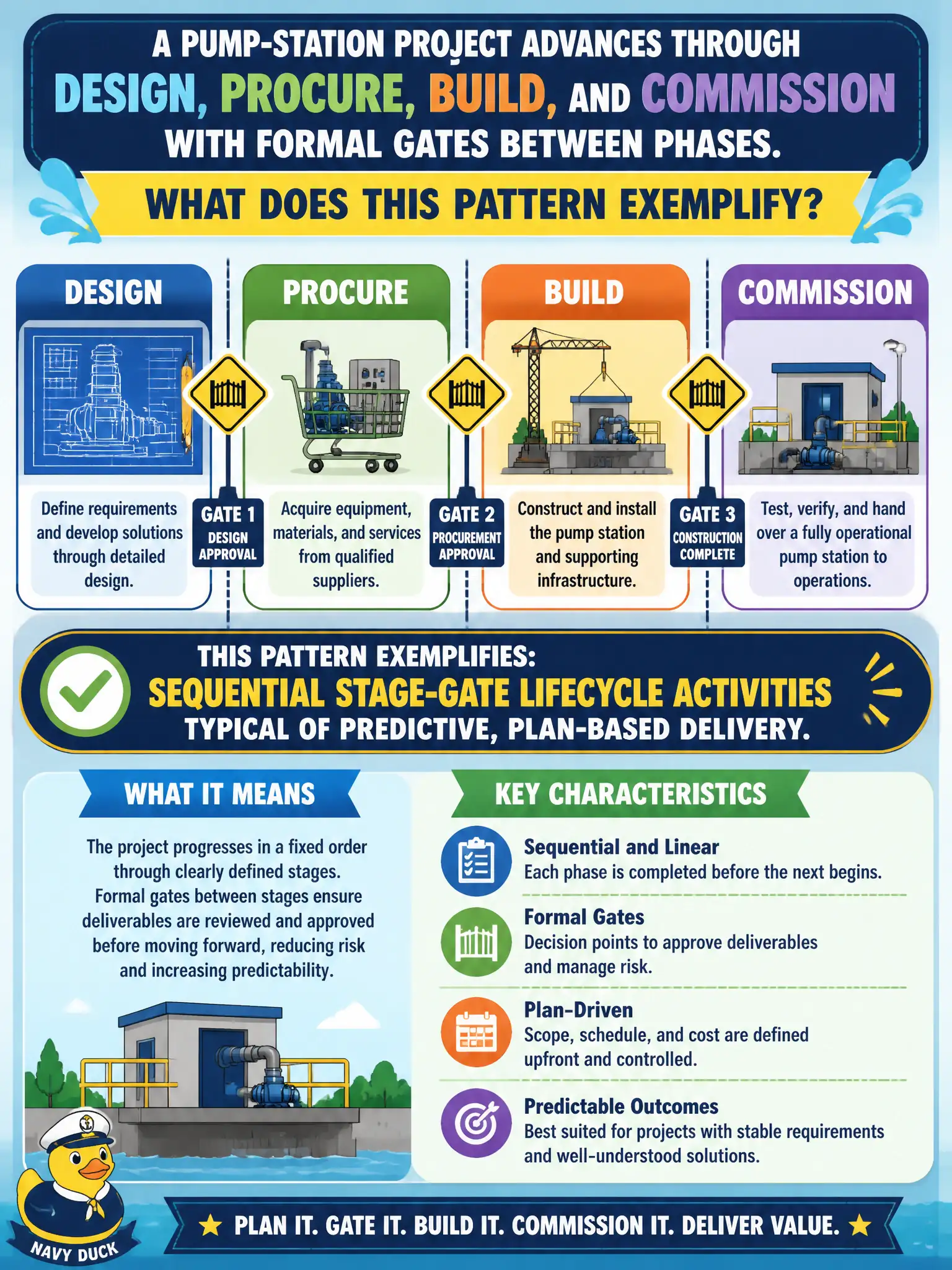
Design, then buy, then build, then commission—with a gate between each—is the classic predictive parade. Each stage earns the right to start the next. Skipping gates or reversing order is how unfinished designs meet expensive concrete.
Full Explanation
A pump-station project that advances through design, procure, build, and commission with formal gates between phases exemplifies sequential stage-gate lifecycle activities typical of predictive, plan-based delivery. Each gate confirms readiness before the next major commitment of public funds and field work. That pattern matches regulated infrastructure more often than continuous unstructured flow.
A Kanban-only flow with no phase reviews or approved designs is a different control philosophy. Forbidding procurement until after public opening day reverses normal predictive sequencing. Random phase order with commissioning before any design package exists is not a coherent stage-gate model.
Exam caveat: Associates should recognize stage-gate as a predictive organizing pattern. Gates are decision points tied to artifacts, not decorative meetings.
Operational check: define entry/exit criteria for design, procure, build, and commission gates; attach required approvals and documents; and prevent phase skipping unless a formal exception is approved. Gate packages should include evidence checklists reviewers sign. A stage-gate without artifacts is only a calendar milestone and will not protect predictive control on the pump station.