
On a city parking-garage build using fixed-price packages, which predictive activity should precede awarding those packages?
Select an answer to reveal the explanation.
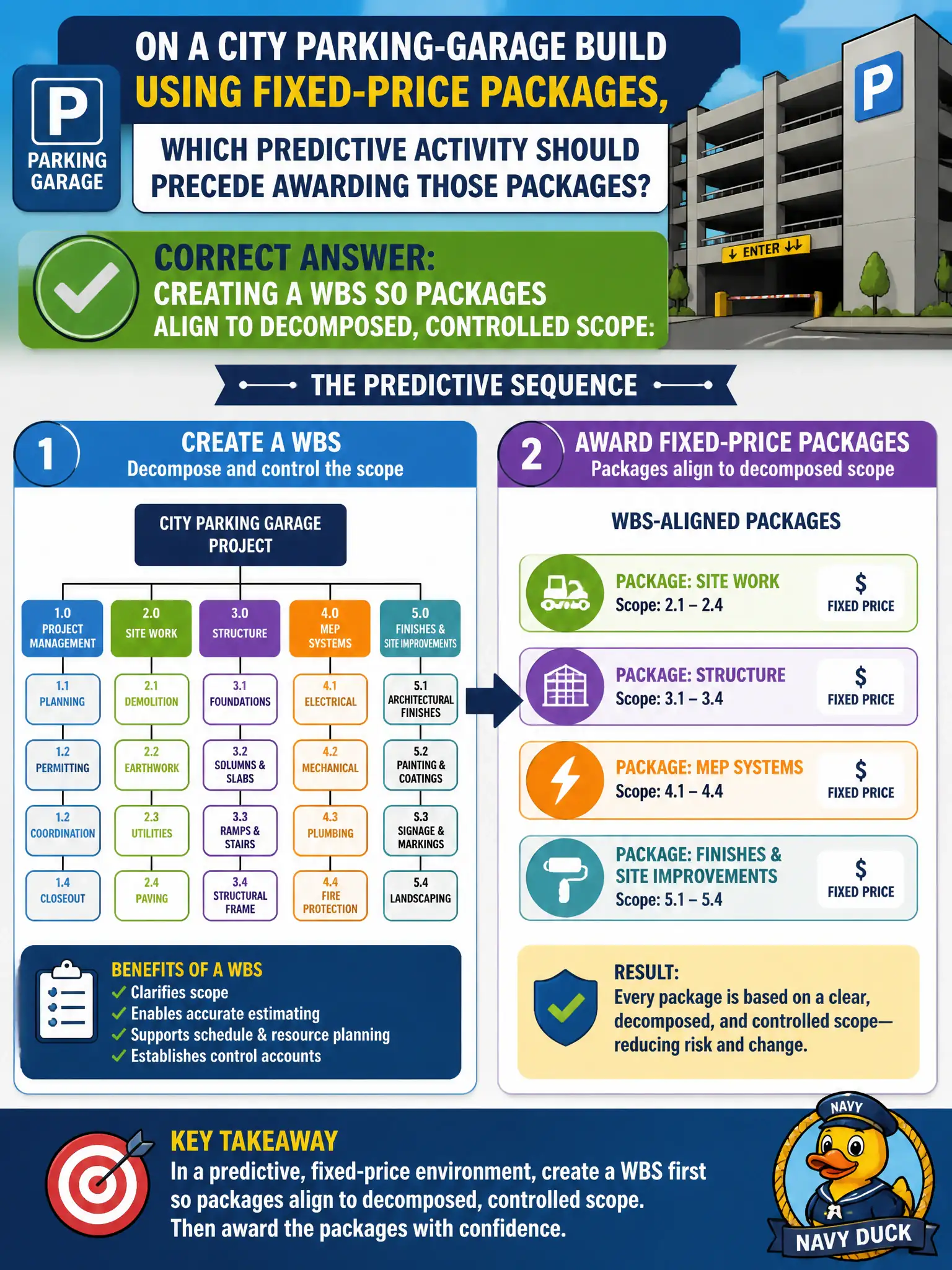
Short Explanation
You do not hand out fixed-price boxes until you know what is inside each box. A WBS decomposes the garage work so procurement packages match clear scope. Award first, define later is how claims and gaps show up.
Full Explanation
On a city parking-garage build using fixed-price packages, creating a WBS so packages align to decomposed, controlled scope should precede awarding those packages. Decomposition clarifies what each contractor is buying into and supports estimate and control boundaries. Without a WBS, fixed-price awards risk ambiguous scope and weak change control later.
Closing the project and archiving lessons learned first is a closeout activity, not a predecessor to award. Measuring earned value without defined work packages lacks a structured basis for progress. Letting each contractor invent scope after notice to proceed abandons owner-controlled decomposition.
Exam caveat: CAPM associates should see the WBS as a bridge between scope baseline and procurement packaging in predictive work. Package awards should map to decomposed scope, not the reverse.
Operational check: complete WBS decomposition for garage deliverables, define package boundaries from WBS elements, align bid documents to those boundaries, then solicit and award fixed-price packages. Trace each fixed-price package ID to WBS codes in the bid form so change orders later map cleanly. Ambiguous package boundaries are a leading cause of claims on municipal garage builds.