
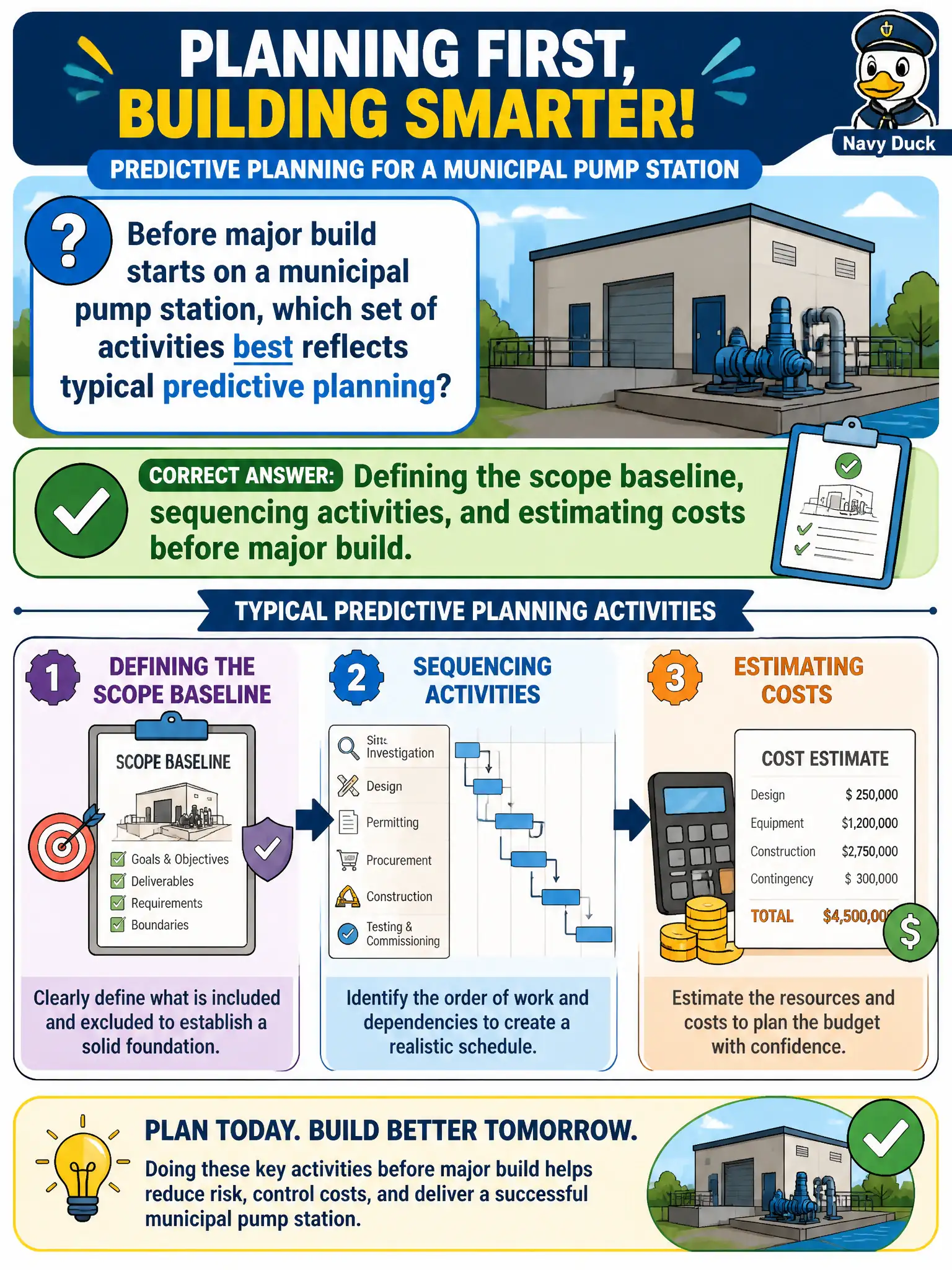
Before major build starts on a municipal pump station, which set of activities best reflects typical predictive planning?
Select an answer to reveal the explanation.
Short Explanation
Predictive planning front-loads the hard thinking: what is in scope, in what order, and roughly what it costs. Doing that before the big dig is the whole point of plan-based work. Waiting until the end to define scope is how surprise change orders breed.
Full Explanation
Before major build starts on a municipal pump station, typical predictive planning includes defining the scope baseline, sequencing activities, and estimating costs. Those activities create the controlled starting point for construction. Civic capital projects that skip this upfront work often discover scope and funding gaps after crews mobilize.
Deferring scope definition until after substantial completion inverts predictive logic. Skipping cost estimates until invoices arrive abandons proactive budgeting. Treating the charter as the only plan and ignoring activity sequencing leaves initiation without planning detail needed to execute.
Exam caveat: CAPM predictive planning is cumulative: authorize, then elaborate scope, time, and cost before major execution. Associates should recognize the planning package, not confuse charter with complete plan.
Operational check: freeze a scope baseline, develop the activity sequence and schedule, complete cost estimates aligned to the WBS, and obtain plan approval before authorizing major pump-station build work. Package the planning outputs for sponsor approval as an integrated plan set, not scattered spreadsheets. Only after that approval should major civil construction commitments proceed on the pump station.