
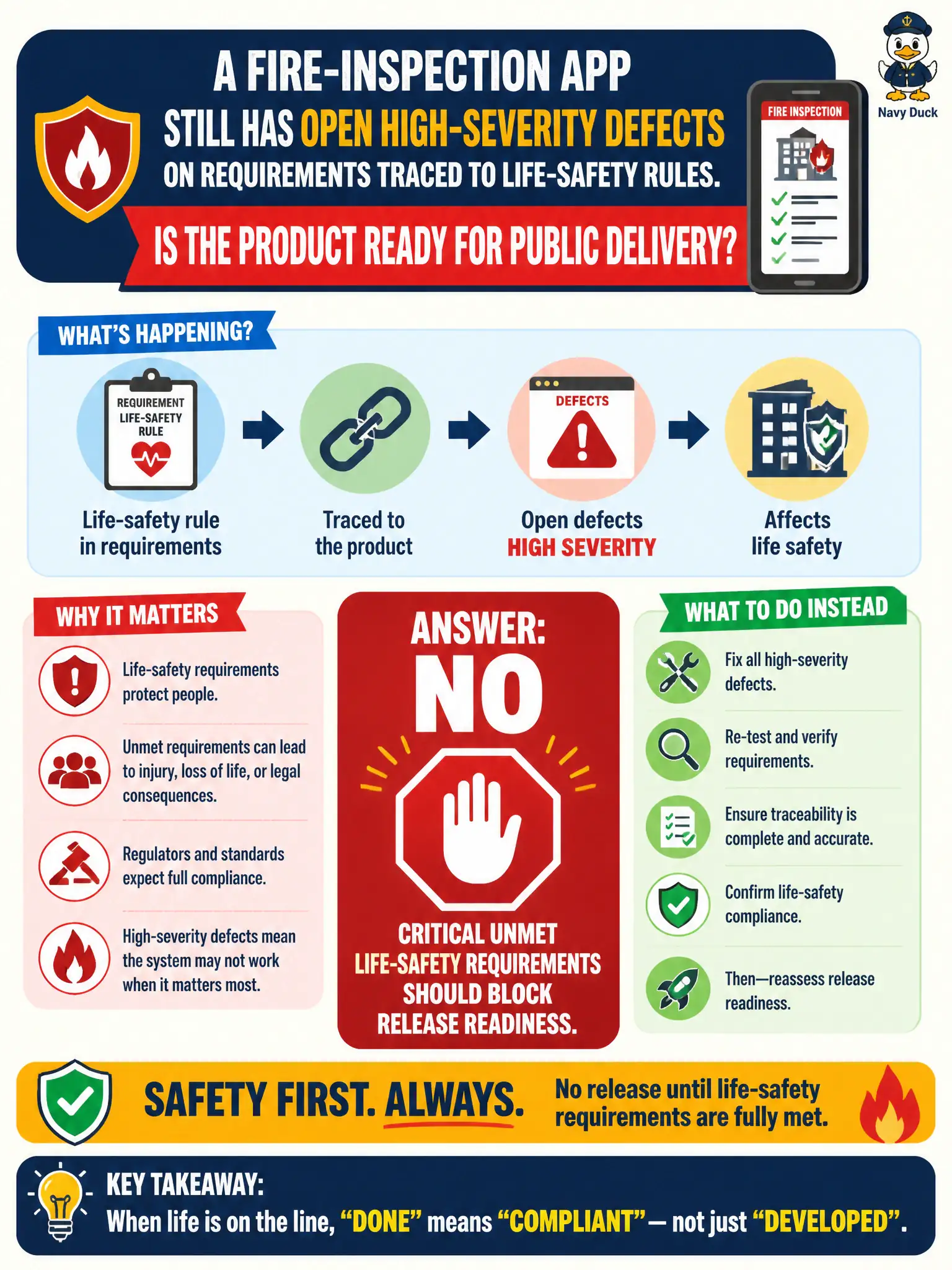
A fire-inspection app still has open high-severity defects on requirements traced to life-safety rules. Is the product ready for public delivery?
Select an answer to reveal the explanation.
Short Explanation
Life-safety bugs aren’t “ship and hope.” If high-severity defects sit on traced safety requirements, the readiness light stays red—public delivery waits.
Full Explanation
A fire-inspection app with open high-severity defects on requirements traced to life-safety rules is not ready for public delivery. Critical unmet life-safety requirements should block release readiness because civic harm and liability outweigh calendar pressure or marketing desire. Readiness determination must privilege safety-traced defects over cosmetic completion signals such as a polished UI.
Saying any remaining defect is acceptable if the UI looks finished fails conceptually because visual finish does not satisfy life-safety requirements or close traced defects. Saying life-safety defects may ship if marketing needs the date fails because marketing dates do not override safety readiness for public inspection tools. Saying only low-severity typos can ever block a municipal release fails because it inverts severity logic; high-severity life-safety defects are classic blockers.
Exam caveat: Life-safety requirement defects are release blockers regardless of UI polish or marketing dates. Operational check: halt public delivery of the fire-inspection app, remediate high-severity life-safety defects, re-run linked tests, and obtain safety stakeholder confirmation before reconsidering readiness.