
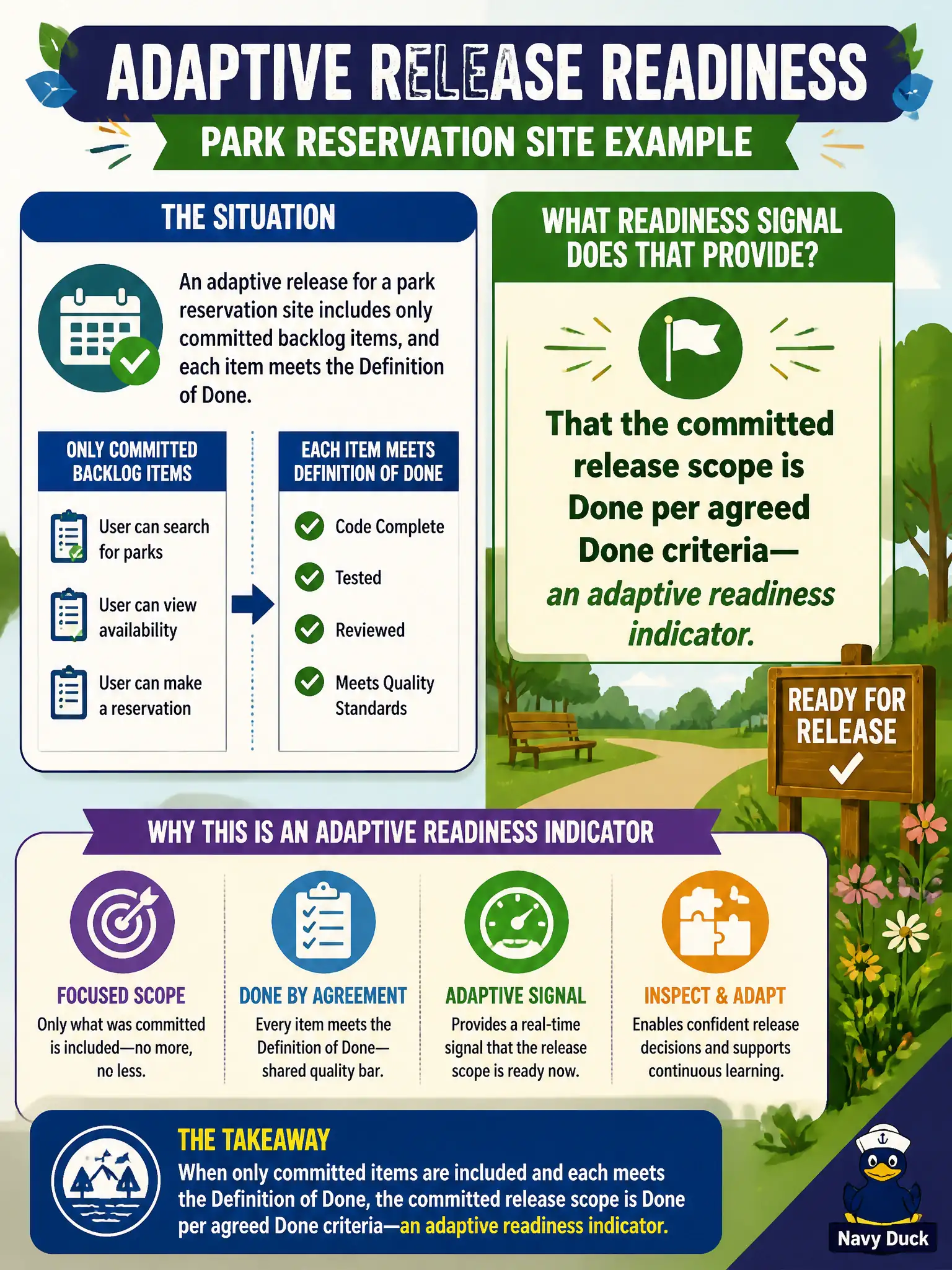
An adaptive release for a park reservation site includes only committed backlog items, and each item meets the Definition of Done. What readiness signal does that provide?
Select an answer to reveal the explanation.
Short Explanation
If the release slice’s backlog items are all Done, you’ve got the adaptive green light for that scope—like every reserved campsite actually having a confirmed booking. Stretch goals waiting outside don’t block that signal.
Full Explanation
An adaptive release for a park reservation site that includes only committed backlog items, with each item meeting the Definition of Done, provides a readiness signal that the committed release scope is Done per agreed Done criteria. That is an adaptive readiness indicator grounded in completed, accepted work rather than in unfinished stretch goals. Civic adaptive releases should ship what is Done, not what was wished during planning workshops.
Requiring unfinished stretch goals to ship immediately fails conceptually because stretch goals outside Done are not ready for public use. Claiming predictive critical-path analysis is complete fails because that is a different life-cycle readiness concept than adaptive Done. Claiming no product owner review is ever needed again fails because Done for a release does not retire ongoing product ownership of the reservation product.
Exam caveat: Adaptive readiness centers on committed scope meeting Definition of Done, not on shipping undone stretch work. Operational check: list committed park-reservation items, confirm each meets Definition of Done and product-owner acceptance, explicitly exclude unfinished stretch goals from the release package, and proceed only if ops support for the Done scope is ready.