
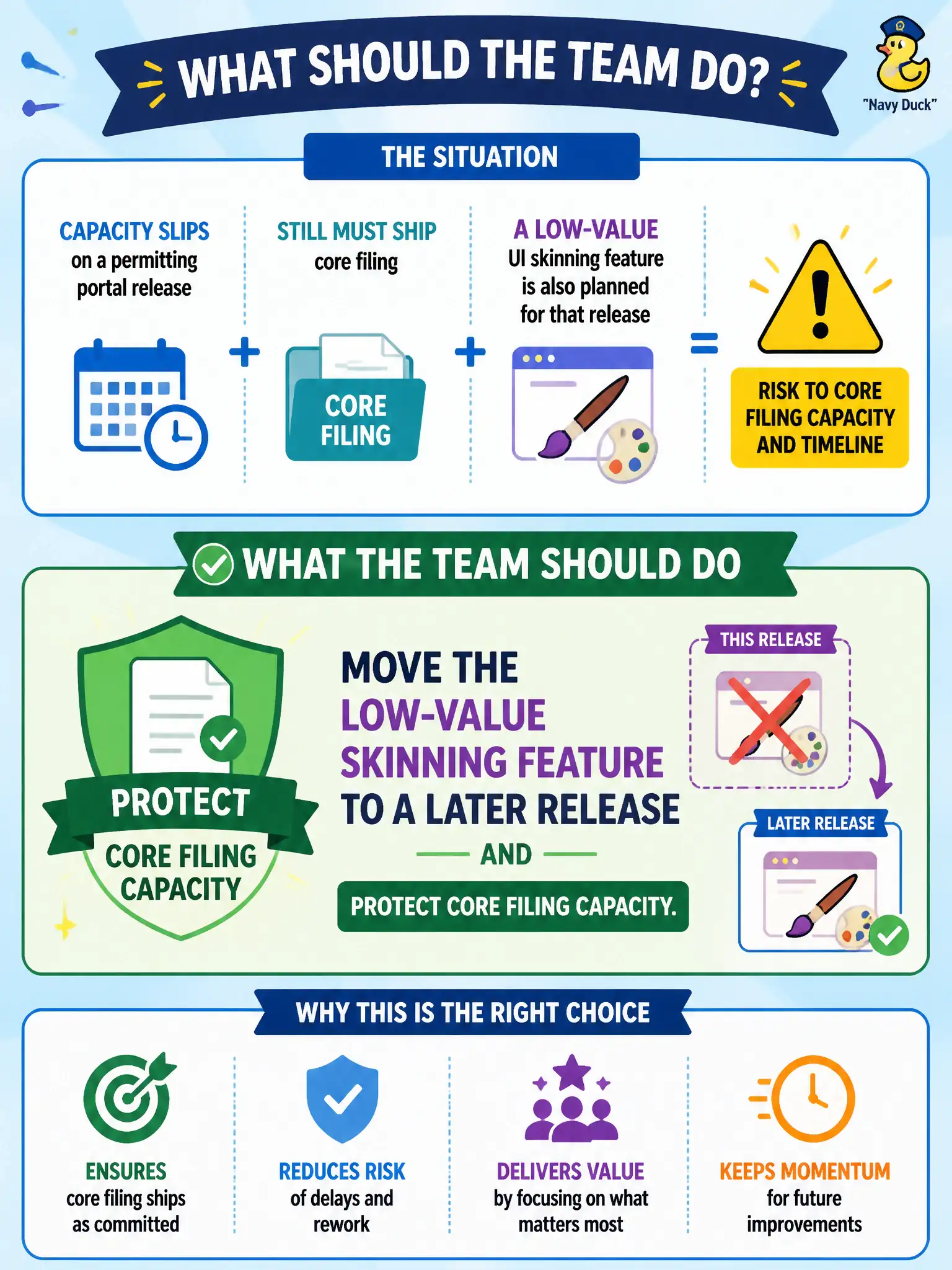
Capacity slips on a permitting portal release that still must ship core filing. A low-value UI skinning feature is also planned for that release. What should the team do?
Select an answer to reveal the explanation.
Short Explanation
When the suitcase won’t close, the fancy luggage tag comes off before the passport. Skinning can wait; core filing stays on this flight.
Full Explanation
When capacity slips on a permitting portal release that still must ship core filing, and a low-value UI skinning feature is also planned, the team should move the low-value skinning feature to a later release and protect core filing capacity. Release triage under constraint preserves civic mandatory outcomes over cosmetic work. Capacity data should change scope commitments rather than be ignored until the date fails.
Cutting core filing to keep skinning fails conceptually because it prioritizes cosmetics over the portal’s essential filing mission for residents and clerks. Adding unpaid overtime as the only allowed response fails because unpaid overtime is neither a sustainable plan nor a substitute for scope triage, and it ignores capacity signals. Ignoring capacity data and keeping both items committed fails because false commitment guarantees either quality loss or a missed date on core filing.
Exam caveat: Under capacity pressure, defer low-value work before sacrificing core civic capabilities. Operational check: move UI skinning out of the current permitting release, reconfirm core filing acceptance criteria and remaining capacity, and communicate the deferral to stakeholders with the capacity rationale documented in release notes.