
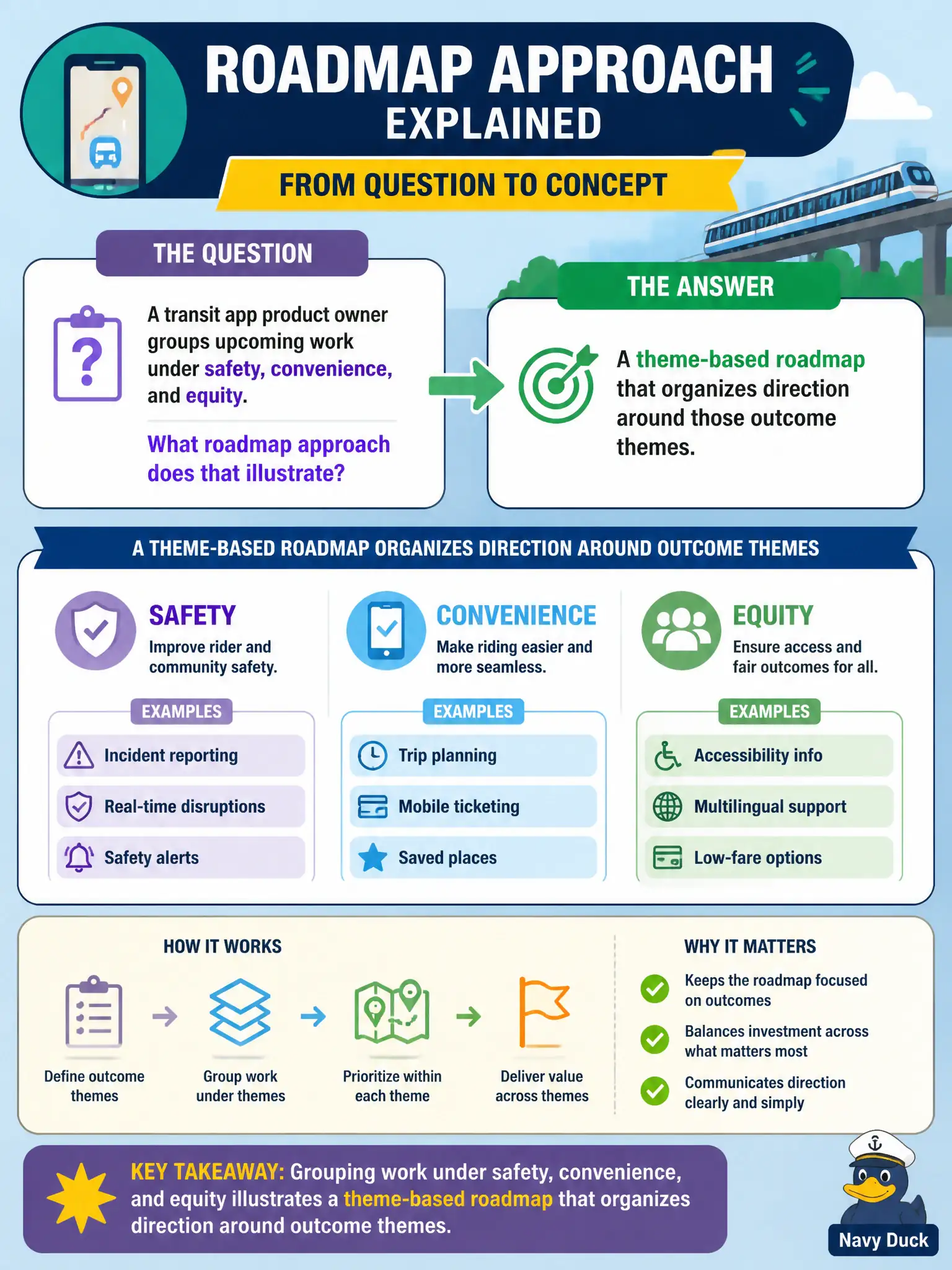
A transit app product owner groups upcoming work under safety, convenience, and equity. What roadmap approach does that illustrate?
Select an answer to reveal the explanation.
Short Explanation
Safety, convenience, and equity work like theme banners on a transit roadmap. They help everyone see why upcoming work matters. That beats handing riders a raw pile of ungrouped tickets.
Full Explanation
When a transit app product owner groups upcoming work under safety, convenience, and equity, that illustrates a theme-based roadmap organizing direction around outcome themes. Theme-based roadmaps help civic stakeholders discuss why work matters—not only which tickets exist—while still allowing detailed backlog items underneath each theme. Riders and oversight bodies can see values reflected in delivery direction.
A pure critical-path schedule that lists only task predecessors with no themes fails conceptually because predecessor logic alone does not communicate outcome themes to stakeholders. A hardware bill of materials as the only communication to riders fails because BOM content is procurement detail, not product direction about safety, convenience, or equity. A timesheet export replacing stakeholder communication fails because labor hours do not express those outcome themes or upcoming capability windows.
Exam caveat: Theme-based roadmaps communicate directional outcomes; schedules, BOMs, and timesheets serve other purposes. Operational check: publish the transit roadmap under safety, convenience, and equity themes with approximate timing, link backlog epics under each theme, and use that view in the next stakeholder direction review with the product owner.