
Partner vendors need to know when public APIs for a city open-data hub will be ready. How can the product roadmap help externally?
Select an answer to reveal the explanation.
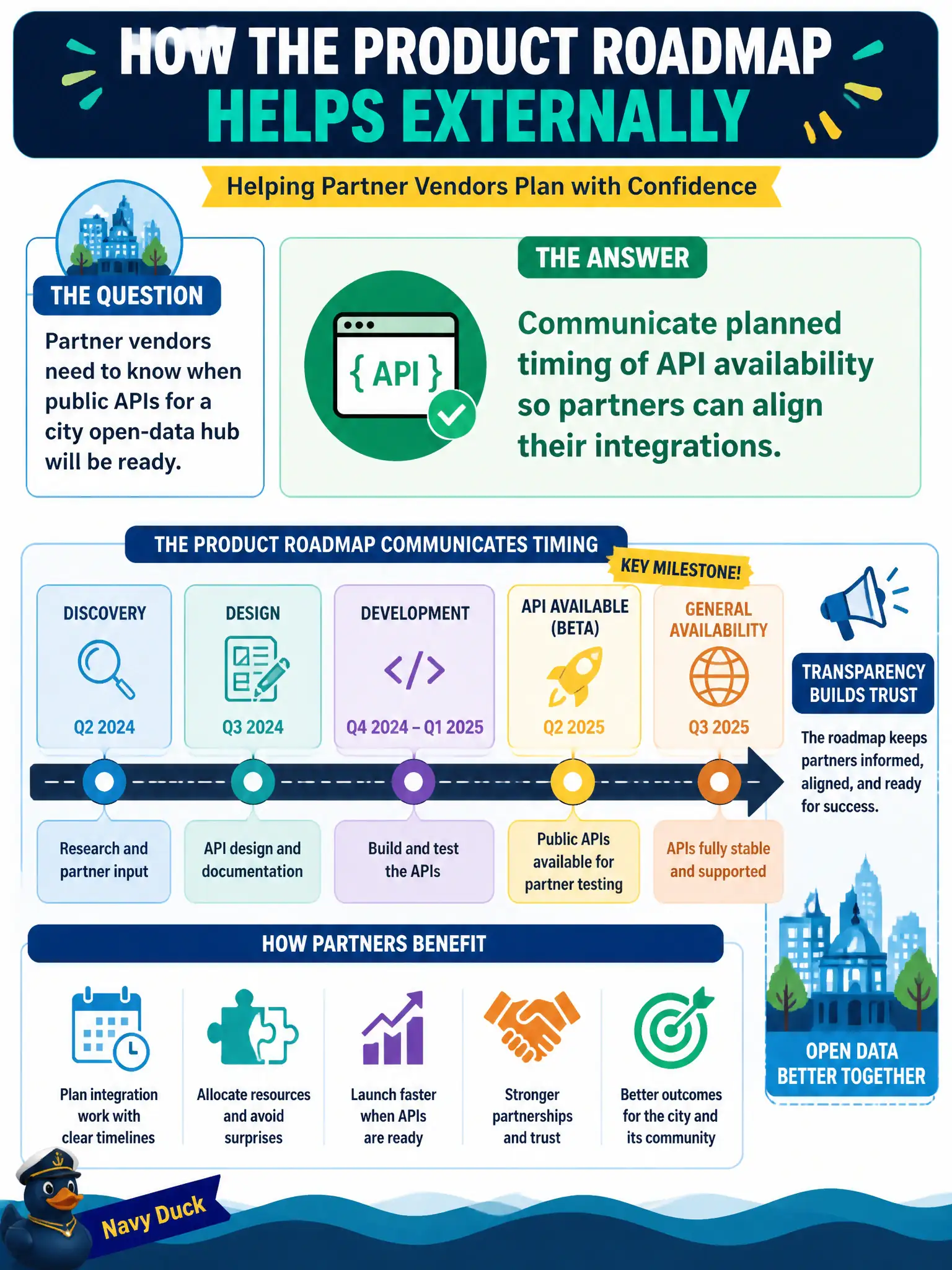
Short Explanation
Partners watching for an open-data API need a clear on-ramp signal. The product roadmap is how you share roughly when that capability lands. Vacation calendars and timesheets do not help vendors plan integrations.
Full Explanation
Partner vendors that need to know when public APIs for a city open-data hub will be ready can use the product roadmap to communicate planned timing of API availability so partners can align their integrations. External coordination is a legitimate roadmap use in civic ecosystems where multiple organizations deliver resident value together. Withholding timing forces partners to guess and increases integration failure risk at launch.
Withholding all timing hints because vendors should never plan against product direction fails conceptually because partners cannot integrate blindly; coordinated timing is part of responsible platform stewardship. Replacing partner communication with an internal-only timesheet summary fails because timesheets do not communicate API readiness themes or windows. Publishing only individual developer vacation calendars fails because personal calendars are not product direction and create noise without capability timing.
Exam caveat: Roadmaps support external partner alignment on capability timing, not only internal storytelling. Operational check: publish open-data API timing themes on the roadmap shared with partner vendors, note caveats appropriate to adaptive uncertainty, and update partners when windows shift rather than staying silent until the API appears.