
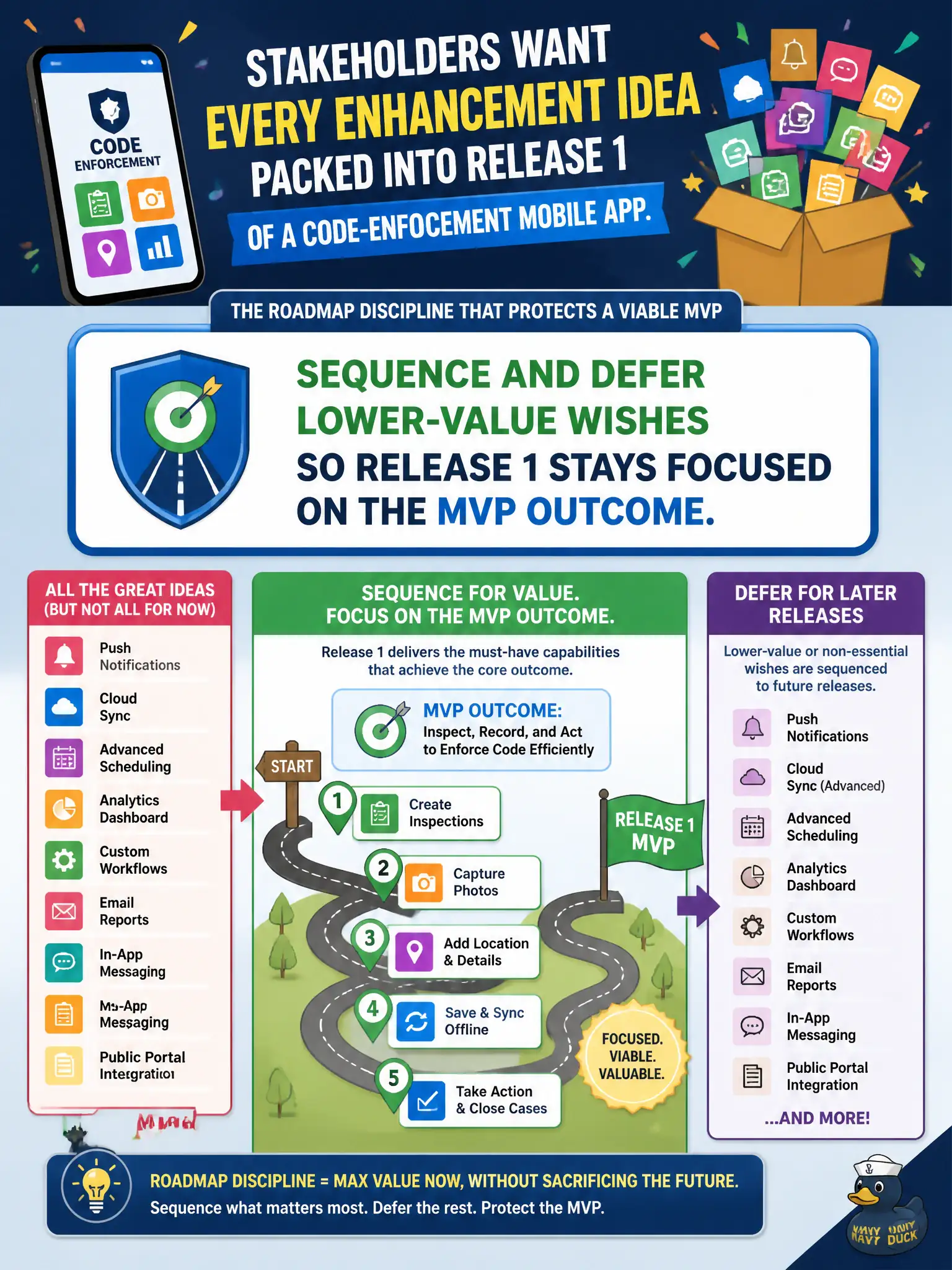
Stakeholders want every enhancement idea packed into release 1 of a code-enforcement mobile app. What roadmap discipline protects a viable MVP?
Select an answer to reveal the explanation.
Short Explanation
Stuffing every wishlist item into release 1 is like packing the whole attic into a carry-on—zippers burst. Roadmap sequencing parks nice-to-haves later so the MVP can actually fly.
Full Explanation
When stakeholders want every enhancement idea packed into release 1 of a code-enforcement mobile app, roadmap discipline protects a viable MVP by sequencing and deferring lower-value wishes so release 1 stays focused on the MVP outcome. Deferral is not denial; it is ordered delivery that preserves quality, training readiness, and date credibility for civic field use by inspectors.
Accepting every wish into release 1 and extending the date only after quality collapses fails conceptually because it plans for failure instead of protecting MVP scope up front. Deleting the roadmap and letting each developer choose personal pet features fails because individual preference replaces product strategy and stakeholder alignment. Promising all wishes for release 1 while secretly planning none of them fails because deceptive planning destroys trust and still fails delivery governance.
Exam caveat: MVP protection on exams often means deferring lower-value scope, not promising everything or abandoning planning. Operational check: classify code-enforcement wishes into MVP versus later releases, publish the sequenced roadmap, obtain stakeholder acknowledgment of deferred items, and keep release 1 capacity reserved for MVP outcomes inspectors need first.