
The mayor’s OKRs emphasize turning vacant lots into community gardens. How should the product roadmap for a lot-reuse platform help?
Select an answer to reveal the explanation.
Short Explanation
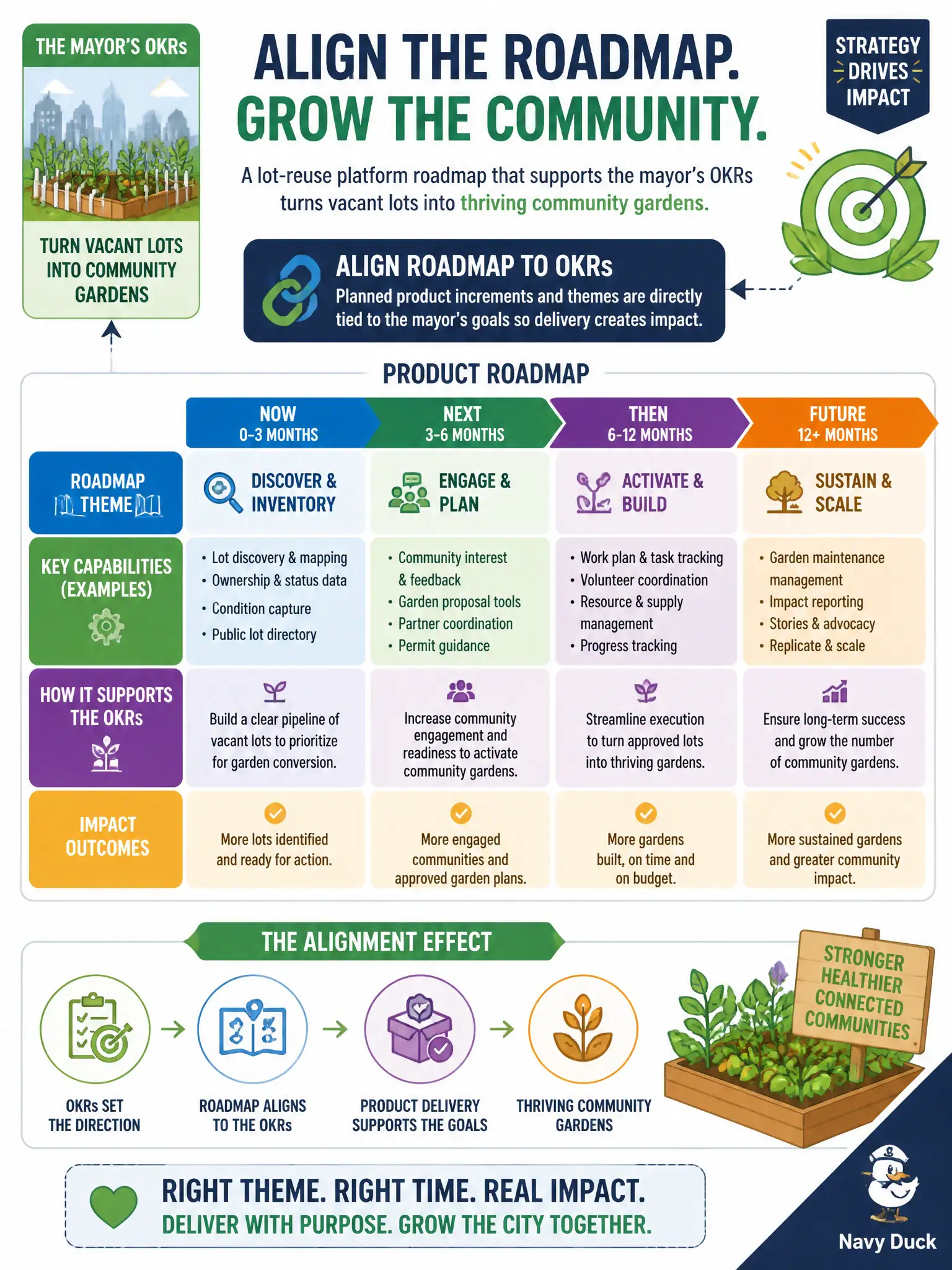
If the mayor’s scoreboard says more gardens on empty lots, the product should move that score. The roadmap is where strategy becomes planned increments. Show intake, matching, and permits themes—not random IT chores that ignore the OKRs.
Full Explanation
When the mayor’s OKRs emphasize turning vacant lots into community gardens, the product roadmap for a lot-reuse platform should align planned product increments and themes with those strategic OKRs so delivery supports the goals. Roadmaps are a translation layer from civic strategy into timed product direction. Without that alignment, teams may ship technically interesting features that miss the public outcome leadership funded.
Hiding OKRs from the delivery team so the roadmap stays purely technical fails conceptually because pure technical roadmaps drift from strategic intent and make success hard to judge. Replacing OKRs with unrelated hardware refresh tickets fails because infrastructure tickets are not a substitute for outcome-aligned product themes about lot reuse. Freezing OKRs out of planning because roadmaps never connect to strategy fails because connecting delivery to strategy is a primary roadmap purpose in portfolio conversations.
Exam caveat: Product roadmaps should reflect strategic OKRs; they are not strategy-free technical wish lists. Operational check: map lot-reuse roadmap themes to the mayor’s garden OKRs, show the linkage in the next steering review, and reprioritize or defer themes that do not advance those outcomes.