
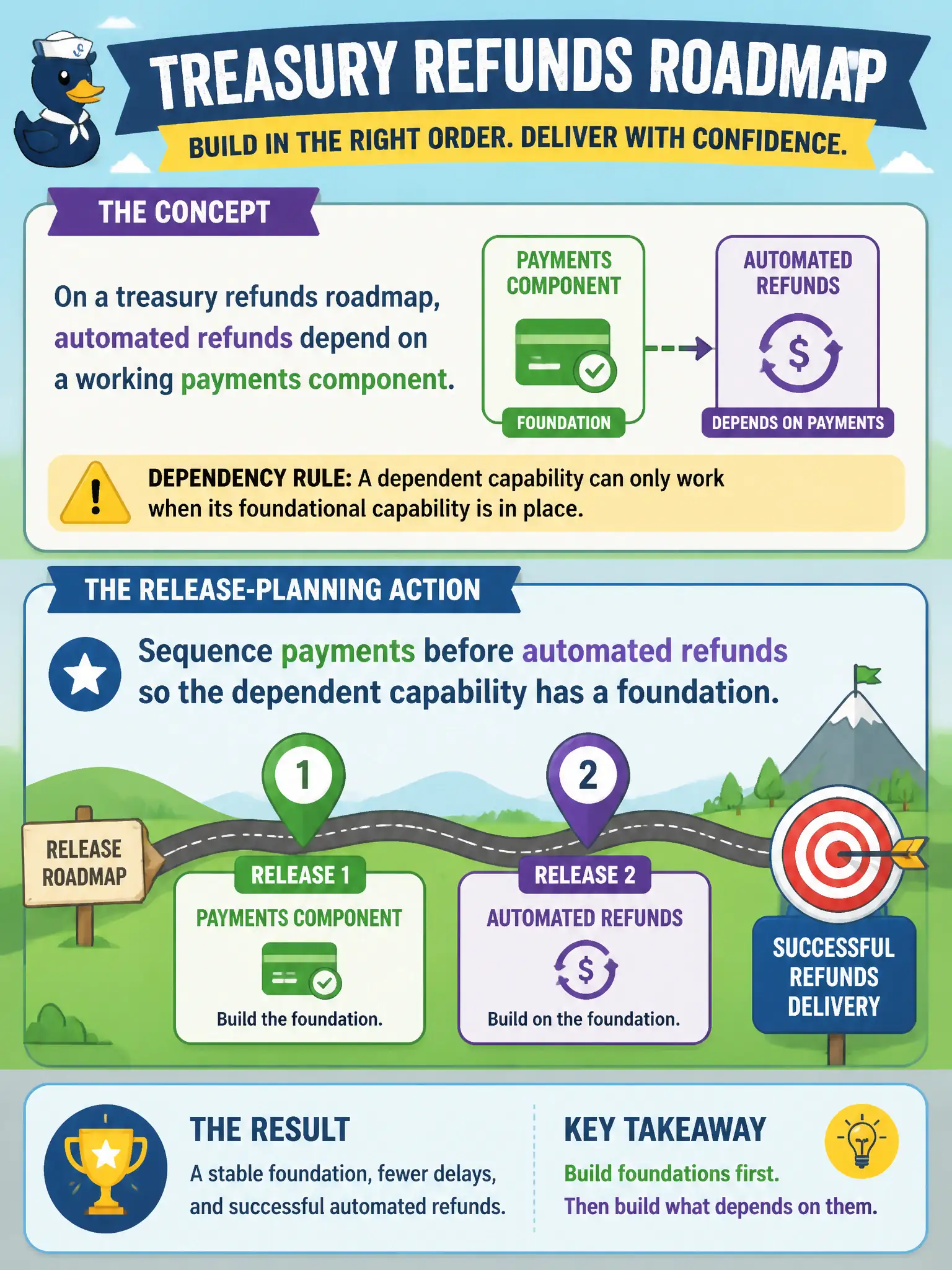
On a treasury refunds roadmap, automated refunds depend on a working payments component. What release-planning action respects that dependency?
Select an answer to reveal the explanation.
Short Explanation
You can’t auto-refund money through a pipe that isn’t connected yet. Payments first, then automated refunds—same as laying plumbing before installing the faucet.
Full Explanation
On a treasury refunds roadmap, automated refunds depend on a working payments component. Release planning should sequence payments before automated refunds so the dependent capability has a foundation. Respecting technical and business dependencies prevents civic releases that promise automation the platform cannot yet execute, which would confuse residents and finance staff alike.
Scheduling automated refunds in release 1 and payments in release 4 fails conceptually because it inverts the dependency and creates urgency theater rather than a workable foundation. Removing payments from the roadmap because dependencies are ignored in adaptive work fails because adaptive delivery still respects real dependencies even while remaining flexible about ordering within constraints. Delivering automated refunds without any payment capability fails because the dependent feature cannot function without its foundation.
Exam caveat: Roadmaps and release plans must honor dependencies; agility does not mean ignoring prerequisite capabilities. Operational check: reorder the treasury roadmap so payments precede automated refunds, document the dependency visibly for stakeholders, and verify release 1 scope does not include refund automation without the payments foundation in place.