
A human services team wants to see how citizens move from eligibility check to benefit renewal on a new portal. Which workshop technique best visualizes that journey for story discovery?
Select an answer to reveal the explanation.
Short Explanation
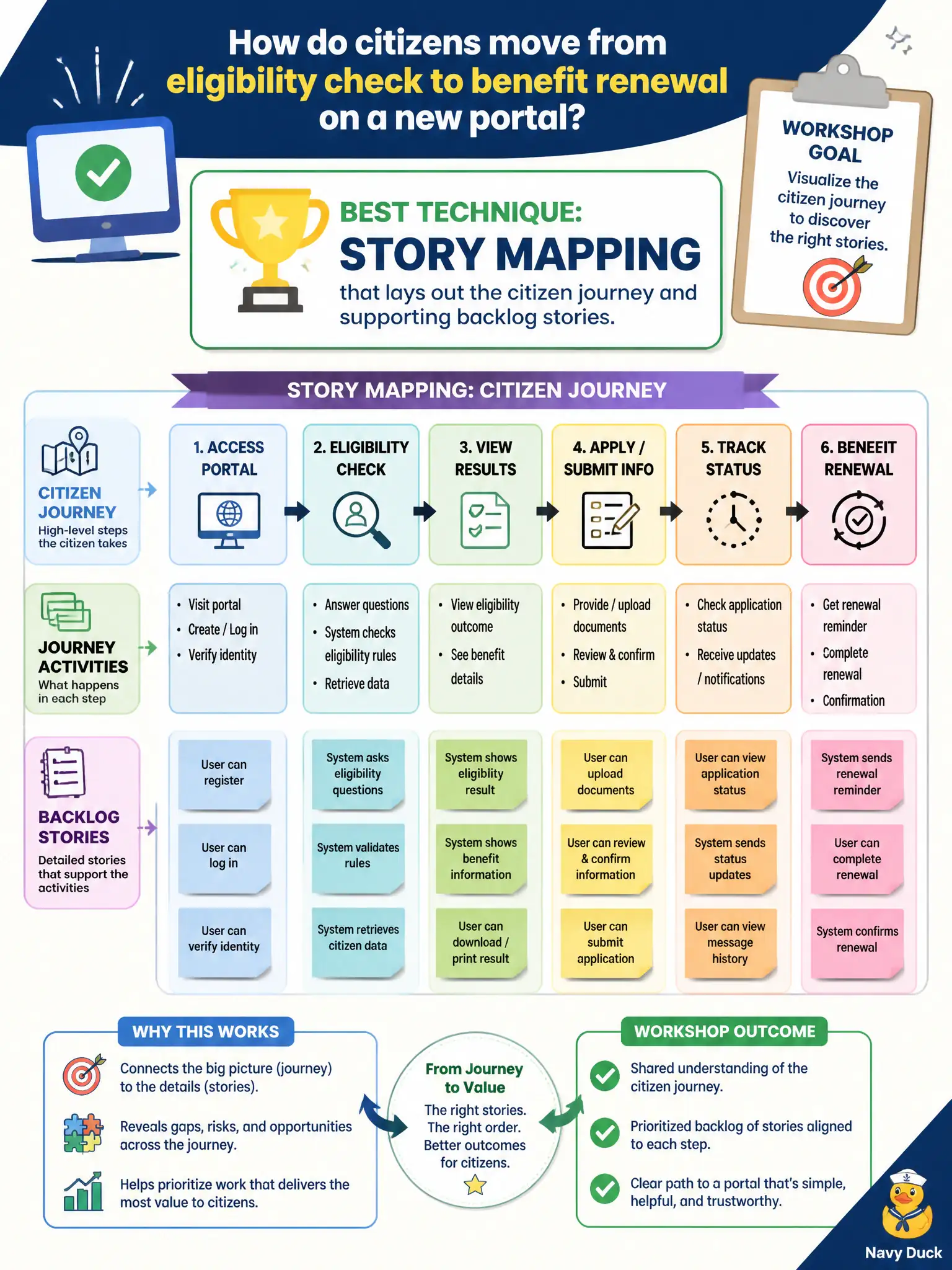
Story mapping is the big wall sticky-note movie of the citizen’s trip—eligibility, apply, renew—with stories hanging under each scene. You see the journey, not just a random pile of tickets.
Full Explanation
A human services team that wants to see how citizens move from eligibility check to benefit renewal benefits from story mapping that lays out the citizen journey and supporting backlog stories. Story mapping visualizes flow across the journey, exposes gaps and dependencies, and connects narrative steps to deliverable stories. Civic benefit portals need that journey view so backlog items do not optimize isolated screens while breaking the resident path.
Focusing solely on server rack diagrams without user steps fails conceptually because infrastructure views do not reveal citizen journey requirements. Holding a closed vendor pricing auction instead of user discussion fails because pricing events are procurement activities, not journey discovery for eligibility and renewal. Running a network cable inventory workshop for the data center only fails because cabling inventories do not model eligibility-to-renewal user flow or story discovery.
Exam caveat: Journey-oriented discovery uses story mapping or an equivalent user-centered technique, not data-center or procurement substitutes. Operational check: facilitate a story map from eligibility through renewal with human-services staff and citizen advocates as appropriate, identify missing steps, and create or reorder backlog stories to cover the journey before the next sprint planning.