
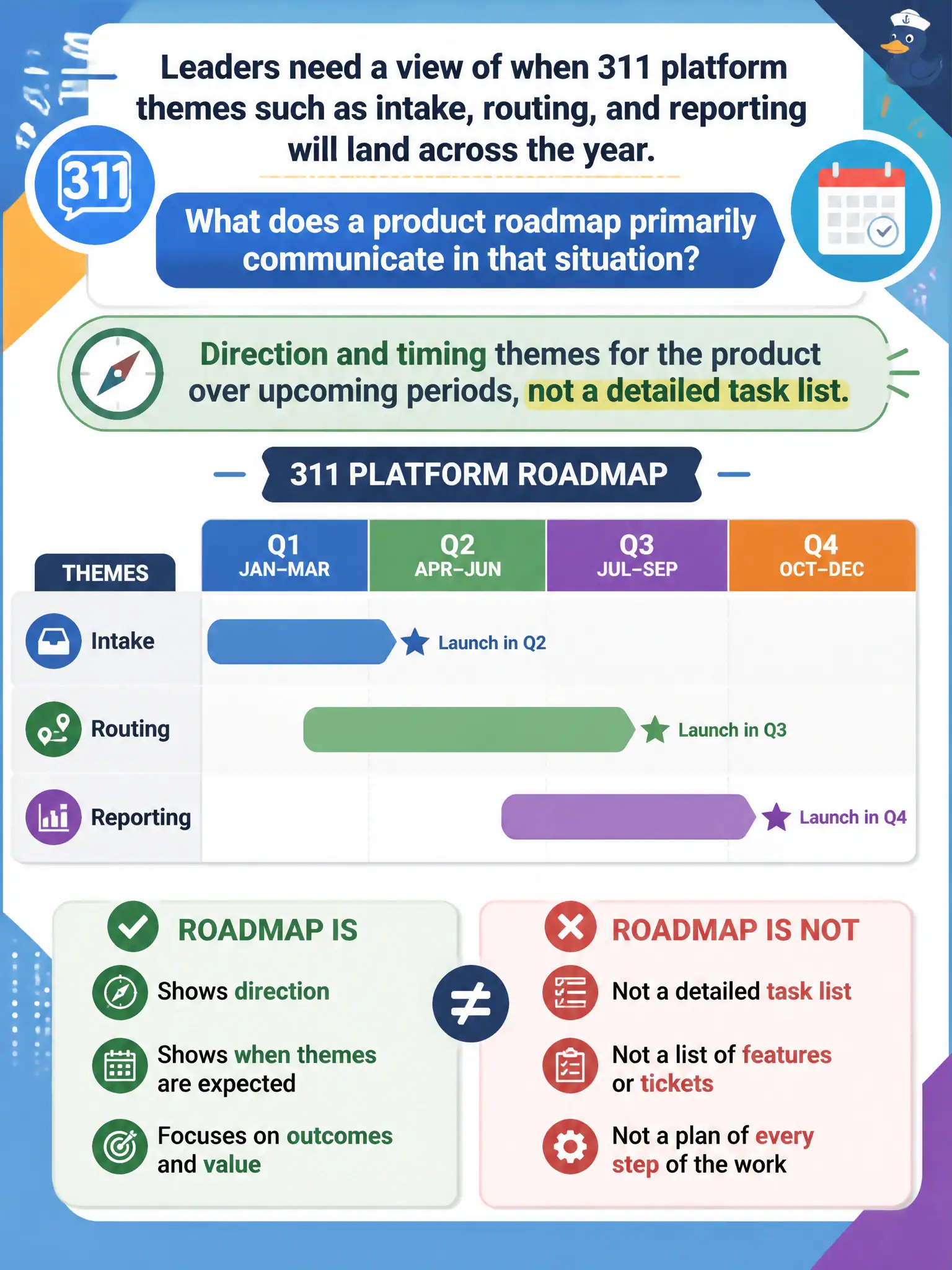
Leaders need a view of when 311 platform themes such as intake, routing, and reporting will land across the year. What does a product roadmap primarily communicate in that situation?
Select an answer to reveal the explanation.
Short Explanation
A roadmap is the highway billboard—‘intake this quarter, smarter routing next’—not the turn-by-turn GPS of today’s sprint tasks. Themes and timing, not every wrench turn.
Full Explanation
Leaders needing a view of when 311 platform themes such as intake, routing, and reporting will land across the year need a product roadmap that communicates direction and timing themes over upcoming periods—not a detailed task list. Roadmaps orient civic stakeholders to outcome themes and approximate windows so portfolio conversations stay strategic. They set directional expectations without pretending to be a minute-level work schedule.
Treating the roadmap as minute-by-minute developer assignments for the next two-week sprint fails conceptually because that detail belongs in a sprint backlog, not a roadmap. Treating it as a permanent contract forbidding any change to theme order fails because roadmaps are planning aids that evolve with learning and capacity. Treating it as the full set of SQL statements for reporting fails because implementation detail is not roadmap content and overwhelms leadership conversations.
Exam caveat: Roadmaps communicate themes and timing direction; they are not sprint plans, immutable contracts, or technical scripts. Operational check: publish a 311 roadmap showing intake, routing, and reporting themes across upcoming periods, review it with leaders for strategic alignment, and keep sprint-level tasks in the sprint backlog rather than on the roadmap slide.