
After a failed grants portal rollout, facilitators run a lessons learned session before rewriting requirements. How should that session be structured for business analysis value?
Select an answer to reveal the explanation.
Short Explanation
Good lessons learned are like a post-game film review: study the missed blocks, not roast the players. Pull out requirement traps so the next grants portal doesn’t trip on the same wire.
Full Explanation
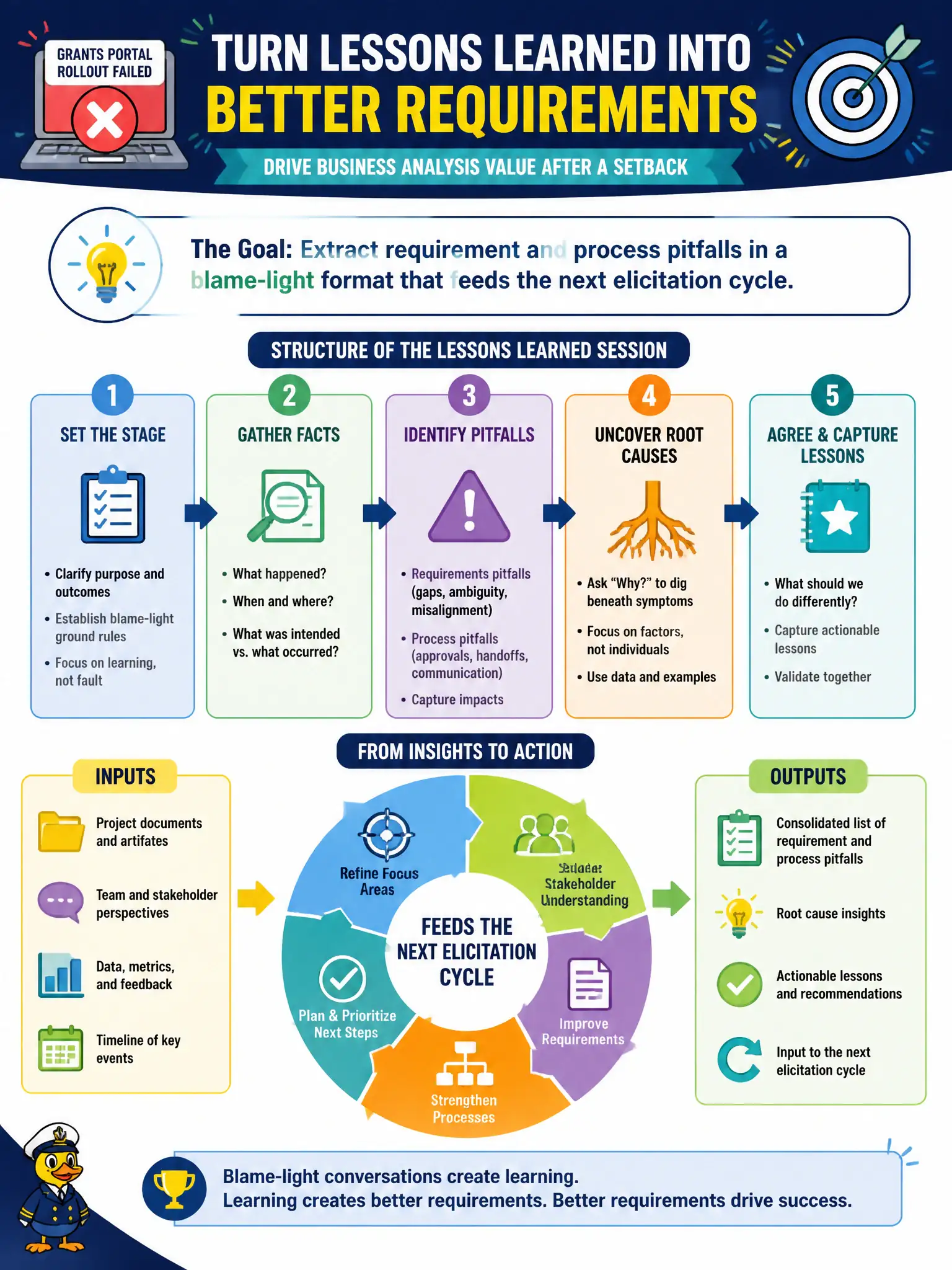
After a failed grants portal rollout, a lessons-learned session creates business analysis value when facilitators extract requirement and process pitfalls in a blame-light format that feeds the next elicitation cycle. The output should be actionable failure modes and improved requirements practices, not a personnel tribunal. Civic replacements improve when history informs analysis without freezing the organization in blame that suppresses honest disclosure.
Focusing on naming individuals to blame fails conceptually because blame theater replaces requirement learning and discourages participants from surfacing real defects. Limiting discussion to cafeteria catering and skipping product outcomes fails because catering issues do not explain portal failure modes that matter to applicants and auditors. Banning any mention of prior defects so the replacement starts with zero history fails because enforced amnesia guarantees the city will repurchase the same grants-portal defects.
Exam caveat: Lessons learned for BA value are blame-light and requirements-focused, then fed into elicitation—not used as punishment or ignored. Operational check: run the grants lessons session with a structured prompt on requirements and process pitfalls, publish a sanitized lessons list into the new elicitation backlog, and verify each high-severity pitfall has a corresponding replacement requirement or control before vendor workshops.