
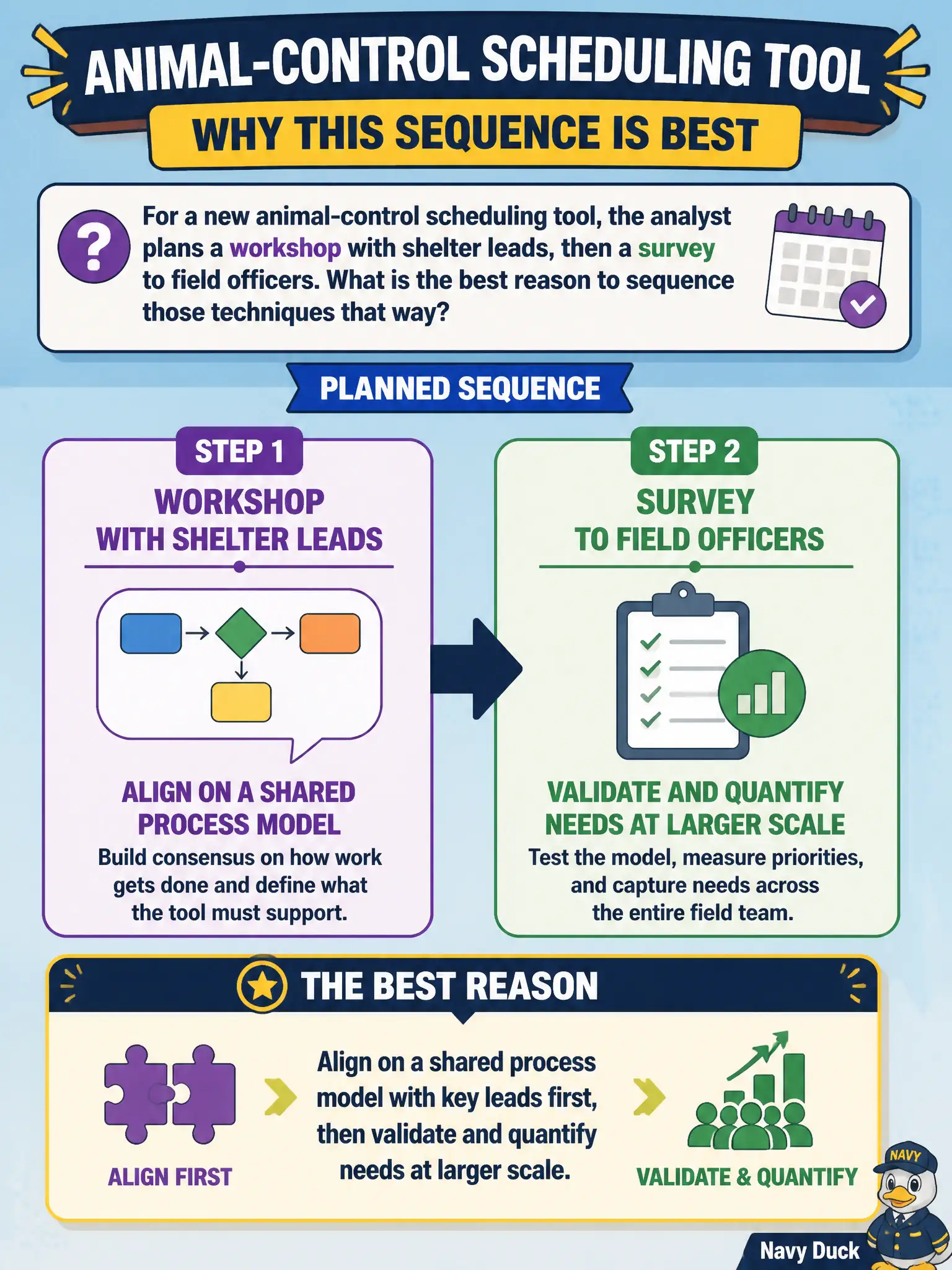
For a new animal-control scheduling tool, the analyst plans a workshop with shelter leads, then a survey to field officers. What is the best reason to sequence those techniques that way?
Select an answer to reveal the explanation.
Short Explanation
Get the shelter leads to agree on the skeleton recipe in a workshop, then taste-test it with lots of field officers via survey. Sequence: align the model, then check it at scale.
Full Explanation
For a new animal-control scheduling tool, sequencing a workshop with shelter leads before a survey to field officers is justified because the team should align on a shared process model with key leads first, then validate and quantify needs at larger scale. Workshops create a coherent draft model; surveys then test breadth and variation across officers without starting from an unstructured free-for-all. Civic scheduling tools benefit from leadership alignment before mass input so survey questions measure the right process.
Claiming surveys must always precede workshops fails conceptually because there is no universal order rule; here, scarce process alignment first is rational. Claiming workshops permanently replace surveys fails because the second step still adds scale validation the workshop cannot provide alone. Saying field officers should never be consulted after leadership has spoken once fails because officers hold operational reality; silencing them after one leadership session invites impractical schedules that fail in the field.
Exam caveat: Technique sequencing should serve learning goals—model with key experts, then broaden—rather than follow a dogma that one method always comes first. Operational check: facilitate the shelter-lead workshop to draft the scheduling model, field a survey to officers against that model, reconcile differences in a short follow-up, and update requirements before build starts on the animal-control tool.