
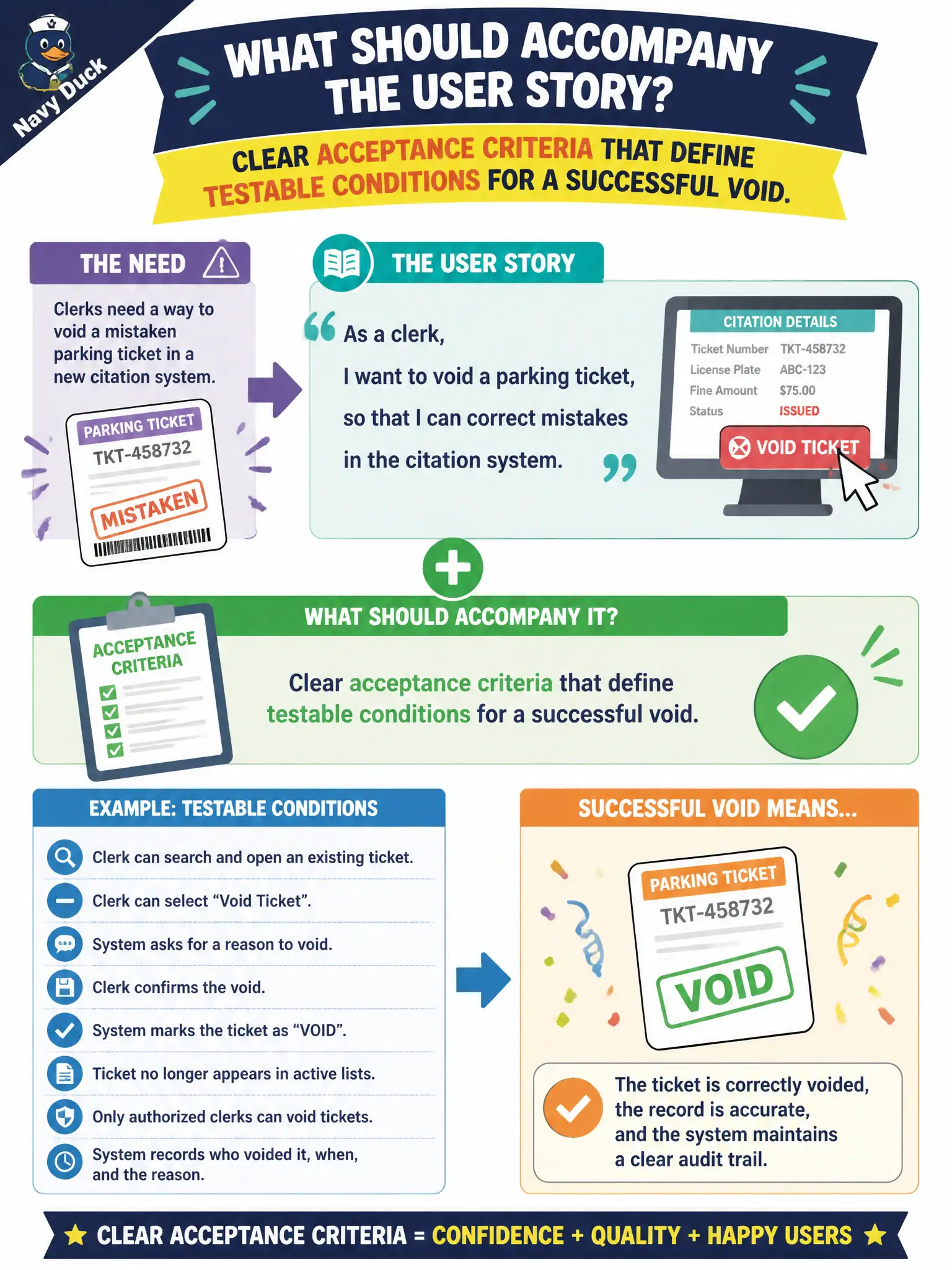
Clerks need a way to void a mistaken parking ticket in a new citation system. What should accompany the user story so the team knows when the need is met?
Select an answer to reveal the explanation.
Short Explanation
A user story without acceptance criteria is like a fix-my-bike sticky note with no definition of done. Clerks need voiding that is actually checkable, not just a vague wish. Acceptance criteria spell out the pass-fail conditions for voiding a mistaken ticket.
Full Explanation
Clerks who need to void a mistaken parking ticket require more than a story title: clear acceptance criteria that define testable conditions for a successful void. Acceptance criteria turn the civic need into verifiable pass/fail checks—who may void, what audit trail is written, how balances update, and what error states occur. Without them, “void ticket” remains ambiguous and UAT becomes opinion.
A Gantt chart showing when the void button will be painted fails conceptually because schedule visualization is not acceptance evidence for correct void behavior. A vendor marketing brochure describing ticket voiding in general terms fails because marketing language is not testable municipal acceptance criteria. A RACI chart that lists only who owns the parking garage lease fails because lease ownership is unrelated to void-transaction acceptance and does not define done for the story.
Exam caveat: User stories need accompanying acceptance criteria; schedules, brochures, and unrelated RACIs do not substitute. Operational check: attach specific void acceptance criteria to the citation story, review them with clerks and testers, and execute those checks in UAT before marking the void capability Done.