
A transit agency wants broad rider satisfaction input to shape a fare-app backlog. Which gathering approach best fits that need?
Select an answer to reveal the explanation.
Short Explanation
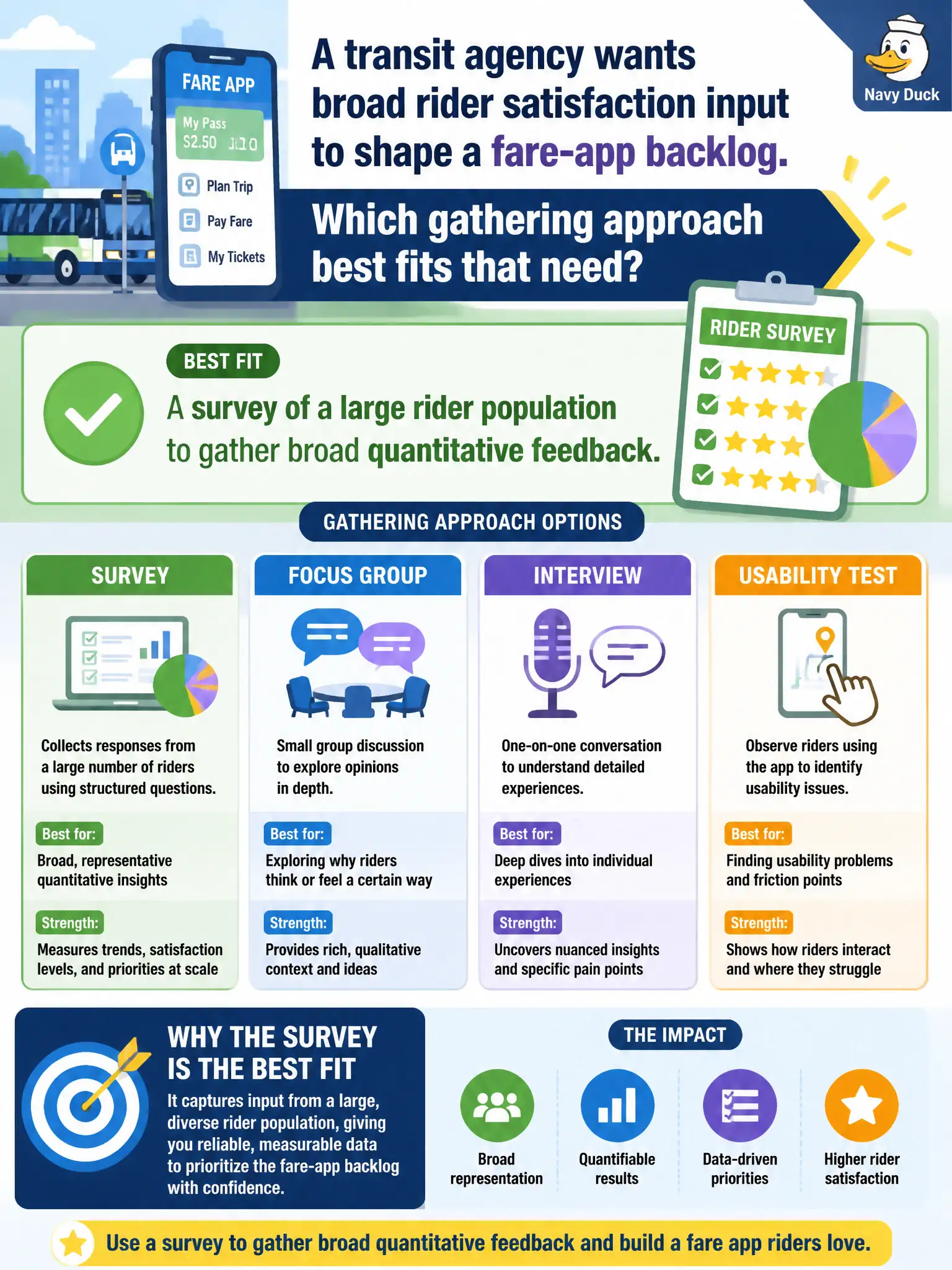
Want the pulse of 2,000 bus riders? Survey the crowd. One cozy interview won’t give you breadth for a fare-app backlog.
Full Explanation
A transit agency seeking broad rider satisfaction input to shape a fare-app backlog needs breadth more than a single deep conversation. A survey of a large rider population gathers quantitative feedback across segments and supports prioritization with evidence rather than anecdote. Civic product decisions that claim to represent riders should sample riders at scale when the question is population-level satisfaction.
Only one unstructured interview with a frequent rider fails conceptually because n=1 cannot represent broad rider satisfaction and biases the backlog toward one person’s habits. A closed workshop limited to three managers with no rider sample fails because managers are not a substitute for rider voice on satisfaction. Writing a use-case document before collecting any rider input fails because modeling without input hard-codes assumptions instead of discovering rider needs.
Exam caveat: Match elicitation technique to the information need—breadth of sentiment favors surveys; depth of expertise favors interviews. Operational check: field a rider satisfaction survey sized for meaningful response, summarize themes into candidate backlog items, and review prioritization with the product owner before committing fare-app sprint scope.