
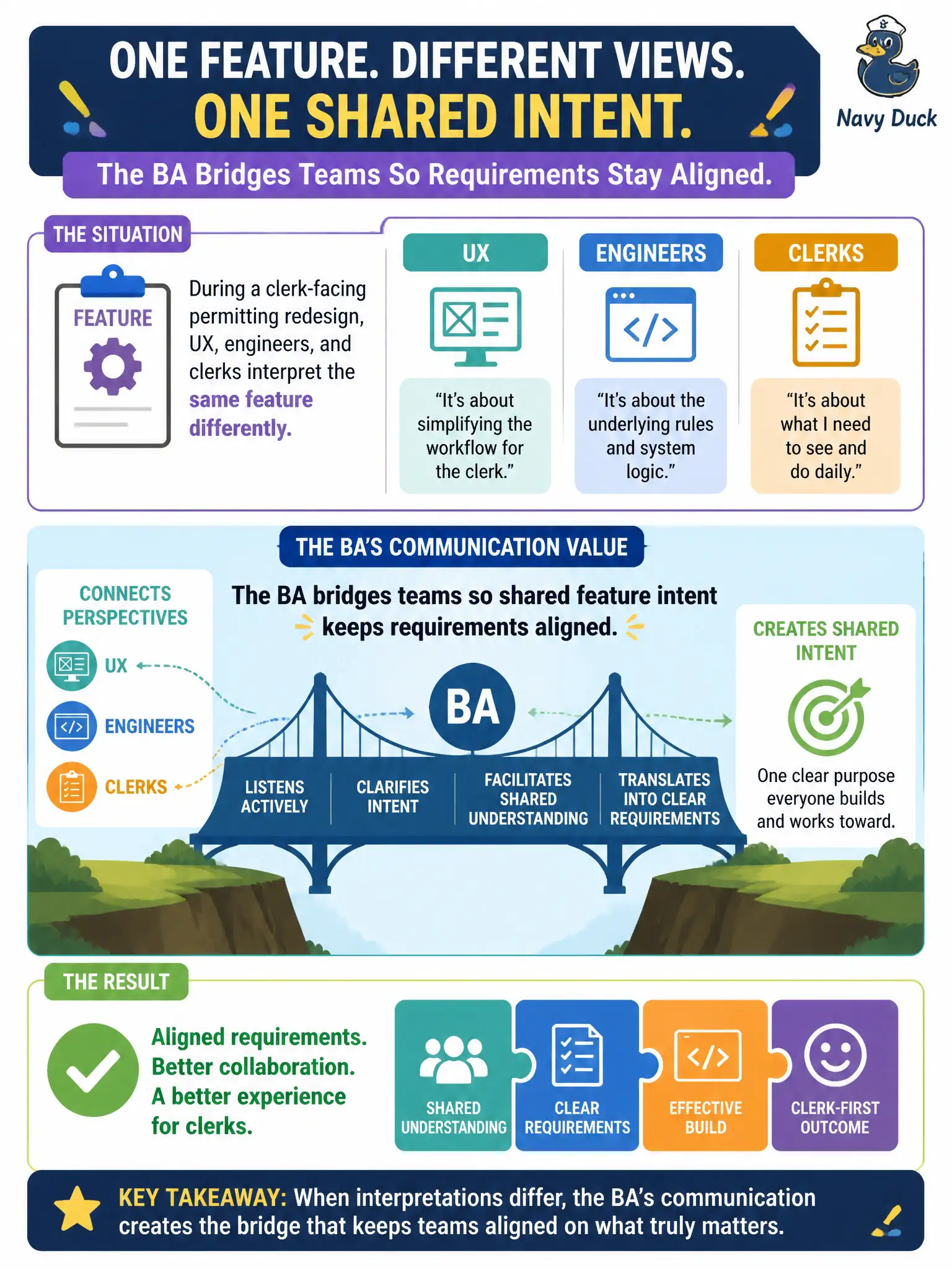
During a clerk-facing permitting redesign, UX, engineers, and clerks interpret the same feature differently. What BA communication value matters most here?
Select an answer to reveal the explanation.
Short Explanation
When designers, builders, and clerks each hear a different movie in their heads, the BA is the subtitle track. Bridging those teams keeps the permitting feature pointed at one intent.
Full Explanation
During a clerk-facing permitting redesign, UX, engineers, and clerks often attach different meanings to the same feature label. The BA’s highest communication value here is bridging those teams so shared feature intent keeps requirements aligned. Translation and facilitation prevent each group from optimizing a private interpretation that later fails acceptance and frustrates public users at the counter.
Withholding intent from engineers until code review fails conceptually because late reveal of intent maximizes rework and treats secrecy as scope control. Letting each team invent its own requirement language without reconciliation fails because parallel dialects produce incompatible implementations. Replacing all meetings with unread status emails fails because one-way unread email does not create shared understanding across specialties that already disagree.
Exam caveat: Associates should treat BA communication as alignment work across disciplines, not as information hoarding or broadcast-only status. Operational check: run a short cross-team walkthrough of the contested permitting feature with UX, engineers, and clerks, capture a single agreed intent statement and acceptance checks, and update the backlog item before further build.