
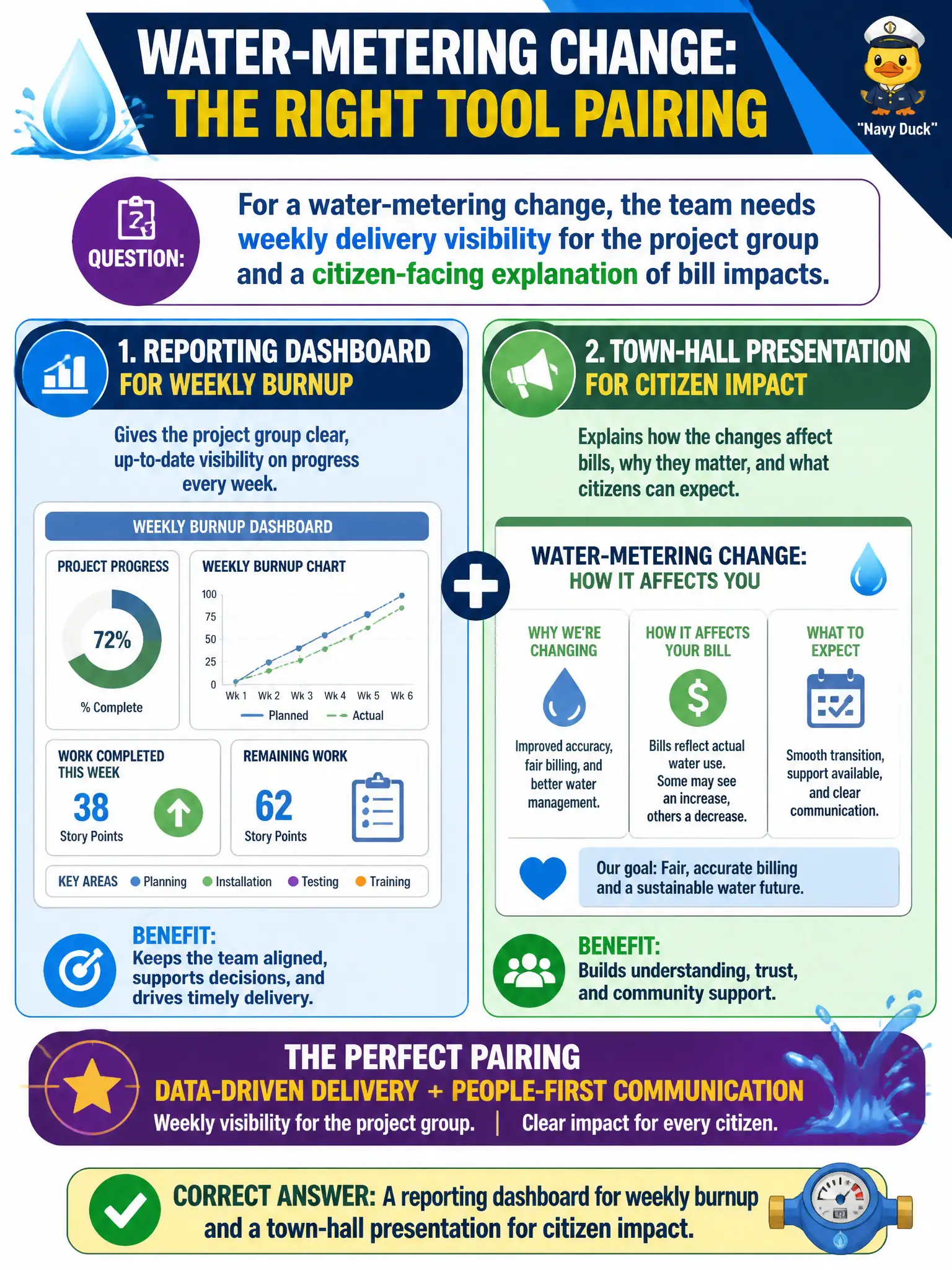
For a water-metering change, the team needs weekly delivery visibility for the project group and a citizen-facing explanation of bill impacts. Which tool pairing fits?
Select an answer to reveal the explanation.
Short Explanation
Ops folks stare at burnup charts; neighbors need a town-hall story about their water bill. Different audiences, different tools—don’t swap them.
Full Explanation
A water-metering change needs two different communication outcomes: weekly delivery visibility for the project group and a citizen-facing explanation of bill impacts. Pairing a reporting dashboard for weekly burnup with a town-hall presentation for citizen impact matches tool to audience. Internal delivery metrics and public policy communication are not interchangeable; civic trust suffers when neighbors are handed burnup charts or crews are handed only narrative town-hall slides.
A town-hall only for burnup metrics and a dashboard only for public policy debate fails conceptually because it swaps the tools: citizens need impact narrative, and the project group needs operational delivery visibility. A private chat for citizens and a press release as the sole internal burnup tool fails because private chat is a poor public-impact channel and a press release does not provide recurring internal burnup visibility. Identical detailed design packets emailed weekly to both crews and residents fails because design depth overwhelms residents and still may not give crews a clear burnup view.
Exam caveat: Communication planning on CAPM exams often hinges on audience-appropriate artifacts rather than one universal document. Operational check: publish the weekly burnup dashboard to the metering project group and schedule a citizen town-hall explaining bill impacts, then confirm both channels are listed in the communication plan with distinct owners and cadences.