
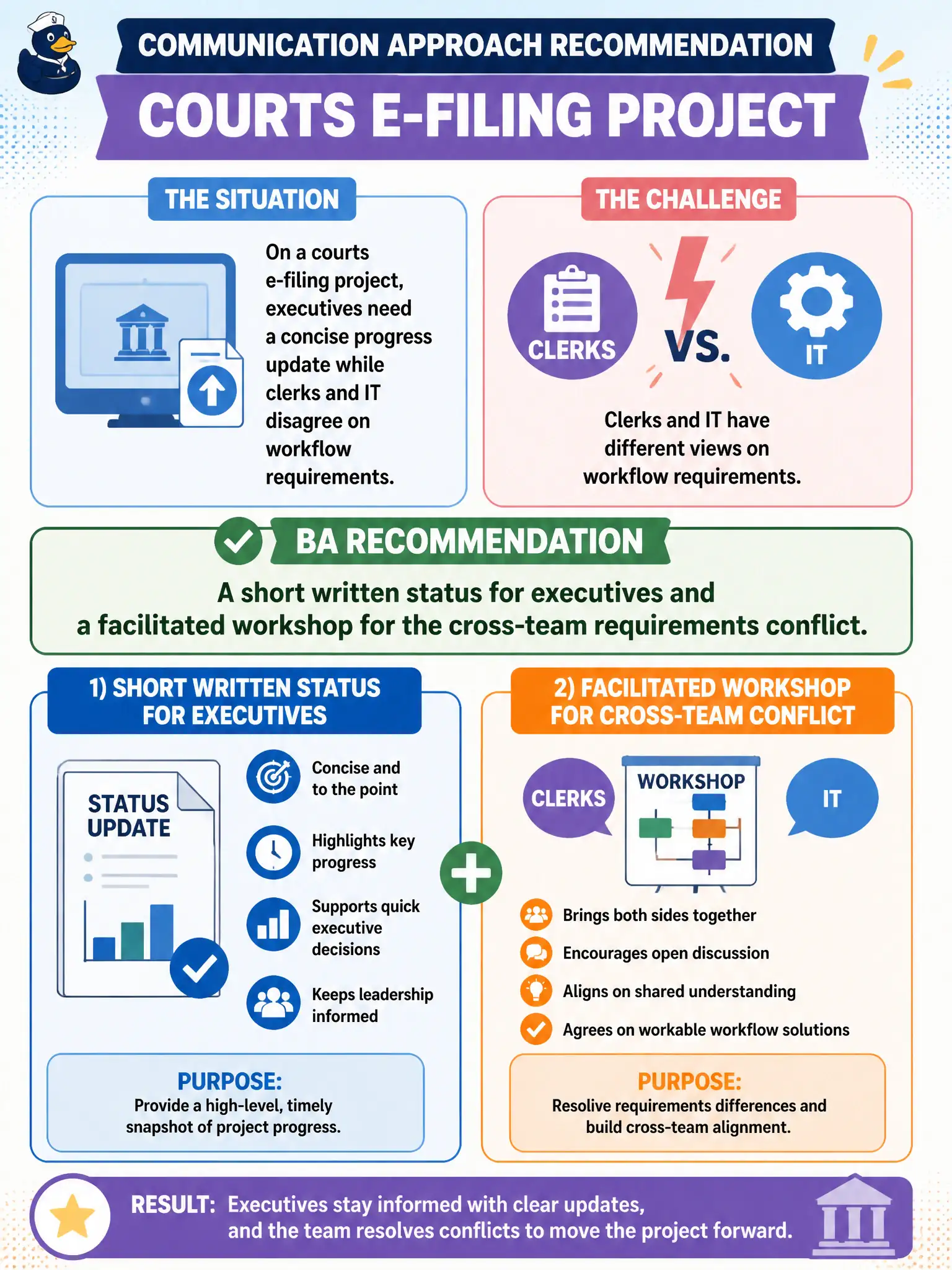
On a courts e-filing project, executives need a concise progress update while clerks and IT disagree on workflow requirements. Which communication approach should the BA recommend?
Select an answer to reveal the explanation.
Short Explanation
Busy executives want a postcard; fighting teams need a roundtable. Match the channel—brief written status upstairs, workshop where clerks and IT collide on e-filing rules.
Full Explanation
On a courts e-filing project, executives need concise progress information while clerks and IT need facilitated conflict resolution on workflow requirements. Recommending a short written status for executives and a facilitated workshop for the cross-team requirements conflict matches channel to purpose: executives receive scannable status, and conflicting workflow parties reconcile in a structured working session. Civic BA communication succeeds when format follows audience need rather than forcing one meeting to do every job.
A single all-hands webinar replacing both status and conflict resolution fails conceptually because broadcast webinars rarely resolve detailed workflow disputes and overwhelm executives with unnecessary detail. An informal chat thread for executives and email voting for the conflict fails because informal chat is a weak audit trail for executive status, and email voting without dialogue freezes positions instead of reconciling process. A detailed Gantt-only packet for clerks with no executive update fails because clerks need requirements reconciliation more than a schedule dump, and executives are left without appropriate status.
Exam caveat: Associates should select communication vehicles by audience and decision type, not by habit or convenience. Operational check: issue a one-page e-filing status to executives and schedule a facilitated workshop with clerks and IT on contested workflow steps, then capture workshop decisions in the requirements baseline or backlog before the next build.