
Building a stakeholder map for a housing lottery system, which pairing correctly reflects internal versus external roles?
Select an answer to reveal the explanation.
Short Explanation
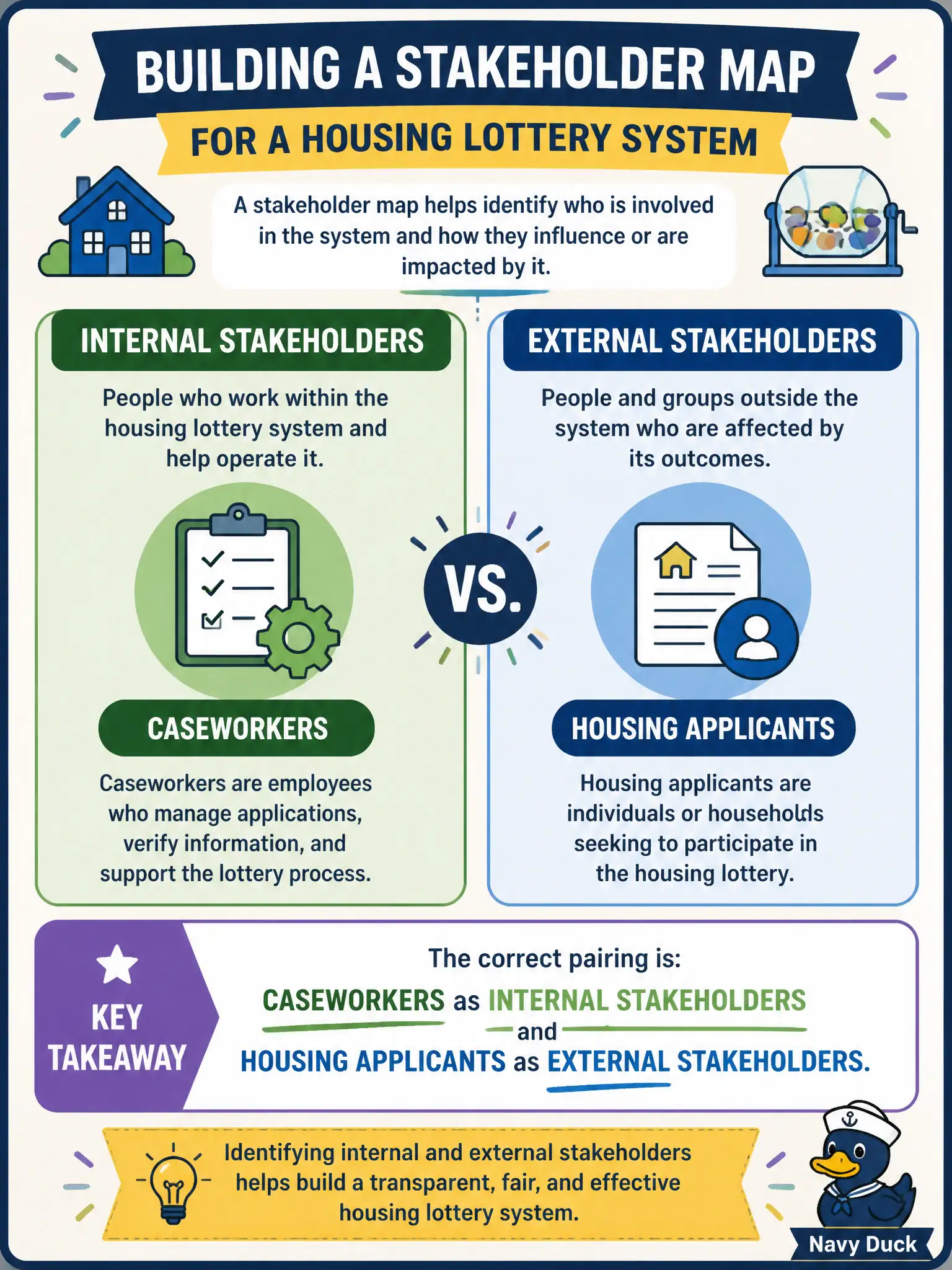
Staff who run the lottery sit inside the org; residents applying for housing sit outside it. Same system, different stakeholder lanes—map them that way.
Full Explanation
For a housing lottery system, internal versus external classification should follow organizational membership and role. Caseworkers who operate the lottery are typically internal stakeholders employed by the housing office, while housing applicants are external stakeholders who interact with the system as citizens. Mapping that pairing correctly drives different engagement plans: staff need workflow and training involvement; applicants need accessible public-facing requirements and communications.
Treating applicants as internal and caseworkers as external vendors fails conceptually because it inverts the employment and service relationship and would mis-set engagement and access. Treating both as internal employees fails because applicants are not staff; calling them internal confuses privacy, access, and communication design. Treating both as external citizens with identical engagement plans fails because caseworkers’ internal process needs differ from applicant-facing needs; identical plans miss role-specific requirements.
Exam caveat: CAPM stakeholder maps should reflect real organizational boundaries and engagement differences, not flatten everyone into one category for convenience. Operational check: revise the lottery stakeholder map so caseworkers are tagged internal and applicants external, attach distinct engagement activities to each group, and verify upcoming elicitation sessions invite the right lane for the topic under discussion.