
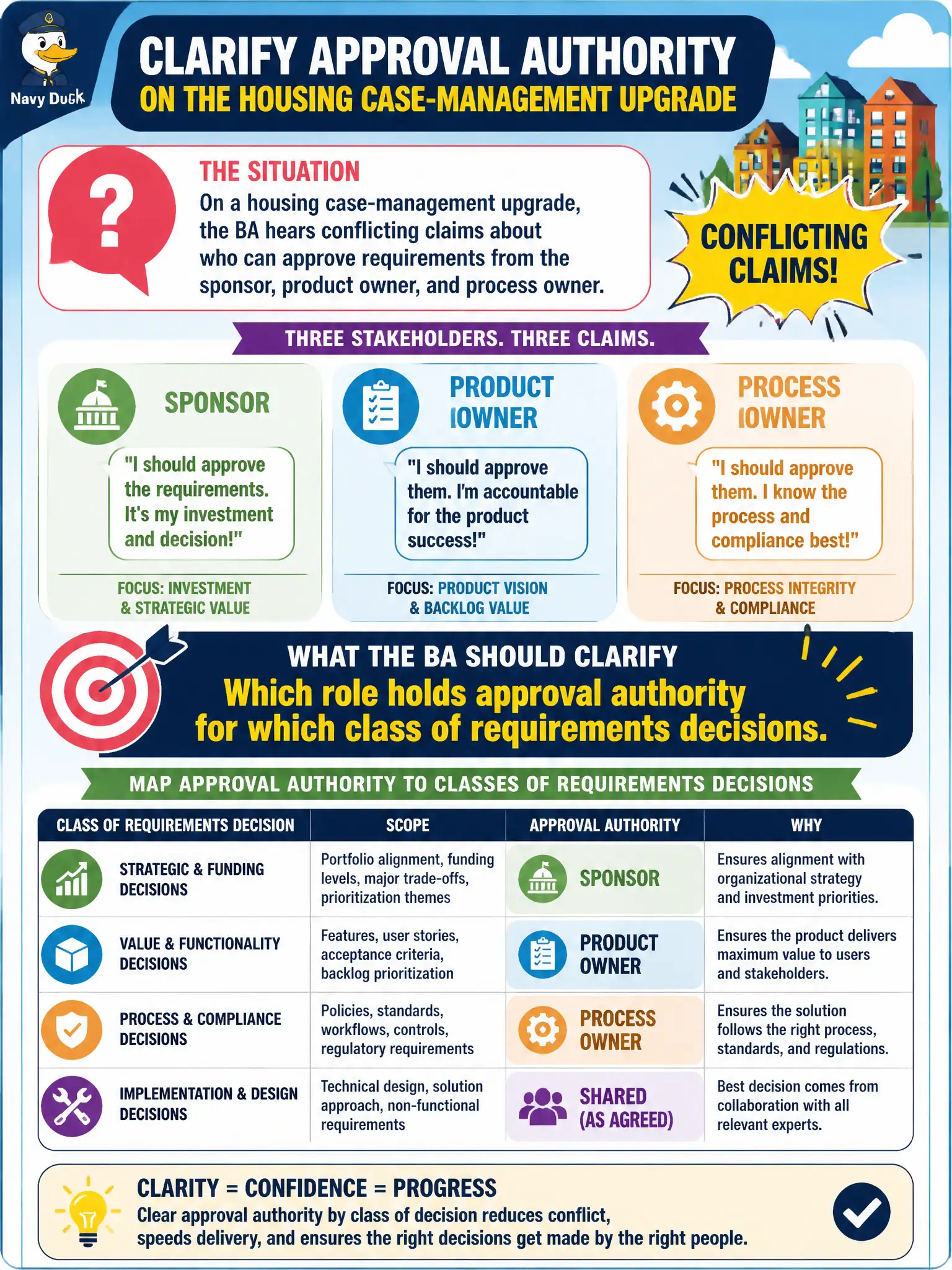
On a housing case-management upgrade, the BA hears conflicting claims about who can approve requirements from the sponsor, product owner, and process owner. What should the BA clarify?
Select an answer to reveal the explanation.
Short Explanation
Three people waving green lights is not governance—it’s a traffic jam. Spell out who approves what: sponsor funding/scope, product backlog calls, process-owner workflow rules.
Full Explanation
On a housing case-management upgrade, conflicting approval claims from the sponsor, product owner, and process owner create false green lights and later reversals. The BA should clarify which role holds approval authority for which class of requirements decisions—for example, sponsor authority for funding and major scope, product-owner authority for backlog priority and story acceptance, and process-owner authority for workflow rules tied to housing policy. Clear decision classes restore governance without inventing a single person who can approve everything.
Allowing any of the three to approve interchangeably fails conceptually because interchangeable approval destroys accountability and invites contradictory decisions under delivery pressure. Restricting approval to engineers after story pointing fails because engineering estimates do not confer business or policy authority over requirements content. Declaring approval unnecessary if the backlog is visible fails because visibility is transparency, not authorization; civic projects still need named decision rights for contested requirements.
Exam caveat: CAPM practice separates visibility of work from authority to approve it; associates should map decision classes to roles rather than hoping visibility alone governs. Operational check: draft a short decision-rights matrix for the housing upgrade covering sponsor, product owner, and process owner, obtain confirmation in the next steering or refinement session, and reject requirements changes that lack the named approver for that decision class.