
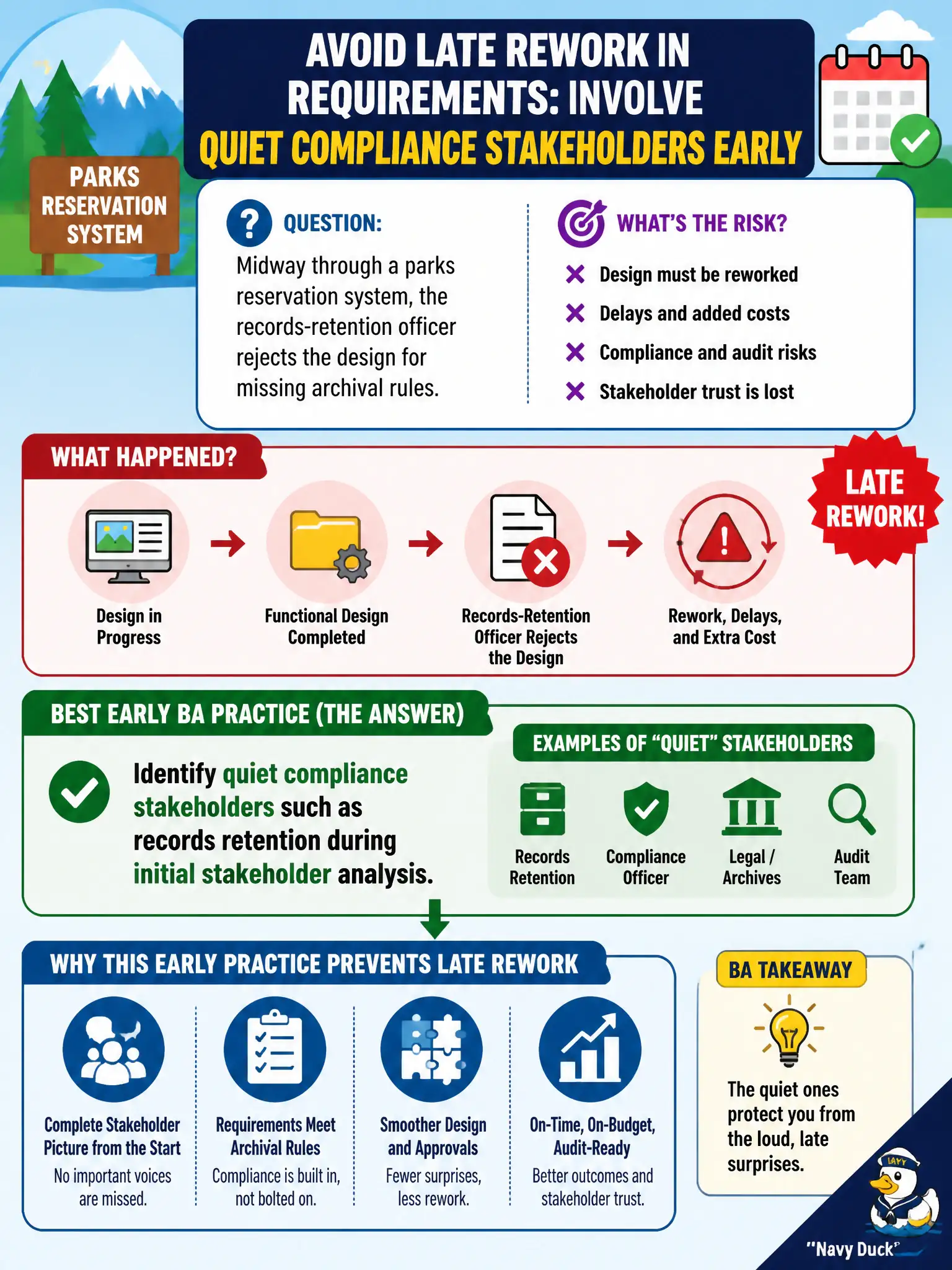
Midway through a parks reservation system, the records-retention officer rejects the design for missing archival rules. What early BA practice would most likely have avoided that late rework?
Select an answer to reveal the explanation.
Short Explanation
The quiet person with the retention stamp can stop a release cold if you never invite them. Finding silent compliance owners early—like records retention—beats ripping out screens after build.
Full Explanation
Late rejection by a records-retention officer on a parks reservation system is a classic symptom of incomplete early stakeholder analysis. Quiet compliance stakeholders often hold veto power over design yet speak infrequently in kickoff meetings. Identifying records retention and similar compliance owners during initial stakeholder analysis would have surfaced archival rules while designs were still inexpensive to adjust, avoiding midstream rework that delays civic service delivery.
Deferring compliance stakeholders until UAT fails conceptually because waiting until acceptance testing to discover mandatory archival rules forces expensive redesign when builders already believe the design is complete. Assuming IT security covers all records rules without naming a retention owner fails because security and retention are related but distinct control domains; security presence does not guarantee retention-policy coverage. Replacing stakeholder identification with a larger development buffer fails because schedule padding does not substitute for knowing who must approve compliance-sensitive design; surprises still arrive, only later and costlier.
Exam caveat: Associates should treat silent compliance roles as high-impact stakeholders to find early, not as optional reviewers after screens are built. Operational check: reopen the parks stakeholder map, add the records-retention officer with explicit archival requirements, run a short compliance review of current designs against retention rules, and log corrective design changes through the team’s change or backlog process before the next build cycle.