
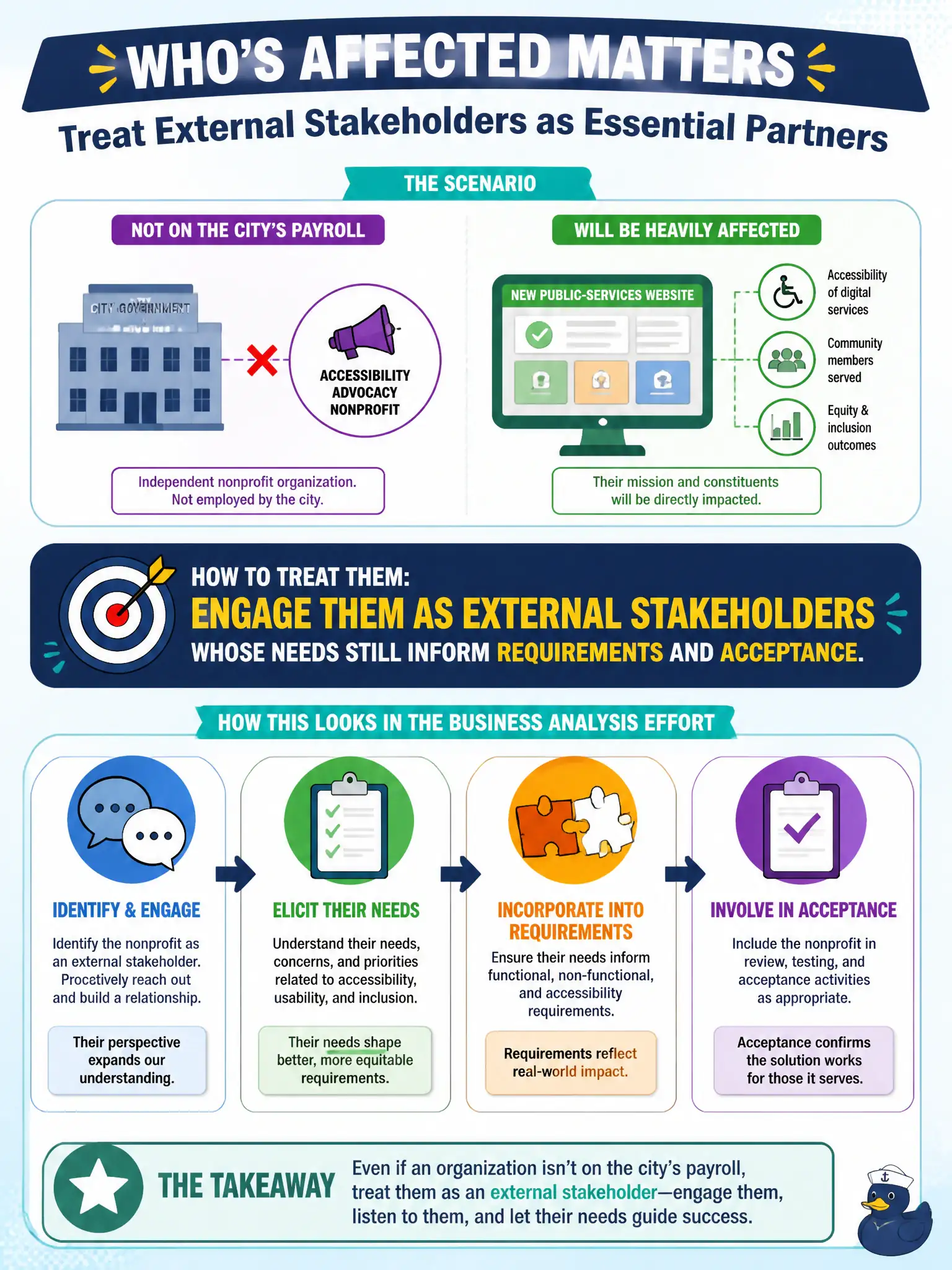
An accessibility advocacy nonprofit is not on the city’s payroll but will be heavily affected by a new public-services website. How should the business analysis effort treat them?
Select an answer to reveal the explanation.
Short Explanation
Payroll doesn’t decide who matters—impact does. Accessibility advocates outside the org chart still feel the website. Bring them in as external stakeholders so requirements don’t blindside real users.
Full Explanation
An accessibility advocacy nonprofit that is not on the city’s payroll but will be heavily affected by a new public-services website should be engaged as external stakeholders whose needs still inform requirements and acceptance. Stakeholder status is based on interest and influence or impact, not solely on payroll. Excluding affected accessibility advocates risks noncompliant or unusable civic web experiences for residents who depend on assistive technologies.
Ignoring them because only salaried employees can be stakeholders fails conceptually because external parties can be stakeholders when affected or influential. Classifying them as the Scrum Master because they are unpaid fails because Scrum Master is a Scrum accountability, not a label for unpaid advocacy groups. Waiting until after go-live to discover accessibility issues without their input fails because late discovery is costly and harmful to residents who need accessible services.
Exam caveat: External nonprofits can be stakeholders; payroll is not the sole qualifier, and they are not Scrum roles by default. Operational check: add the accessibility nonprofit to the stakeholder register as external, invite them into elicitation and acceptance discussions, and include accessibility criteria before go-live of the public-services website.