
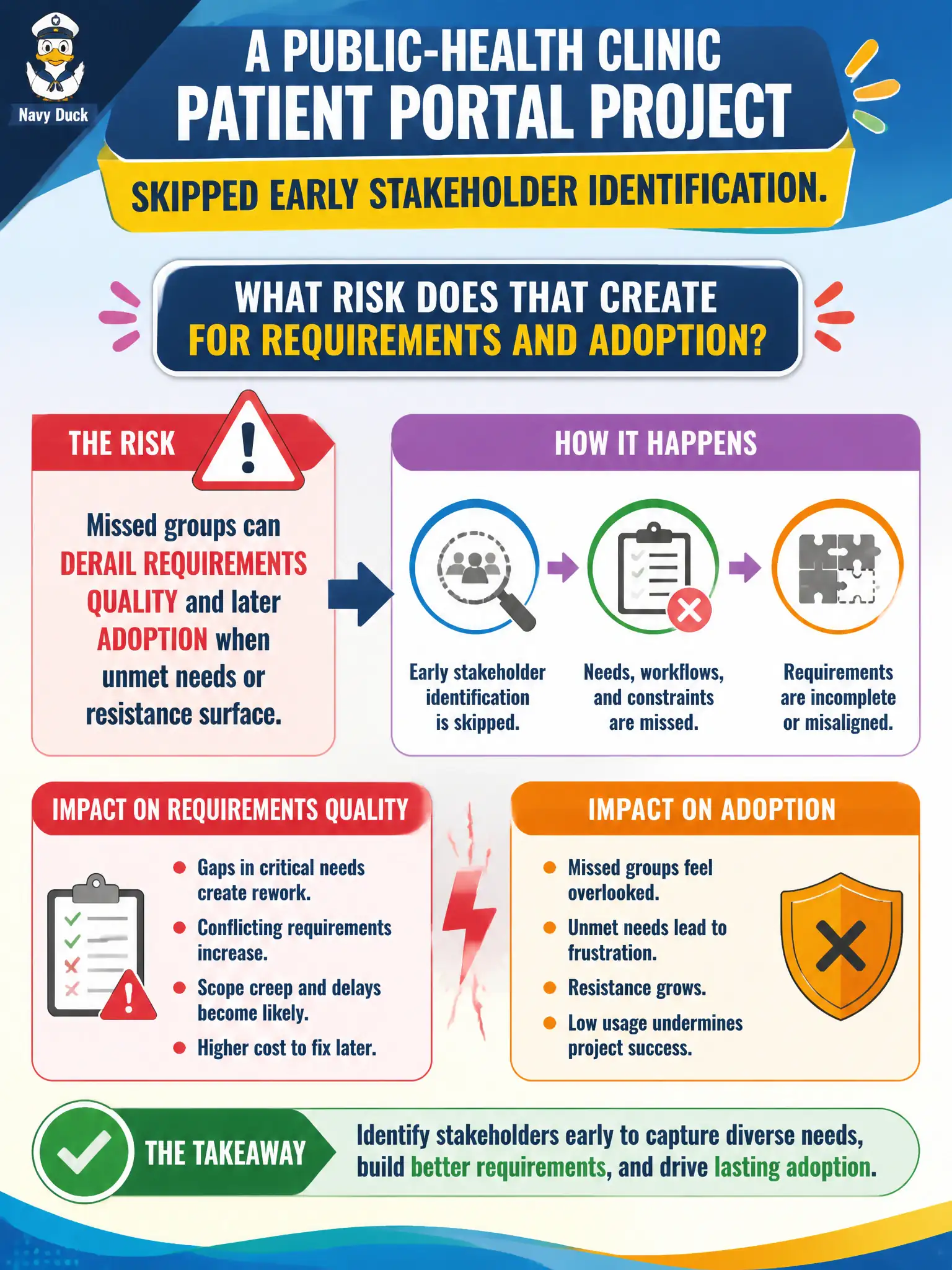
A public-health clinic patient portal project skipped early stakeholder identification. What risk does that create for requirements and adoption?
Select an answer to reveal the explanation.
Short Explanation
Forget a stakeholder group and you build half a doorway—then wonder why people won’t walk through. Missed clinics staff, patients, or privacy folks means gaps and pushback later. Identify early so requirements and adoption don’t blow up.
Full Explanation
When a public-health clinic patient portal project skipped early stakeholder identification, the risk is that missed groups can derail requirements quality and later adoption when unmet needs or resistance surface. Stakeholder identification exists to surface people with influence or interest before design hardens. Quiet groups—patients, nurses, privacy officers—often hold late veto power on civic health portals and can force costly rework if ignored early.
Claiming faster adoption because fewer people can object to missing features fails conceptually because excluded stakeholders often object later at higher cost and with more political heat. Claiming automatic compliance with every regulation without elicitation fails because compliance requirements must be elicited from the right stakeholders. Claiming no impact because portals never need nurses, patients, or privacy officers as stakeholders fails because those groups are classic stakeholders for clinical portals.
Exam caveat: Skipping identification increases requirements and adoption risk—it does not speed sustainable adoption or create automatic compliance. Operational check: run a structured stakeholder identification for the clinic portal, add missed groups to the register, and schedule elicitation before requirements harden or UX freezes.