
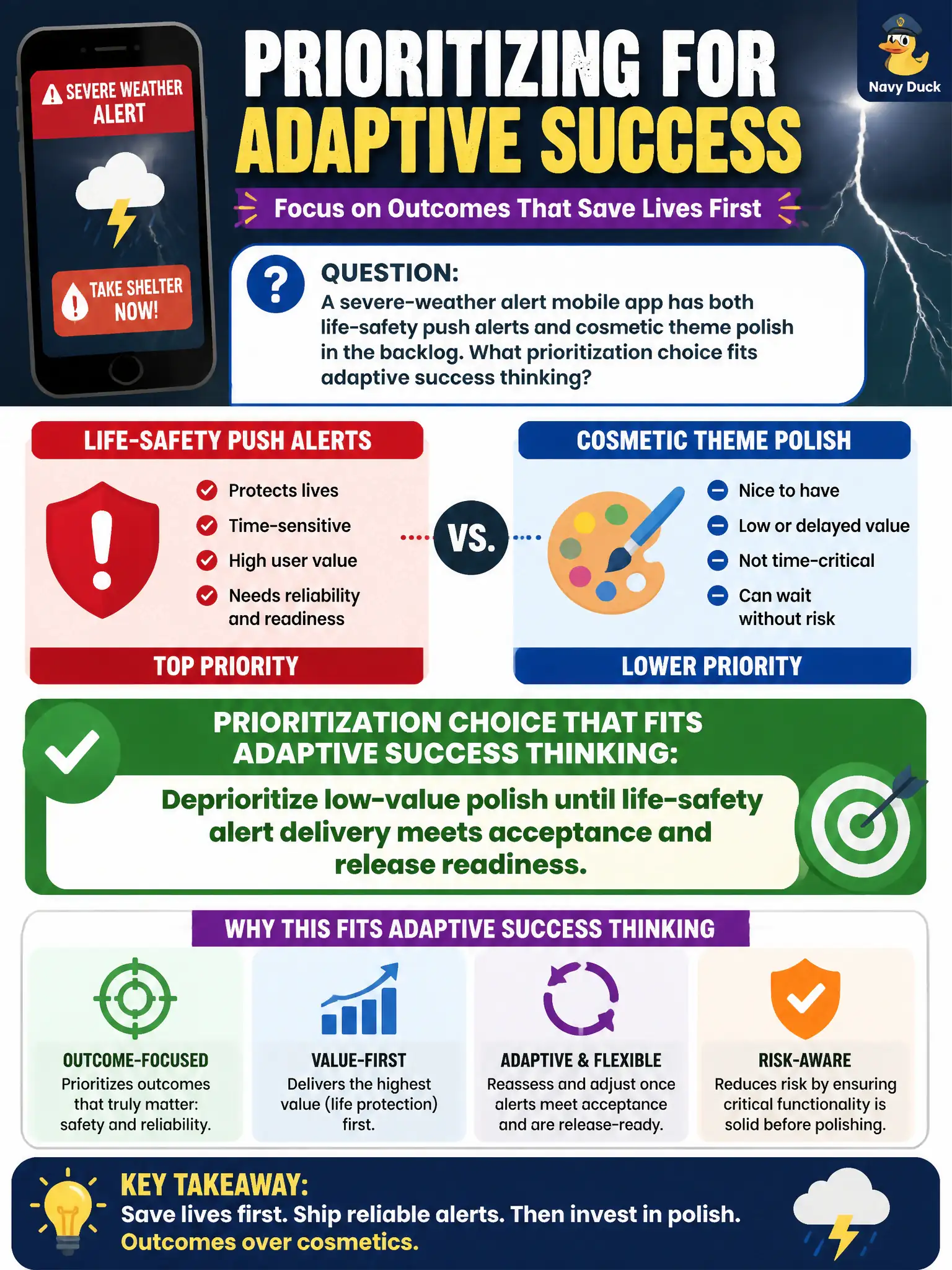
A severe-weather alert mobile app has both life-safety push alerts and cosmetic theme polish in the backlog. What prioritization choice fits adaptive success thinking?
Select an answer to reveal the explanation.
Short Explanation
Pretty skins can wait—alerts that keep people safe can’t. Outcome criticality sets the order: deliver the life-safety path, then spend leftover capacity on sparkle. Citizens forgive a plain screen; they won’t forgive a missed warning.
Full Explanation
On a severe-weather alert mobile app backlog that includes both life-safety push alerts and cosmetic theme polish, adaptive success thinking deprioritizes low-value polish until life-safety alert delivery meets acceptance and release readiness. Value and risk reduction put citizen-protecting alerts ahead of appearance work when Sprint capacity is limited. Municipal emergency apps exist first to warn residents; themes can follow once alerts are trustworthy and releasable.
Shipping color themes first because they are more visible on social media fails conceptually because social visibility is not life-safety value and can delay protective capability. Blocking all alerts until every font pairing is approved by marketing fails because polish gates must not hold life-safety capability hostage. Treating polish and life-safety alerts as identical priority so neither can lead fails because equal priority erases the risk-based ordering adaptive success requires under constrained capacity.
Exam caveat: Life-safety civic features outrank cosmetic polish in adaptive prioritization when capacity forces a choice. Operational check: sequence weather-alert acceptance tests and release readiness first, park theme polish below that line on the backlog, and communicate the risk rationale clearly to marketing and sponsors.