
A grants-finder web app adopts Scrum. Which statement correctly identifies core Scrum components at CAPM depth?
Select an answer to reveal the explanation.
Short Explanation
Scrum’s kit is pretty specific: sprints, three accountabilities, a backlog, and those recurring events. Pair programming is XP flavor; RTE and PI planning are scaling-land. Keep the name tags on the right jerseys.
Full Explanation
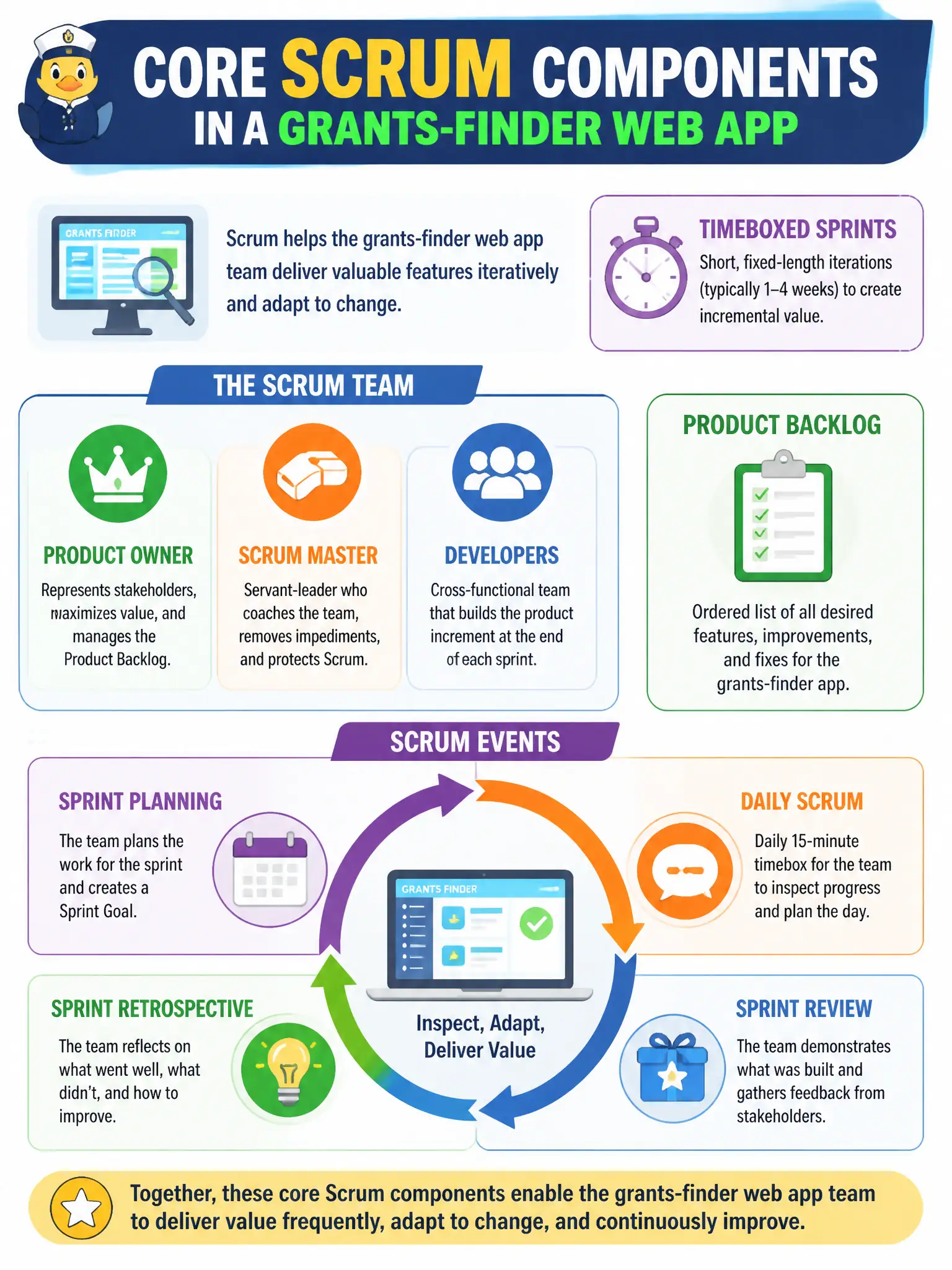
At CAPM depth, core Scrum components for a grants-finder web app include timeboxed sprints; the Product Owner, Scrum Master, and Developers accountabilities; the product backlog and related artifacts; and events such as sprint planning, daily Scrum, sprint review, and retrospective. Those pieces form the core single-team framework associates should recognize. Labeling that set correctly matters more than importing specialist-cert depth from other methods.
Only a predictive PMO steering committee and an annual change-control board with no backlog fails conceptually because that describes predictive governance, not Scrum’s roles, events, and artifacts. Pair programming and test-driven development as the required Scrum roles fails because those are Extreme Programming engineering practices, not Scrum’s official accountabilities. Program Increment planning and RTE as mandatory single-team Scrum roles fails because those are scaling-framework constructs, not basic single-team Scrum components.
Exam caveat: Associates should identify the Scrum set without treating XP practices or SAFe scaling roles as required Scrum core. Operational check: map the grants-finder team to PO, Scrum Master, and Developers; run the Scrum events each sprint; keep a living product backlog; and avoid relabeling XP or SAFe constructs as if they were mandatory single-team Scrum.