
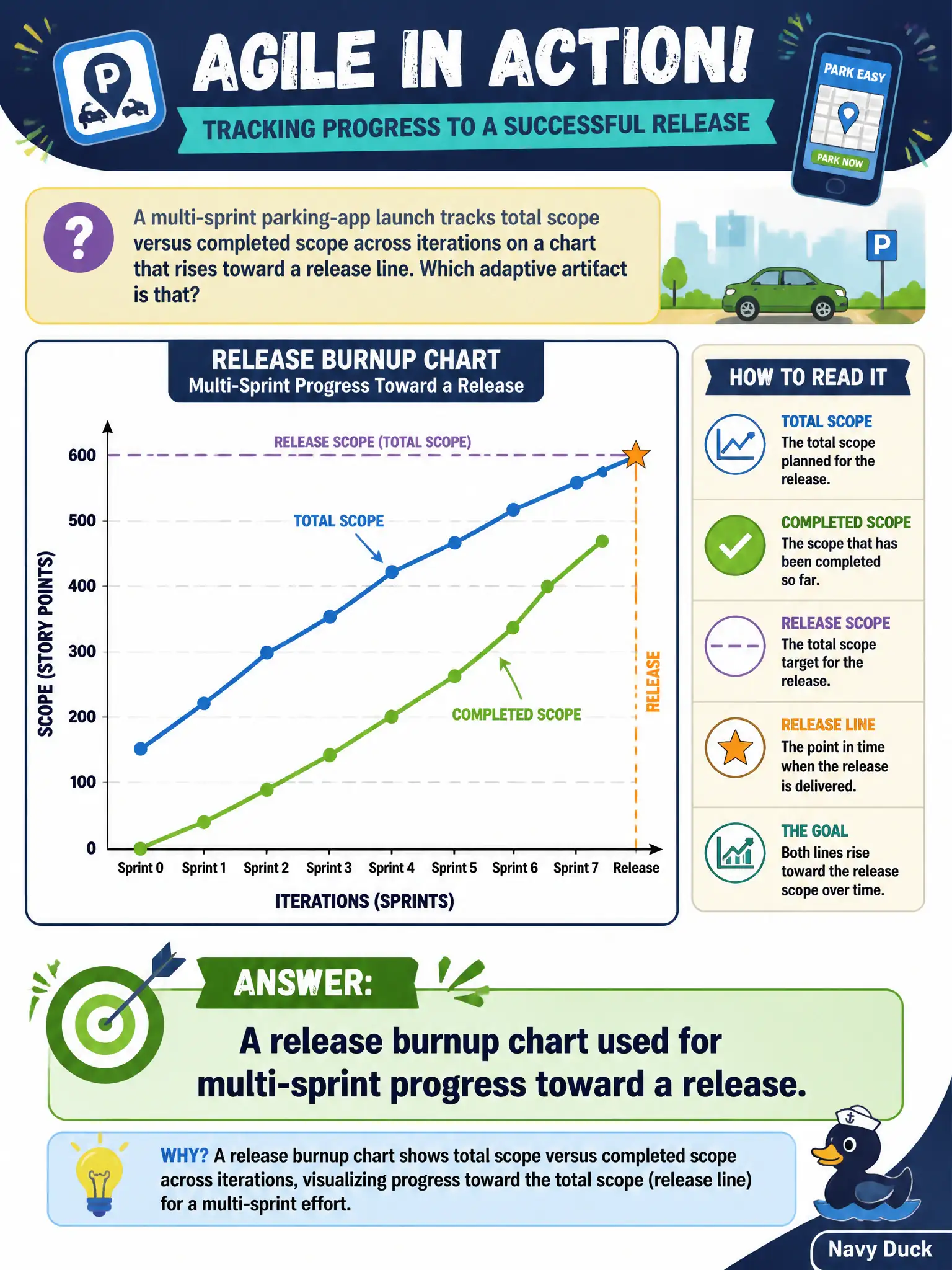
A multi-sprint parking-app launch tracks total scope versus completed scope across iterations on a chart that rises toward a release line. Which adaptive artifact is that?
Select an answer to reveal the explanation.
Short Explanation
Burnup is the "how much have we climbed toward the release peak" chart—scope done versus scope aimed. Spanning multiple sprints makes it a release-level view. It is not a critical-path network or a closeout-only log.
Full Explanation
A multi-sprint parking-app launch that tracks total scope versus completed scope across iterations on a chart rising toward a release line is using a release burnup chart—an adaptive tracking artifact for multi-sprint progress toward a release. Burnup shows completed work accumulating against a scope line, making growth of done work and scope changes visible across iterations for civic product leadership.
A predictive critical-path network diagram with float calculations only fails conceptually because CPM networks are predictive schedule models, not multi-sprint burnup toward a release scope line. A RACI matrix that assigns only procurement responsibilities fails because RACI clarifies accountabilities; it does not chart completed versus remaining release scope. A lessons-learned register opened exclusively at project closeout fails because closeout lessons are not the live multi-sprint progress chart used during the launch.
Exam caveat: Release burnup is an adaptive progress artifact distinct from CPM networks, RACI matrices, and closure-only lessons registers. Operational check: update the parking-app burnup each sprint, explain scope-line moves when backlog grows, and use the chart in release forecasts discussed with product and municipal sponsors.