
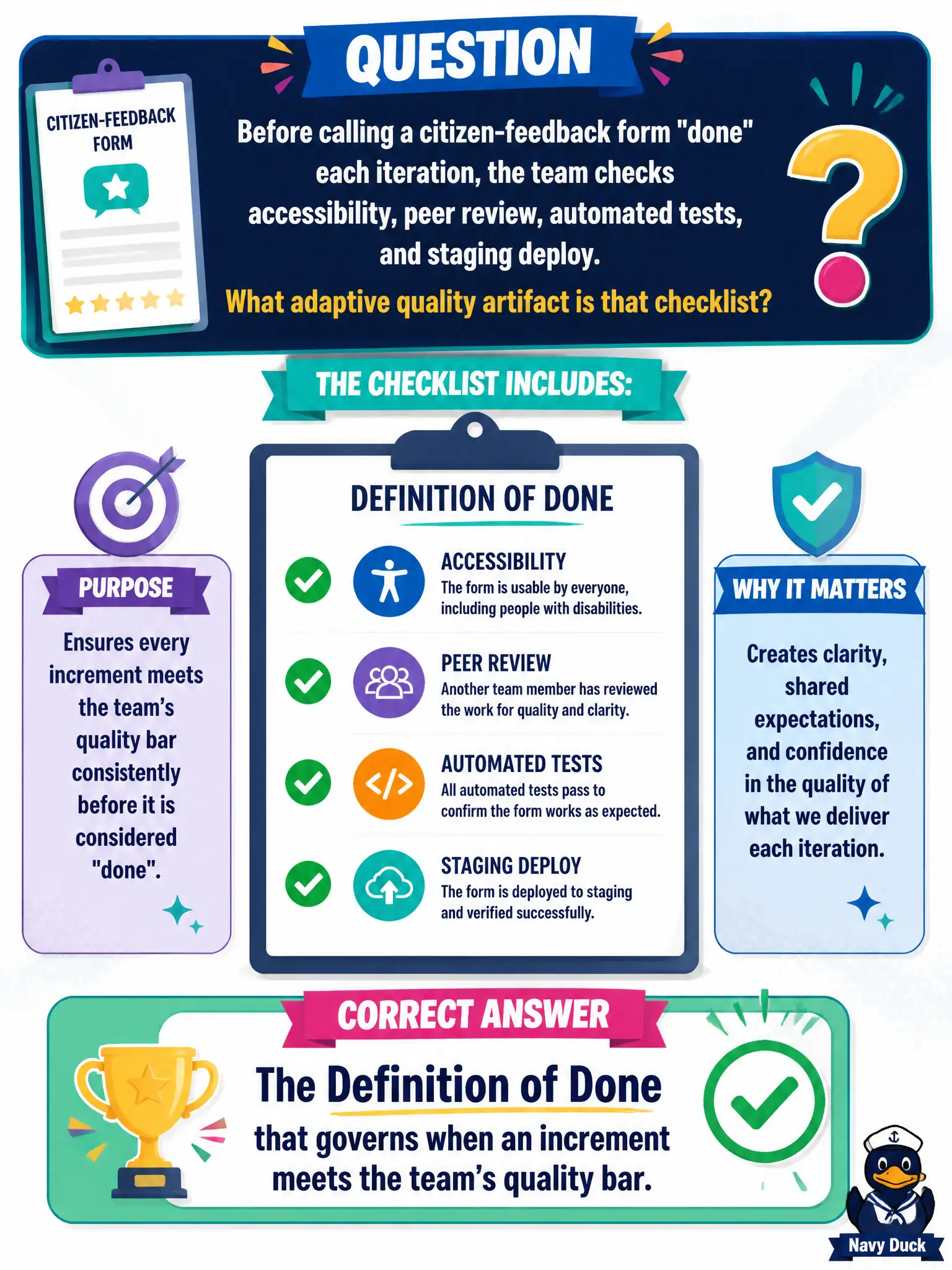
Before calling a citizen-feedback form "done" each iteration, the team checks accessibility, peer review, automated tests, and staging deploy. What adaptive quality artifact is that checklist?
Select an answer to reveal the explanation.
Short Explanation
Definition of Done is the shared "good enough to ship this slice" checklist—tests, review, deploy, accessibility, the works. Without it, "done" means whatever each person hopes. It is quality control for the increment, not a cost index.
Full Explanation
Before calling a citizen-feedback form "done" each iteration, checking accessibility, peer review, automated tests, and staging deploy is applying the Definition of Done—an adaptive quality artifact that states the shared criteria an increment must meet before it is considered complete. DoD promotes consistent quality across stories and sprints so "done" means the same thing to developers, product owners, and civic stakeholders reviewing the form. Without a shared DoD, teams declare victory on partial work and reopen defects after demos.
A predictive cost performance index that replaces all quality checks fails conceptually because CPI measures cost efficiency relative to earned value, not whether accessibility, tests, and deploy gates passed. A stakeholder register used only to list email addresses fails because a register identifies people; it does not define increment quality criteria or completion rules. A lessons-learned archive opened solely after project closure fails because closure lessons are retrospective knowledge capture, not the live quality gate applied to each iteration’s increment.
Exam caveat: Definition of Done is a quality agreement for increments—not CPI, stakeholder contact lists, or closure-only archives. Operational check: publish the citizen-feedback DoD where the team works, refuse to mark stories done until every checklist item passes, demo only Done work, and refine the DoD when escaped defects show gaps in the civic quality bar.