
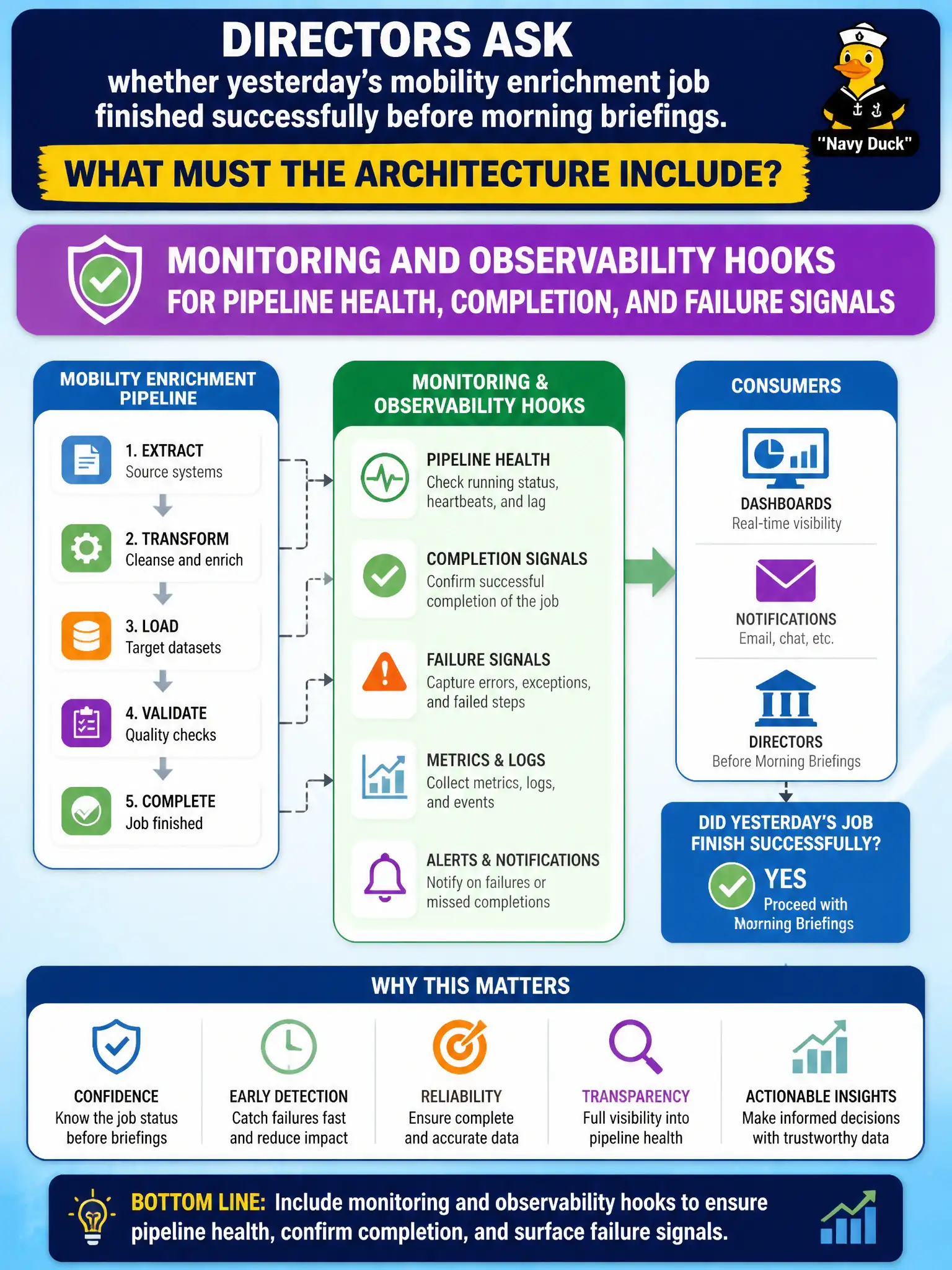
Directors ask whether yesterday’s mobility enrichment job finished successfully before morning briefings. What must the architecture include?
Select an answer to reveal the explanation.
Short Explanation
If leadership cannot tell whether last night’s job landed, the platform is flying blind. Wire in monitoring so success and failure are visible, not tribal knowledge.
Full Explanation
Directors who need to know whether yesterday’s mobility enrichment finished before morning briefings require monitoring and observability hooks for pipeline health, completion status, and failure signals. Architecture without operational visibility cannot support accountable municipal decision-making when leadership briefings depend on overnight jobs landing correctly. A rule that directors may only ask about jobs during annual budget hearings ignores the daily operational dependency on pipeline success for mobility and permitting narratives. Deleting job logs daily to keep disk artificially low destroys forensics and the evidence trail needed for SLA and audit discussions. Hiding pipeline status behind undocumented shell scripts on one engineer’s laptop creates unacceptable bus-factor risk and fails transparency standards for public-sector IT. Exam caveat: observability—metrics, logs, alerts, and lineage—is an architectural concern, not an optional luxury after go-live. Operational check: expose enrichment success and failure in a shared ops dashboard with timestamps, page on SLA breach before briefings, retain logs per retention policy, and include pipeline status in the morning mobility stand-up checklist.