
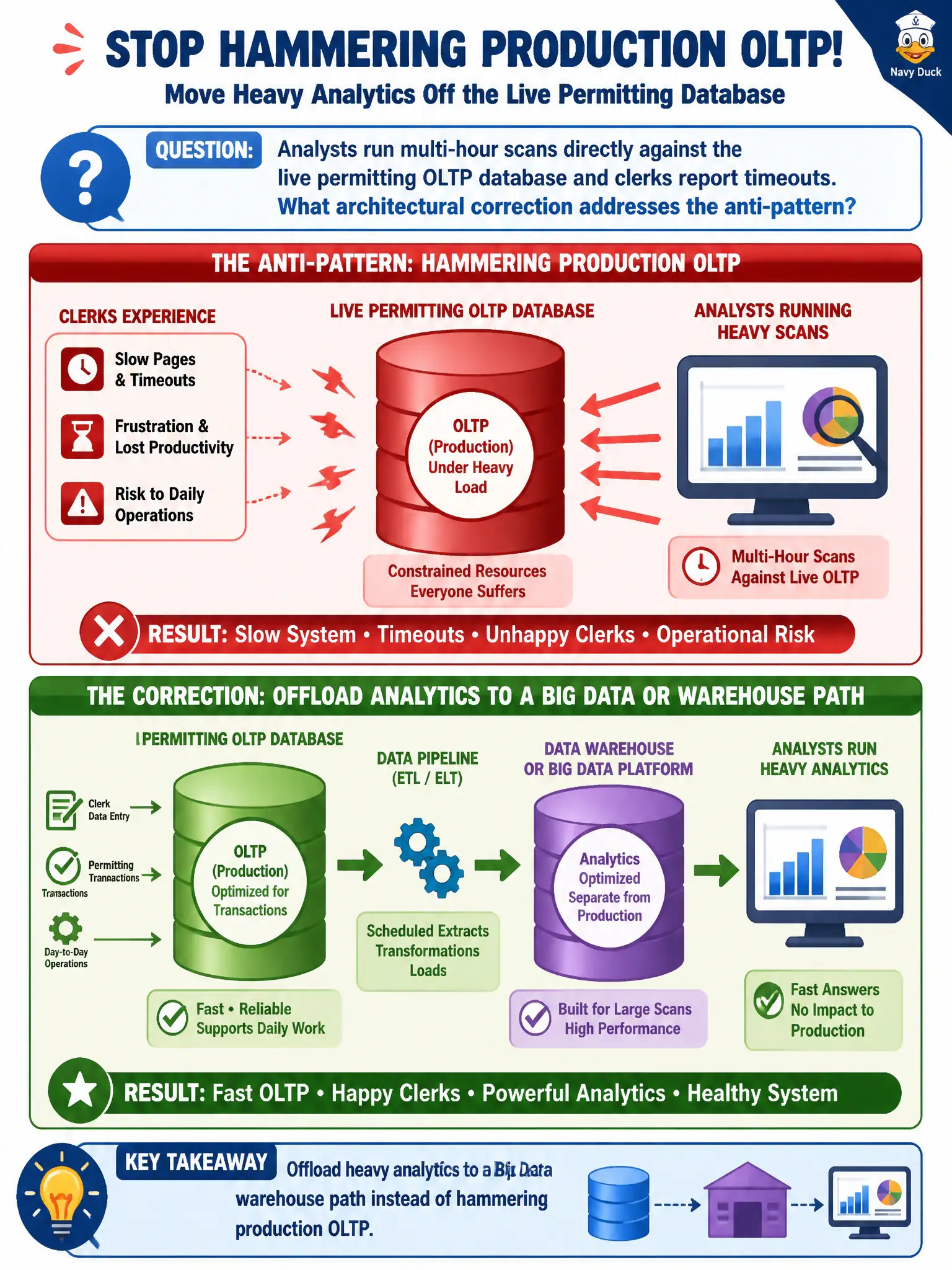
Analysts run multi-hour scans directly against the live permitting OLTP database and clerks report timeouts. What architectural correction addresses the anti-pattern?
Select an answer to reveal the explanation.
Short Explanation
Using the live permitting database as a playground for huge scans is like holding a parade on the runway. Move the analytics off the operational system.
Full Explanation
Multi-hour analytical scans against the live permitting OLTP database are a classic anti-pattern that causes clerk timeouts and counter delays; the architectural correction is to offload heavy analytics to a Big Data or warehouse path fed from the system of record. Production OLTP exists for transactions; analytical platforms exist for large scans that would otherwise contend with resident-facing service. Granting analysts sysadmin rights so scans bypass locks more aggressively worsens integrity risk and contention rather than solving the design problem. Increasing OLTP timeouts indefinitely and accepting clerk outages as normal abandons service quality for residents and staff. Moving the entire permitting application onto a single shared Excel workbook is not an enterprise architecture remedy and creates worse concurrency and audit failures. Exam caveat: never treat OLTP as the analytical workbench; BDPC-style questions reward clear separation of operational and analytical workloads. Operational check: redirect heavy queries to warehouse or lake curated permitting tables, throttle or block long scans on production, measure clerk transaction latency before and after, and verify service returns to baseline after cutting live OLTP reporting.