
Where do HDFS, YARN, and processing engines typically sit among city Big Data architecture layers?
Select an answer to reveal the explanation.
Short Explanation
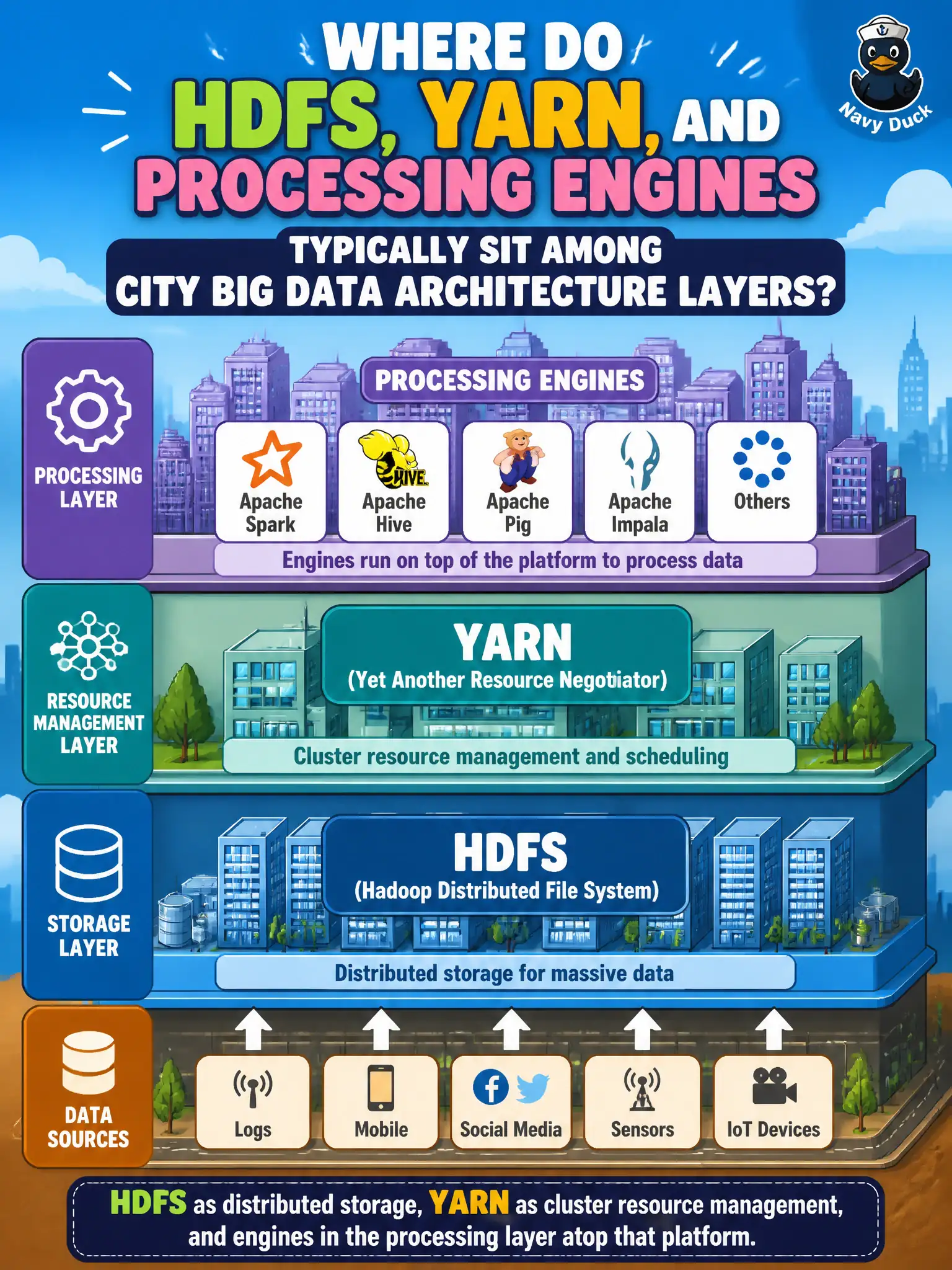
HDFS is the big shared filing cabinet, YARN hands out the workers, and engines do the heavy lifting on top. None of that lives in the brochure CDN or the dashboard color picker.
Full Explanation
In layered Big Data architectures, the Hadoop ecosystem commonly anchors distributed storage (HDFS) and resource management (YARN), with MapReduce, Spark, or similar engines in the processing layer. Placement literacy matters for civic designs that adopt Hadoop-family components. Correct placement keeps capacity planning and data locality aligned with architecture diagrams.
Placing HDFS/YARN only in the public web CDN that serves PDF brochures fails by concept: CDN brochure delivery is not cluster storage/RM. Treating them only as desktop spreadsheet plugins fails by concept: they are cluster roles. Placing them only in the serving UI theme pack that picks dashboard colors fails by concept: theming is not storage or processing.
Exam caveat: HDFS = distributed storage, YARN = cluster resource management, engines in processing—not CDN, desktop plugins, or UI themes.
Operational check: Update the city’s architecture diagram to show HDFS under storage, YARN under resource management, and compute engines under processing; validate capacity plans against that placement. Document residual risk for civic operators and revisit after the next production change window. Confirm owners, SLAs, and rollback criteria in the runbook before go-live.