
During a concrete saw-cutting shift, a supervisor notices a worker wearing cap-mounted earmuffs whose vinyl cushions are cracked and stiff, with thick safety-glass temples holding the cups slightly off the worker's head. How does this affect hearing protection, and what should the supervisor require?
Select an answer to reveal the explanation.
Short Explanation
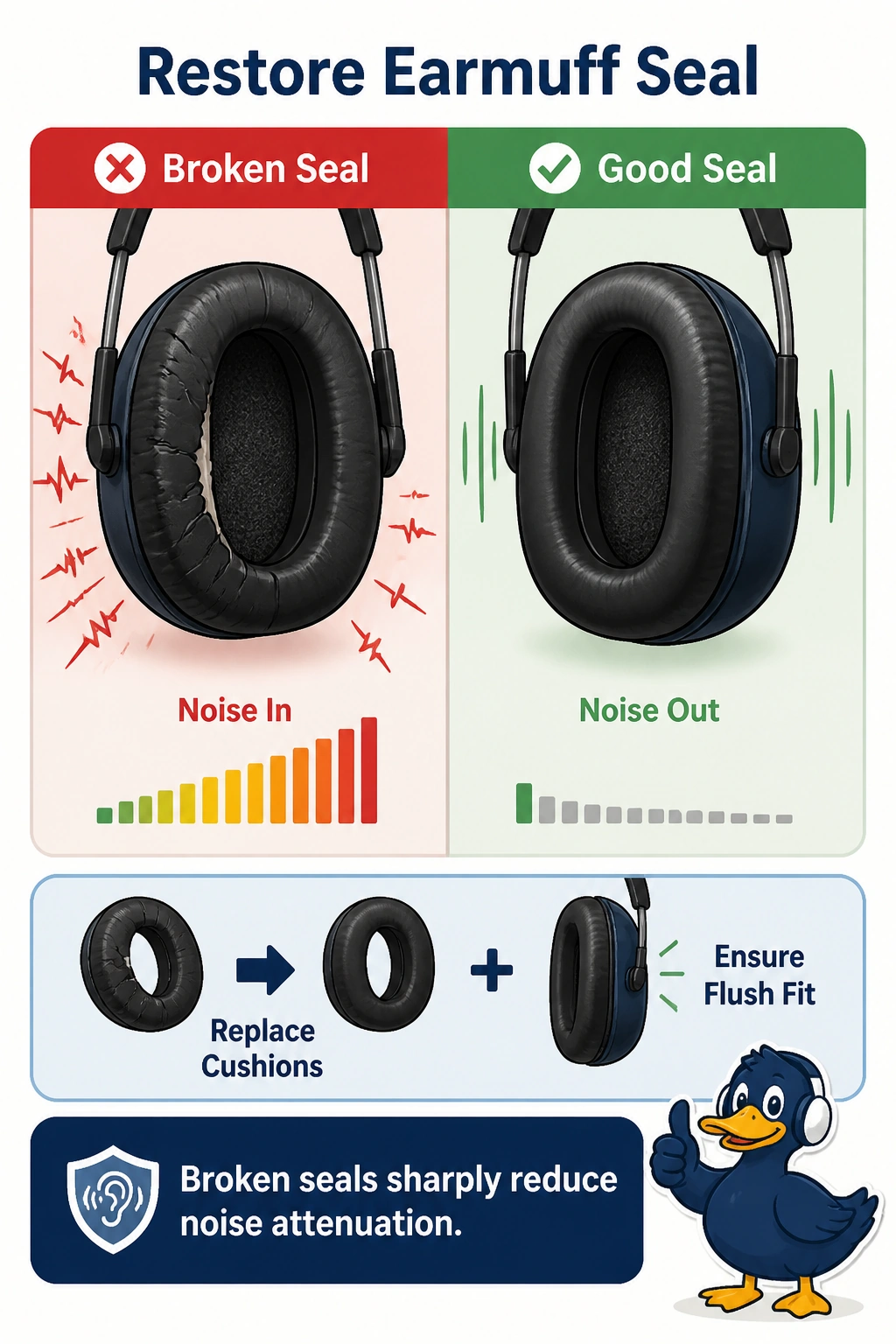
You can count on earmuffs only when their cushions make a complete seal around your ears. Cracked cushions and thick safety-glass temples break that seal, so replace the cushions and ensure a flush fit; tightening the headband, ignoring the gaps, or adding a sweatshirt will not restore protection.
Full Explanation
Earmuffs need a continuous, pliable seal against your head around the entire outer ear to achieve their rated Noise Reduction Rating. Hardened or cracked vinyl cushions, or thick safety-glass temples that lift the cups from your skin, let sound leak directly into the ear canal and reduce attenuation. The supervisor should require replacement of the cushions with fresh manufacturer-approved ones and a flush fit; safety glasses with thinner temples can help avoid interference. Hard-hat clips do not compensate for split or hardened cushions, and tightening the headband cannot restore the seal; added clamping force may cause headaches. Small gaps around eyewear do reduce attenuation, including protection at high and low frequencies, so they cannot be ignored. A hooded sweatshirt under the cups adds porous fabric and creates a larger acoustic leak rather than cushioning cracked vinyl. Exam caveat: if noise levels remain extreme, double hearing protection—earplugs beneath intact earmuffs—may be required. Practical check: inspect cushions for pliability and cracks during weekly PPE checks, and keep replacement hygiene kits in the job trailer.
Prefer to study offline? Printable PDF study book + test engine ($7.50, unofficial). These questions stay free here.